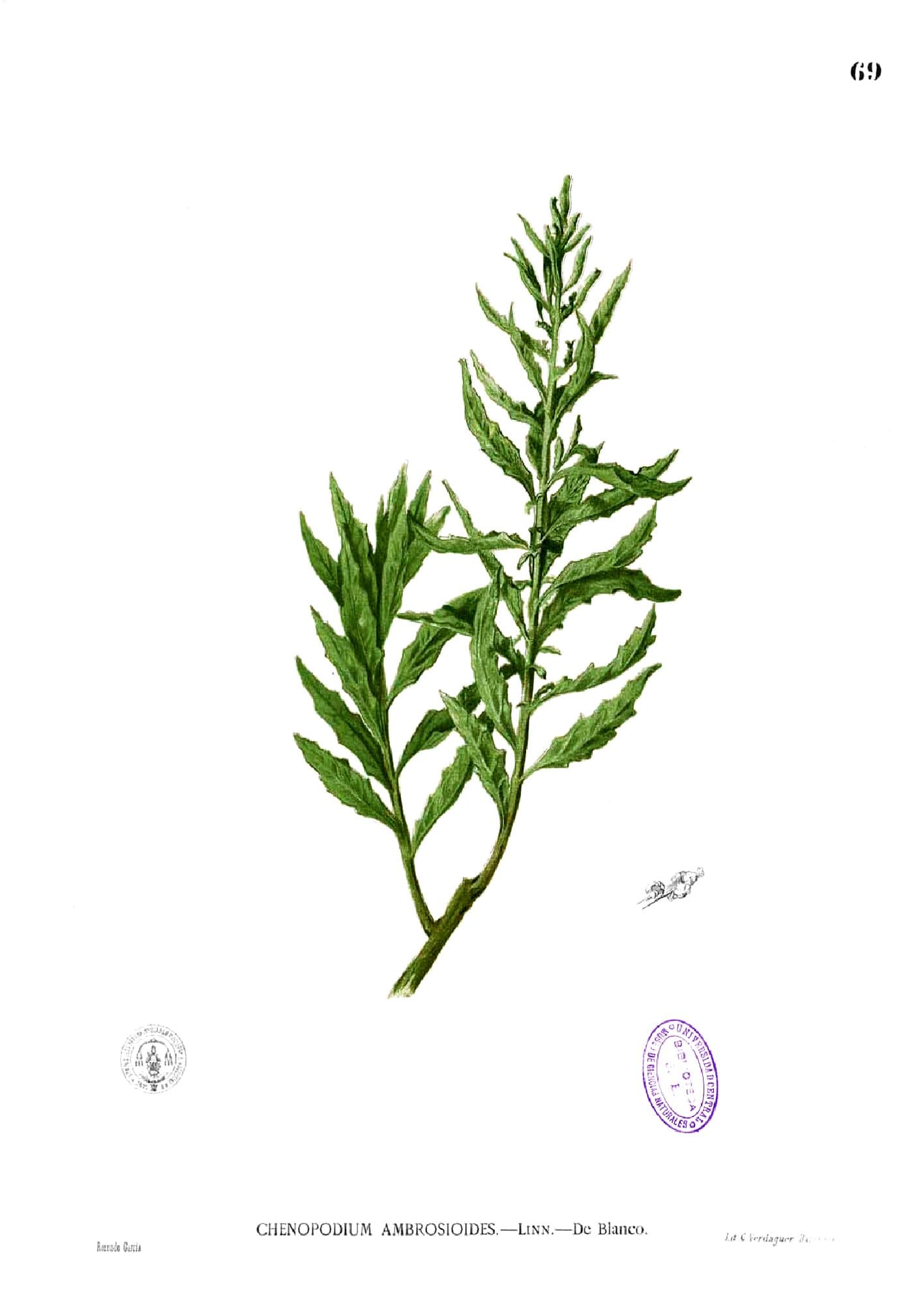
Epazote
Image: Francisco Manuel Blanco (O.S.A.) (Public domain)
NameEpazote
Scientific NameDysphania ambrosioides
Common NamesMexican Tea, Wormseed, Jesuit's Tea, Paico, Pigweed
Plant FamilyAmaranthaceae
Natural HabitatNative to Central and South America, Epazote thrives in disturbed soils, roadsides, waste areas, and cultivated fields. It is widely naturalized in tropical to warm temperate regions globally.
Parts Usedleaf,seed,whole_plant
Medicinal Actionsanalgesic, anti-inflammatory, antimicrobial, carminative, expectorant, nervine
Traditional UsesTraditionally, Epazote has been widely used as an anthelmintic to expel intestinal worms, particularly roundworms and hookworms. It is also valued for its carminative properties, helping to relieve flatulence, stomach cramps, and other digestive discomforts, and is often added to bean dishes to reduce their gas-producing effects.
Active ConstituentsAscaridole, Limonene, p-Cymene, Myrcene, Terpinene
Preparation Methodsinfusion, decoction, essential oil, powder
Contraindications & WarningsHigh doses of Epazote, especially the essential oil, are toxic due to the presence of ascaridole and can cause nausea, vomiting, dizziness, and convulsions. It is contraindicated for pregnant or breastfeeding women, young children, and individuals with kidney or liver disease.
Cultivation NotesEpazote is easy to grow from seed in full sun and well-drained soil, tolerating a range of soil types. It is a prolific self-seeder and can become invasive in suitable climates, requiring management to prevent overgrowth.
Raritycommon
Description
Epazote is an aromatic annual herb, typically growing up to 1 meter tall, characterized by its lanceolate to ovate, irregularly toothed leaves. It produces small, inconspicuous green flowers in dense clusters along the stem, often emitting a strong, distinctive odor.