Dyssochroma viridiflorum
NameDyssochroma viridiflorum
Scientific NameDyssochroma viridiflorum
Common NamesGreen-flowered Dyssochroma
Plant FamilySolanaceae
Natural HabitatNative to the humid forests of Brazil, particularly found within the Atlantic Forest biome. It thrives in tropical and subtropical environments.
Parts Usedleaf,flower
Medicinal Actionsanalgesic, sedative
Traditional UsesNo specific traditional medicinal uses are widely documented for Dyssochroma viridiflorum in readily available ethnobotanical literature. Plants in the Solanaceae family often contain potent alkaloids, some of which have been used traditionally for their psychoactive or pain-relieving properties, but also carry significant toxicity risks.
Active ConstituentsSteroidal alkaloids, Tropane alkaloids
Preparation Methodsinfusion, tincture
Contraindications & WarningsDue to its classification within the Solanaceae family, this plant is presumed to contain potent alkaloids and should be considered potentially toxic. Use is strongly discouraged without expert guidance and thorough research. Specific contraindications and drug interactions are largely unknown due to lack of research on this particular species.
Cultivation NotesRequires a tropical or subtropical climate with high humidity and well-drained, fertile soil. Prefers partial shade to full sun. Can be propagated by seed or cuttings, but is not widely cultivated.
Rarityuncommon
Description
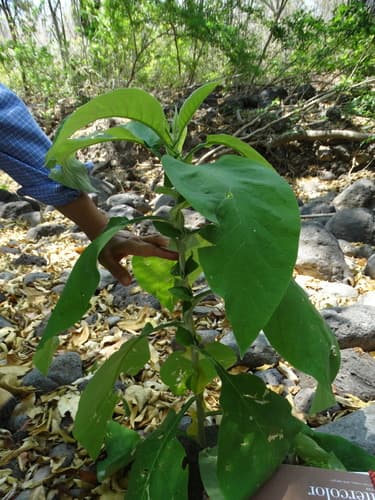
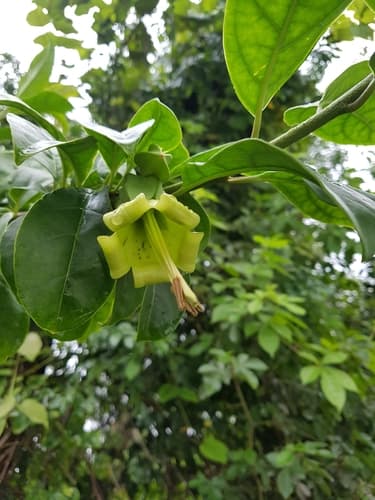
This plant is a shrub or small tree characterized by its large, simple, ovate, glossy green leaves. It produces distinctive greenish-yellow, trumpet-shaped flowers that hang downwards, featuring a prominent style and stamens extending from the corolla.