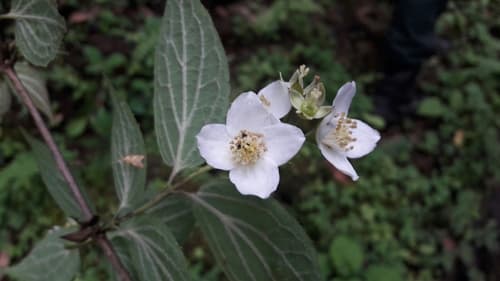
Downy Mock-orange
NameDowny Mock-orange
Scientific NamePhiladelphus pubescens
Common NamesDowny Mock-orange, Hairy Mock-orange
Plant FamilyHydrangeaceae
Natural HabitatNative to southeastern North America, it typically thrives in woodlands, forest edges, rocky slopes, and along stream banks. It is also widely cultivated as an ornamental shrub in gardens.
Parts Usedleaf,bark
Medicinal Actionsanti-inflammatory, astringent
Traditional UsesHistorically, some Native American tribes utilized external washes made from the leaves and bark of certain *Philadelphus* species for minor skin conditions or to help reduce fevers. It is not widely recognized as a significant medicinal plant in Western herbalism and is primarily valued for its ornamental qualities.
Active Constituentsiridoid glycosides, flavonoids, tannins
Preparation Methodsinfusion, decoction
Contraindications & WarningsIngestion of large quantities of the leaves or bark may cause mild gastrointestinal upset due to the presence of certain compounds. This plant is not recommended for internal medicinal use.
Cultivation NotesThis shrub prefers full sun to partial shade and well-drained soil, tolerating various soil types once established. It is relatively drought tolerant and benefits from pruning after flowering to maintain shape and encourage vigorous new growth.
Raritycommon
Description
Downy Mock-orange is a deciduous shrub growing 6-10 feet tall, characterized by arching branches and ovate to elliptic leaves that are often downy on the underside. It produces showy, fragrant white flowers with four petals in late spring to early summer, featuring prominent yellow stamens.