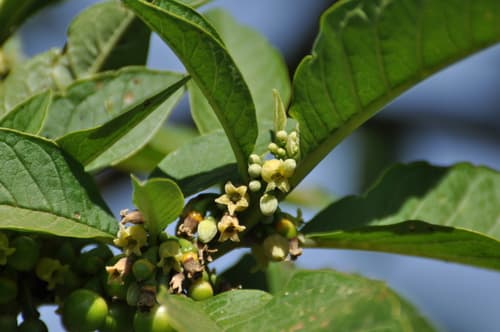
Discopodium penninervium
NameDiscopodium penninervium
Scientific NameDiscopodium penninervium
Common NamesNone widely recognized
Plant FamilyCelastraceae
Natural HabitatNative to tropical East Africa, it thrives in montane forests, forest margins, and woodlands at altitudes typically ranging from 1200 to 3000 meters.
Parts Usedleaf,root,bark
Medicinal Actionsanalgesic, anti-inflammatory, antimicrobial, antioxidant, expectorant
Traditional UsesTraditionally, the root bark is used to treat malaria, stomachaches, and various skin diseases. Leaves are employed for coughs, colds, and fevers. Decoctions of the roots or bark are taken internally, while poultices made from leaves or bark are applied externally for wounds and skin conditions.
Active ConstituentsTriterpenes, Flavonoids, Tannins, Alkaloids
Preparation Methodsinfusion, decoction, poultice
Contraindications & WarningsSpecific contraindications are not well-documented in scientific literature. As with many traditional remedies, caution is advised for pregnant or nursing women, young children, and individuals with pre-existing medical conditions. High doses may lead to adverse effects.
Cultivation NotesThis plant prefers well-drained soils and can tolerate a range of light conditions from full sun to partial shade. It is typically propagated by seeds or cuttings and is adapted to tropical montane climates.
Rarityuncommon
Description
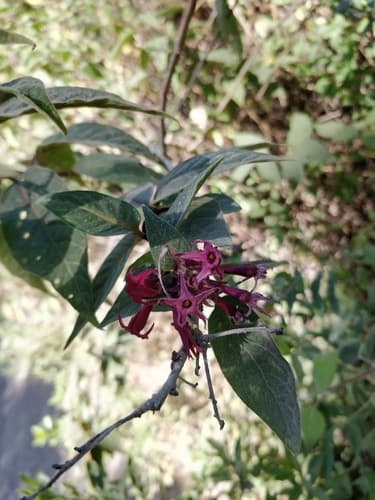
Discopodium penninervium is a small tree or shrub characterized by its simple, alternate leaves with prominent venation. It produces small, greenish-yellow flowers in axillary clusters, which develop into small, globose green fruits that ripen to a darker color.