Cypresshead Groundcherry
NameCypresshead Groundcherry
Scientific NamePhysalis angustifolia
Common NamesCypresshead Groundcherry, Narrowleaf Groundcherry
Plant FamilySolanaceae
Natural HabitatNative to the southeastern United States, particularly Florida and Georgia, it thrives in sandy soils, pine flatwoods, open woodlands, and disturbed areas. It prefers full sun to partial shade and well-drained conditions.
Parts Usedfruit,leaf
Medicinal Actionsanti-inflammatory, antioxidant, diuretic
Traditional UsesWhile specific traditional medicinal uses for *Physalis angustifolia* are not extensively documented, other *Physalis* species have been traditionally used for their anti-inflammatory properties, to treat fevers, urinary tract issues, and as a general tonic. The ripe fruits of many *Physalis* species are consumed for their nutritional value.
Active ConstituentsPhysalins, flavonoids, carotenoids, vitamin C
Preparation Methodsinfusion, decoction, powder
Contraindications & WarningsUnripe fruits of *Physalis* species can contain solanine-like compounds and are considered toxic; only ripe fruits should be consumed. Individuals with allergies to the Solanaceae family should exercise caution. Not recommended for use during pregnancy or lactation without professional advice.
Cultivation NotesPrefers full sun and well-drained, sandy soil. It is relatively drought-tolerant once established and can be propagated by seed. It is a hardy plant that can spread readily in suitable conditions.
Raritycommon
Description
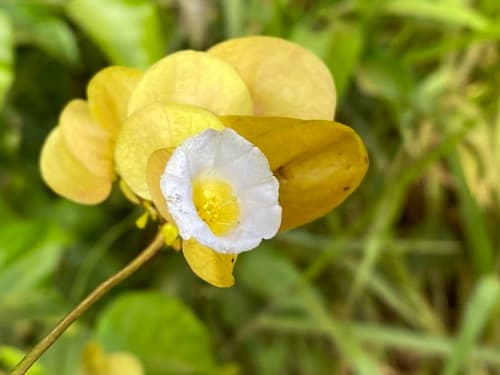
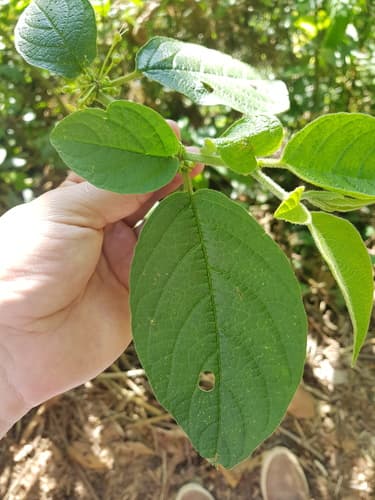
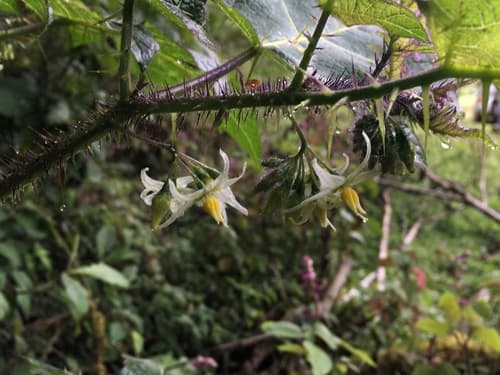
This herbaceous perennial plant features pale yellow, bell-shaped flowers with a distinctive dark brown or purplish-brown star-shaped blotch in the center. Its leaves are typically hairy and somewhat lobed or toothed, and it produces small, edible berries encased within an inflated, papery calyx when ripe.