Cuscuta timorensis
Image: Conveyor Belt (cc0)
NameCuscuta timorensis
Scientific NameCuscuta timorensis
Common NamesDodder, Timor Dodder
Plant FamilyConvolvulaceae
Natural HabitatAn obligate parasitic vine found growing on various host plants in tropical and subtropical regions, often in disturbed areas, fields, and natural ecosystems. The specimen originates from the Usambara Mountains region.
Parts Usedwhole_plant,seed
Medicinal Actionsadaptogen, anti-inflammatory, antioxidant, diuretic
Traditional UsesTraditionally, *Cuscuta* species have been used as a kidney and liver tonic, to improve vision, and to address issues related to reproductive health such as impotence, premature ejaculation, and infertility. It is also employed for conditions like frequent urination and certain digestive complaints.
Active ConstituentsFlavonoids, Lignans, Polysaccharides, Alkaloids
Preparation Methodsinfusion, decoction, powder, tincture
Contraindications & WarningsCaution is advised during pregnancy and lactation. Individuals on blood-thinning medications or with specific medical conditions should consult a healthcare professional before use. Excessive doses may cause digestive upset.
Cultivation NotesCuscuta species are obligate parasites and cannot be cultivated independently. They require a suitable host plant for germination and growth, making them challenging to cultivate intentionally and often considered agricultural weeds.
Raritycommon
Description
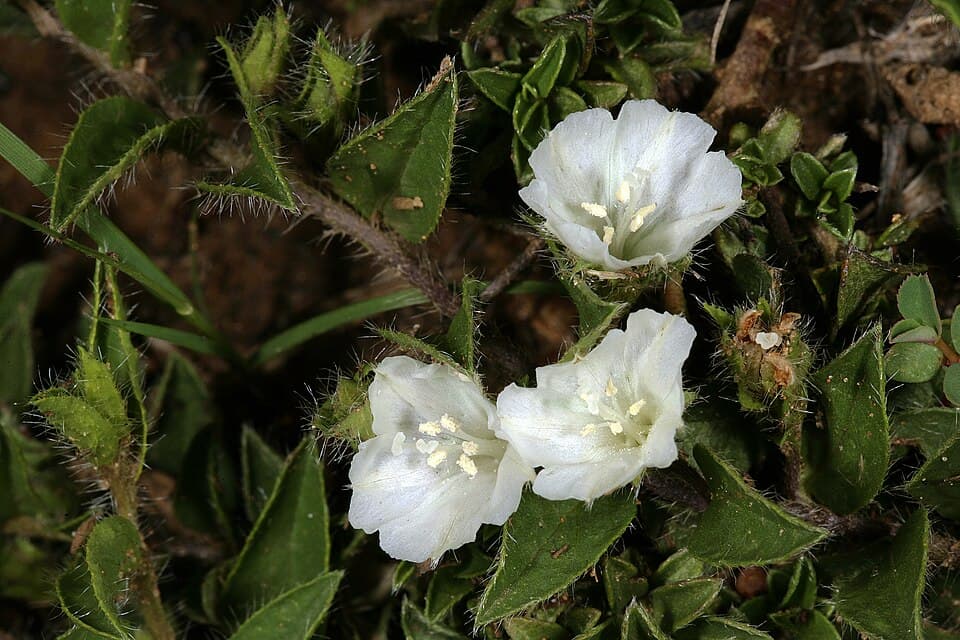
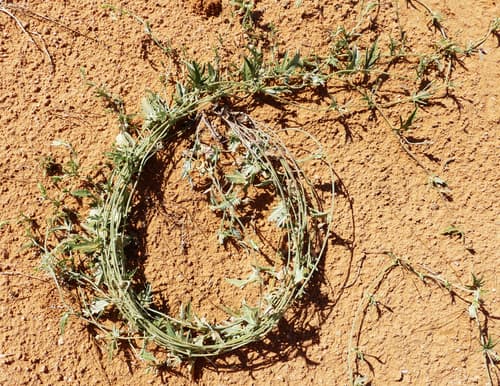
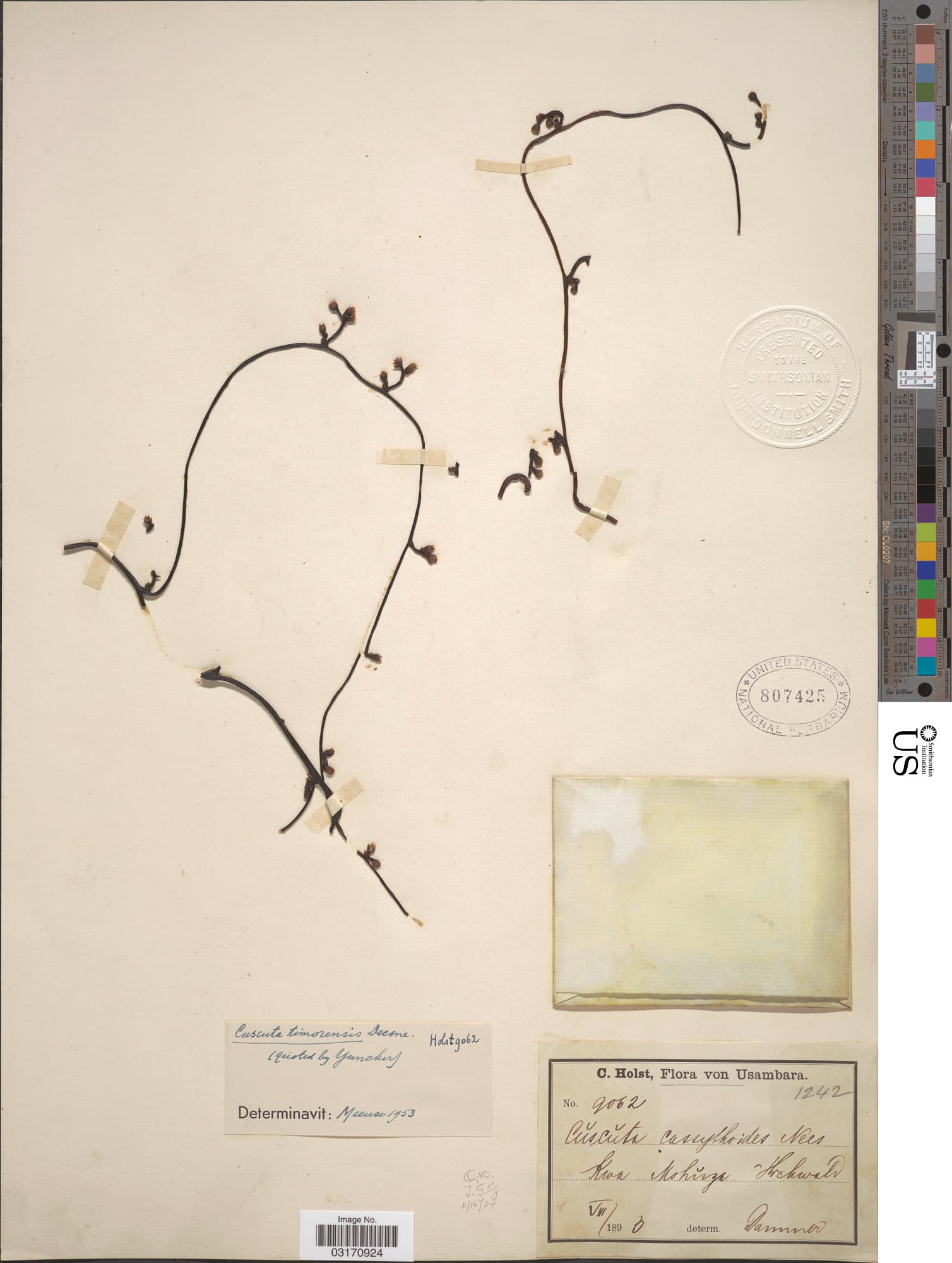
Cuscuta timorensis is a parasitic, herbaceous vine characterized by its slender, twining, leafless stems that attach to host plants. It produces small, inconspicuous flowers in clusters along its thread-like stems.