Solanum elachophyllum
NameSolanum elachophyllum
Scientific NameSolanum elachophyllum
Common NamesDesert Potato Bush, Potato Bush, Bush Potato
Plant FamilySolanaceae
Natural HabitatNative to arid and semi-arid regions of central and western Australia, it thrives in sandy soils, mulga woodlands, and spinifex grasslands.
Parts Usedroot,fruit
Medicinal Actionsanalgesic, anti-inflammatory
Traditional UsesPrimarily known as a significant bush food, Aboriginal people traditionally harvest and roast the tubers (bush potatoes). Ripe fruits are also consumed, though unripe fruits and other parts are generally avoided due to toxicity. Some traditional uses of related Solanum species include topical application for skin ailments or internal use for minor pain, suggesting potential analgesic or anti-inflammatory properties, but specific medicinal uses for S. elachophyllum are less documented than its food value.
Active Constituentssteroidal glycoalkaloids, solasodine, solamargine
Preparation Methodspowder, poultice
Contraindications & WarningsAll parts of the plant, especially unripe fruits, leaves, and stems, contain toxic steroidal glycoalkaloids. Consumption of these parts can cause severe gastrointestinal upset, neurological symptoms, and can be fatal. Ripe fruits should be consumed with caution and in moderation. Pregnant women and children should avoid consumption.
Cultivation NotesThis species is drought-tolerant and prefers full sun with well-drained sandy or loamy soils. It can be propagated from seeds or by dividing the tubers.
Raritycommon
Description
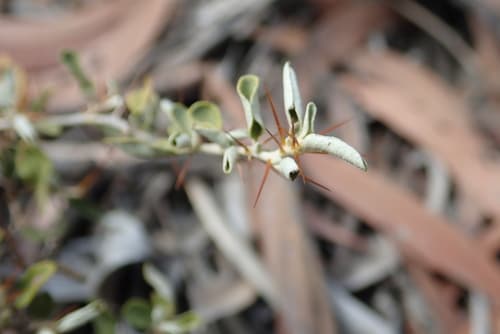
Solanum elachophyllum is a thorny, erect or spreading shrub, typically growing 0.5-2 meters tall, characterized by stems and small, often greyish, stellate-hairy leaves. It produces purple flowers and globular yellow-green fruits, and is notable for its edible underground tubers.