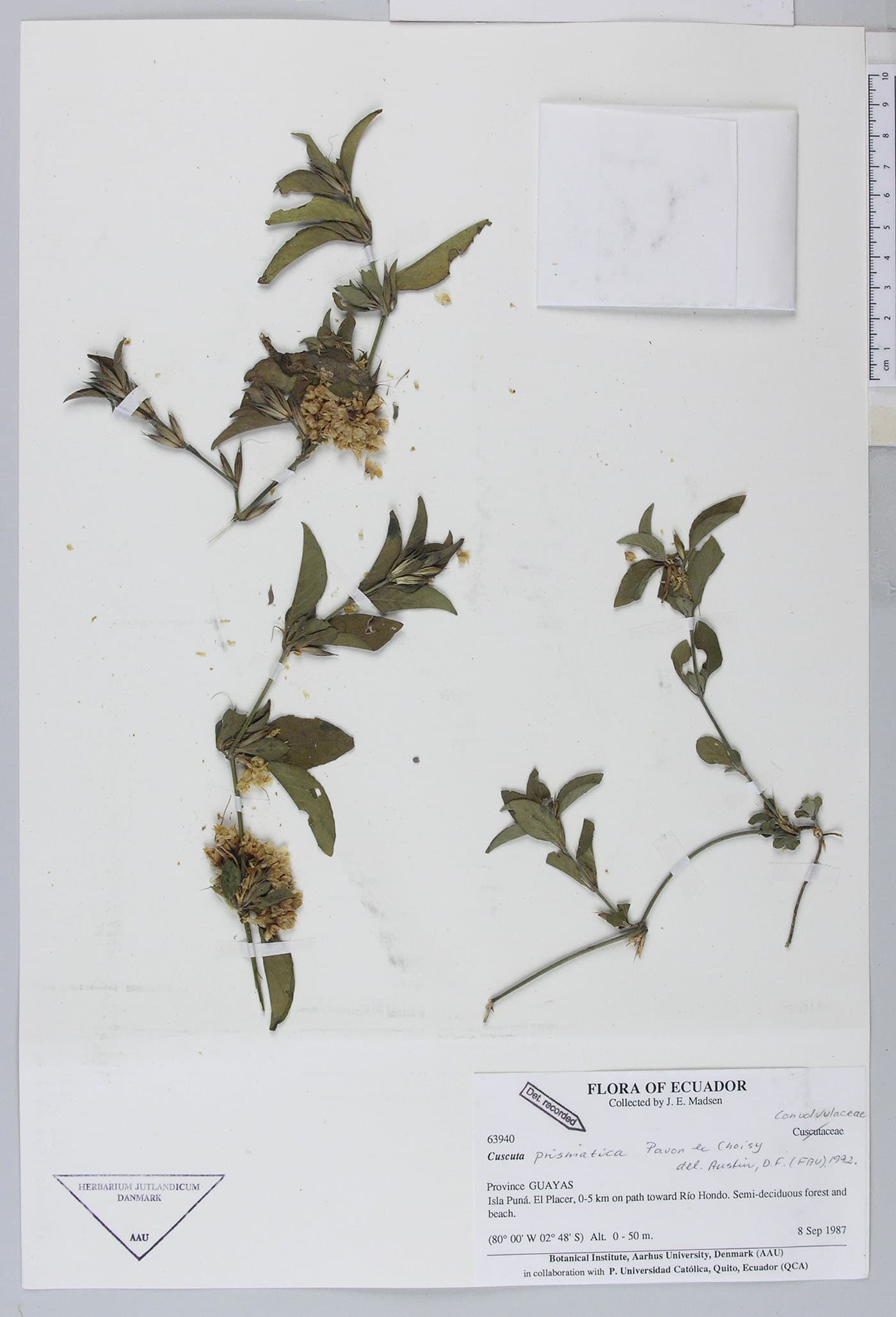
Cuscuta paitana
Image: J.E. Madsen (cc-by)
NameCuscuta paitana
Scientific NameCuscuta paitana
Common NamesDodder, Paita Dodder
Plant FamilyConvolvulaceae
Natural HabitatNative to coastal and arid to semi-arid regions of Peru and Ecuador, Cuscuta paitana parasitizes various herbaceous plants and shrubs. It is often found in disturbed areas, scrublands, and dry forests at low elevations.
Parts Usedwhole_plant
Medicinal Actionsantioxidant, anti-inflammatory, diuretic, antimicrobial
Traditional UsesWhile specific traditional uses for Cuscuta paitana are not extensively documented, other Cuscuta species have been traditionally used to support liver and kidney function, promote urination, and as a general tonic. They are also employed for their potential to improve vision and strengthen bones.
Active ConstituentsFlavonoids, Lignans, Polysaccharides, Alkaloids
Preparation Methodsinfusion, decoction, tincture, powder
Contraindications & WarningsDue to its parasitic nature and potential for various compounds, dodder should be used with caution. It is generally contraindicated in pregnancy and lactation, and may interact with certain medications, particularly anticoagulants.
Cultivation NotesAs a parasitic plant, Cuscuta paitana is not typically cultivated for medicinal purposes. It requires a host plant to grow and thrive, making intentional cultivation challenging and usually relying on wild harvesting.
Rarityuncommon
Description
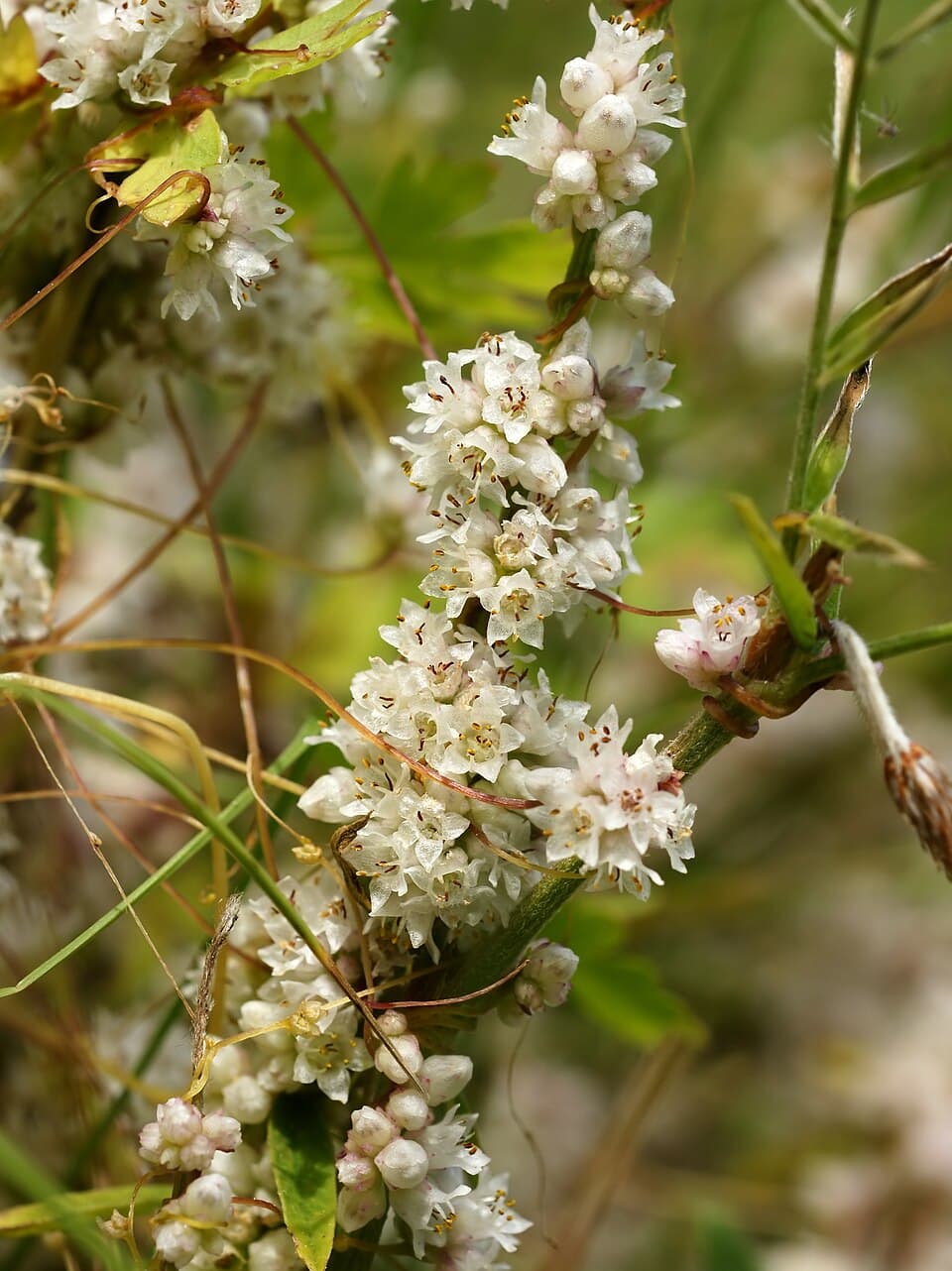
Cuscuta paitana is a parasitic, annual or perennial vine characterized by its slender, yellowish to orange, thread-like stems. It lacks true leaves, instead having minute scales, and attaches to host plants via haustoria to absorb nutrients. Its small, clustered flowers are typically white or cream-colored.