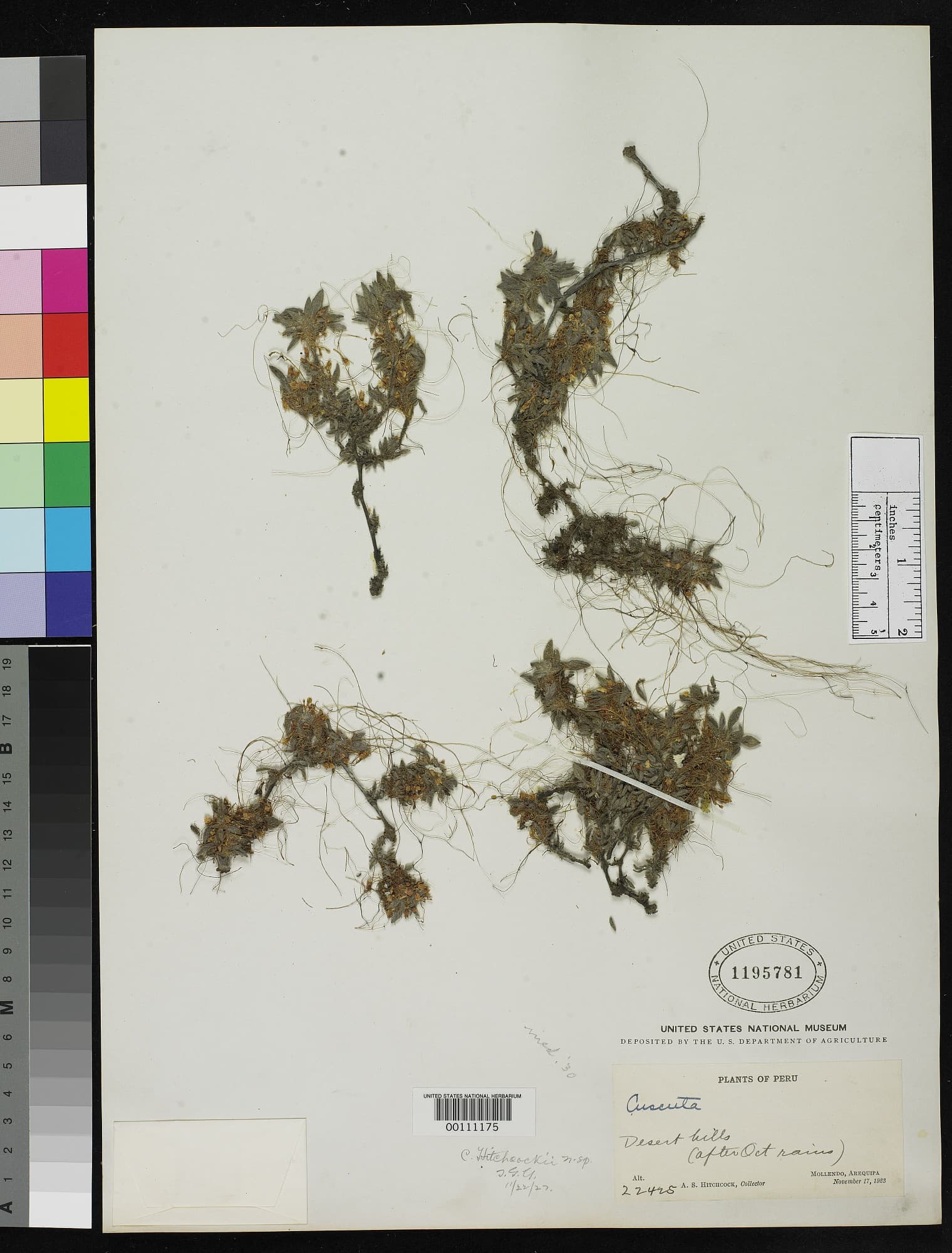
Cuscuta hitchcockii
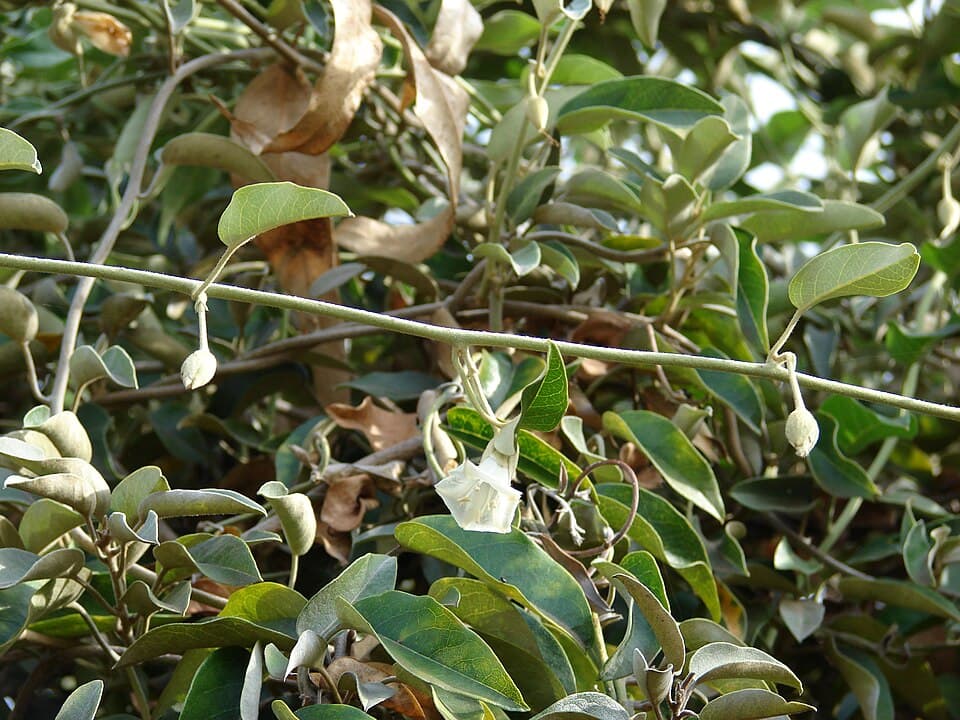
Image: Ingrid P. Lin (cc0)
NameCuscuta hitchcockii
Scientific NameCuscuta hitchcockii Yunck.
Common NamesDodder, Love Vine, Strangleweed
Plant FamilyConvolvulaceae
Natural HabitatThis species is found in arid or semi-arid regions, specifically noted in 'Desert hills' in Arequipa, Peru, often appearing after seasonal rains. It requires a suitable host plant for survival.
Parts Usedwhole_plant,seed
Medicinal Actionsantioxidant, anti-inflammatory, diuretic, astringent
Traditional UsesTraditionally, seeds of Cuscuta species (e.g., Tu Si Zi) are used in Traditional Chinese Medicine to tonify kidney and liver, improve vision, and treat conditions like impotence, premature ejaculation, and frequent urination. Some folk traditions also use the plant for skin conditions and as a general tonic.
Active ConstituentsFlavonoids, Lignans, Polysaccharides, Alkaloids, Saponins
Preparation Methodsinfusion, decoction, powder, tincture
Contraindications & WarningsNot recommended during pregnancy or lactation due to insufficient safety data. May interact with medications due to potential diuretic or hormonal effects. As a parasitic plant, it can be toxic to livestock in large quantities.
Cultivation NotesCuscuta species are parasitic and require a host plant for growth, making them difficult to cultivate intentionally for medicinal harvest. They are often considered agricultural weeds and are typically wild-harvested.
Raritycommon
Description
Cuscuta hitchcockii is a parasitic annual plant characterized by its slender, leafless, thread-like stems that twine around host plants. It produces small, clustered, yellowish flowers and lacks chlorophyll, obtaining nutrients directly from its host.