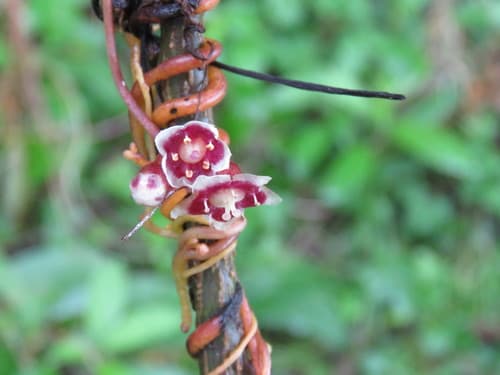
Cuscuta grandiflora
NameCuscuta grandiflora
Scientific NameCuscuta grandiflora
Common NamesGiant Dodder, Large-flowered Dodder
Plant FamilyConvolvulaceae
Natural HabitatFound in various habitats where suitable host plants are present, often in disturbed areas, fields, roadsides, and natural ecosystems, particularly in its native range of South America.
Parts Usedwhole_plant,seed
Medicinal Actionsdiuretic, anti-inflammatory, antioxidant, astringent
Traditional UsesTraditionally, species of Cuscuta have been used in folk medicine for conditions related to the urinary system, liver support, and as a general tonic. It has also been applied externally for skin ailments and wounds due to its astringent properties.
Active Constituentsflavonoids, lignans, coumarins, polysaccharides, saponins
Preparation Methodsinfusion, decoction, powder
Contraindications & WarningsDue to its parasitic nature and potential for toxicity, internal use should be approached with caution and under expert guidance. Pregnant and breastfeeding women, and individuals with specific medical conditions, should avoid use. May interact with certain medications.
Cultivation NotesAs a parasitic plant, Cuscuta grandiflora cannot be cultivated independently. It requires a living host plant to grow and complete its life cycle, making it generally considered a weed rather than a cultivated medicinal herb.
Raritycommon
Description
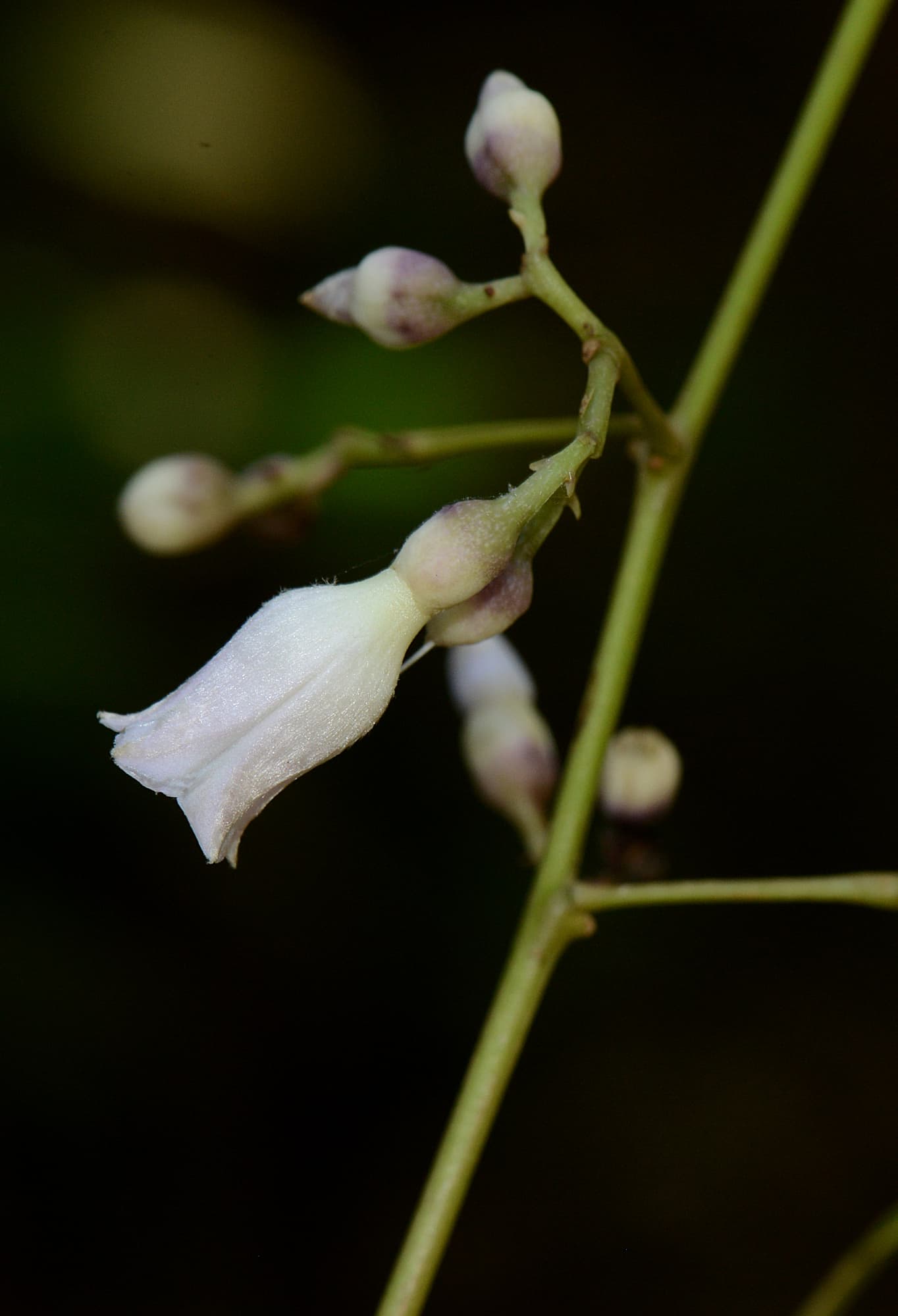
Cuscuta grandiflora is a parasitic annual vine characterized by its thread-like, yellowish-orange stems that twine around host plants. It lacks true leaves and roots, instead forming haustoria to absorb nutrients, and produces clusters of small, bell-shaped flowers, typically white to reddish.