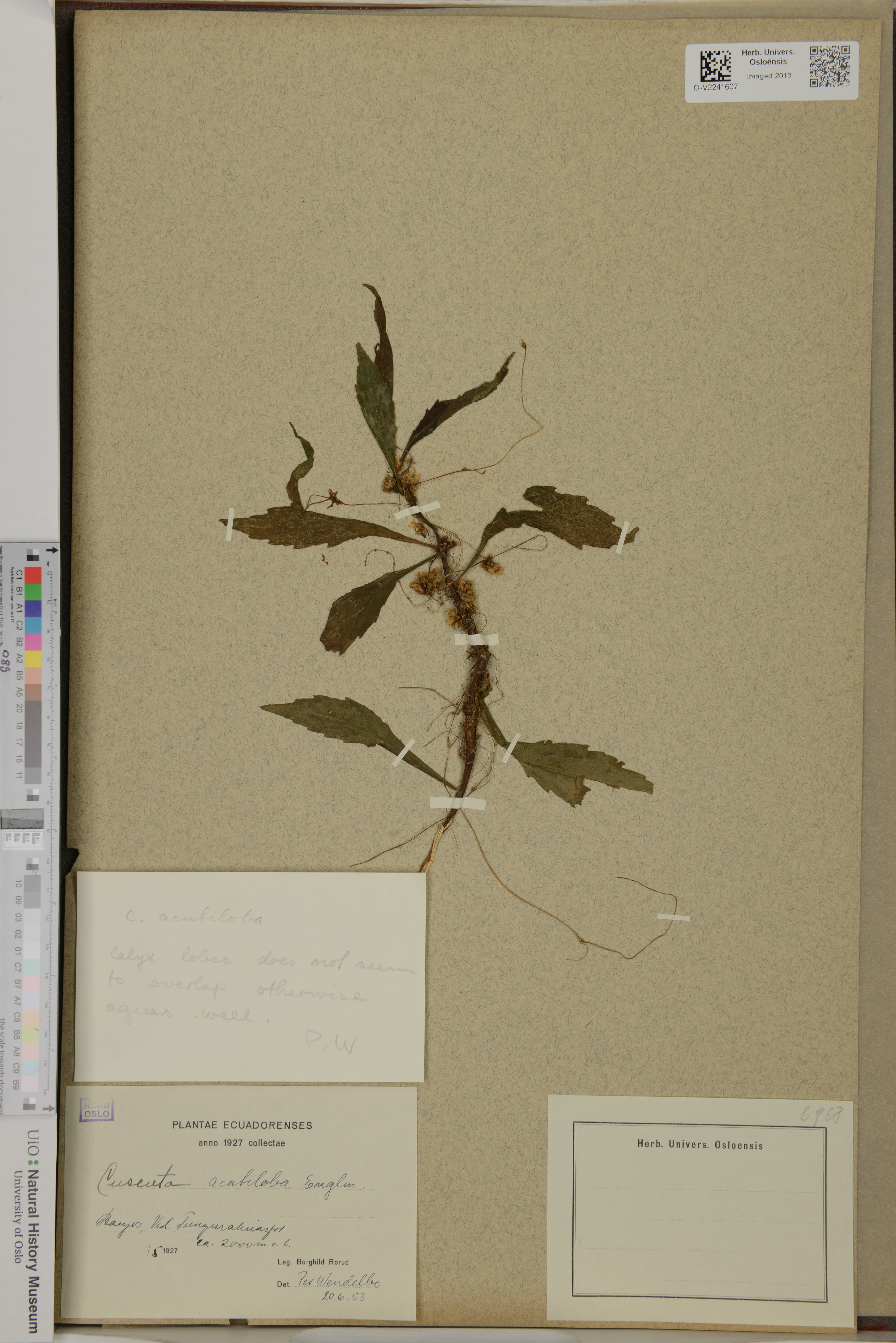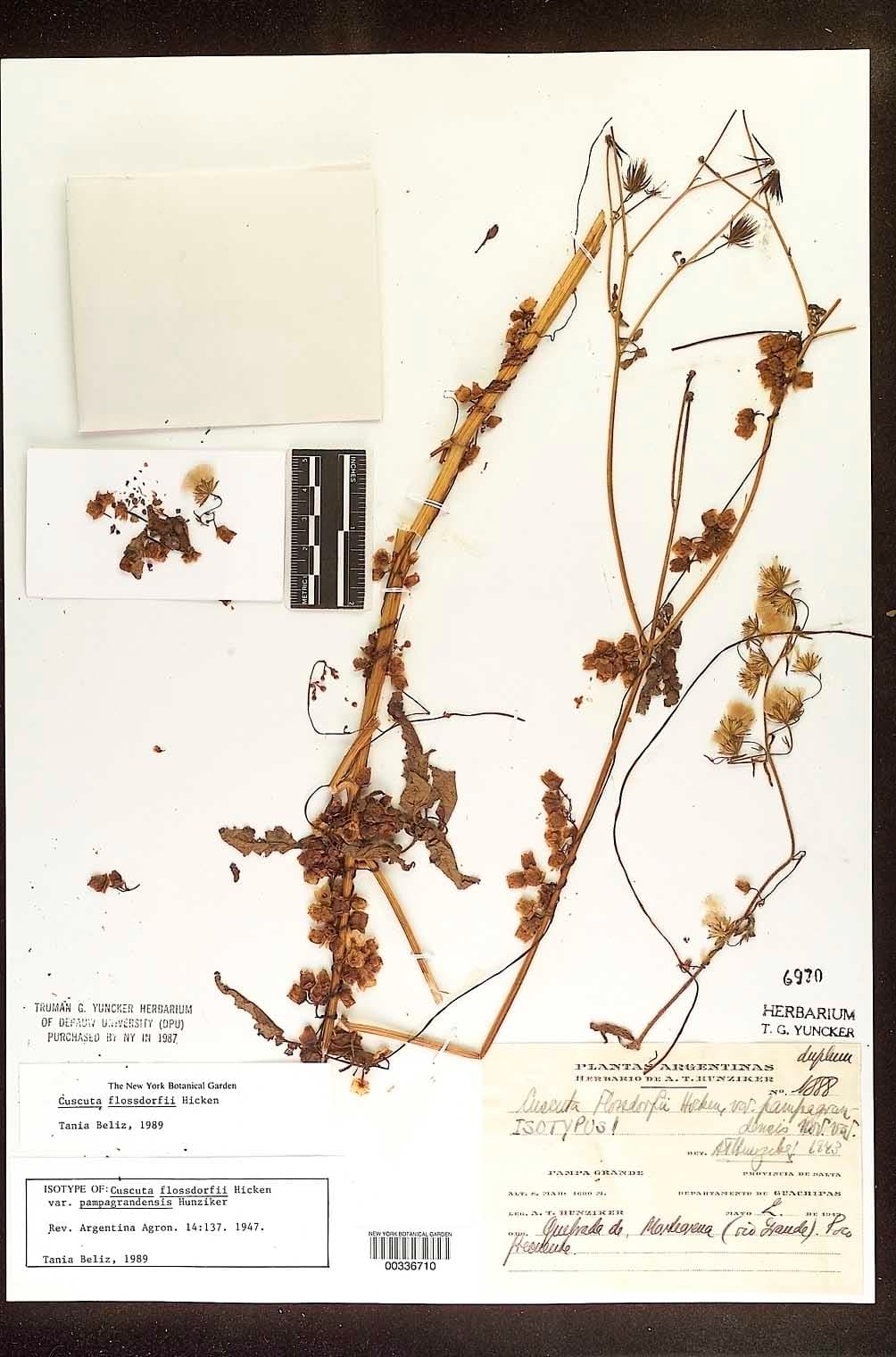
Cuscuta flossdorfii
Image: The New York Botanical Garden (cc-by)
NameCuscuta flossdorfii
Scientific NameCuscuta flossdorfii
Common NamesDodder, Love Vine, Witch's Hair
Plant FamilyConvolvulaceae
Natural HabitatAs a parasitic plant, Cuscuta flossdorfii grows on various herbaceous hosts in grasslands, disturbed areas, and agricultural fields. The specimen indicates its presence in Pampa Grande, Salta, Argentina, suggesting a native range in South American temperate to subtropical regions.
Parts Usedwhole_plant,seed
Medicinal Actionsadaptogen, antioxidant, diuretic, anti-inflammatory
Traditional UsesTraditionally, species of Cuscuta (especially the seeds, known as Tu Si Zi in Traditional Chinese Medicine) have been used to tonify the kidney and liver, improve vision, and treat conditions such as impotence, premature ejaculation, frequent urination, and chronic diarrhea. It is also employed as a general tonic to strengthen bones and tendons.
Active ConstituentsFlavonoids, Lignans, Polysaccharides, Saponins
Preparation Methodsdecoction, powder, infusion, tincture
Contraindications & WarningsGenerally considered safe in traditional doses, but pregnant or breastfeeding women should avoid its use. Caution is advised for individuals on blood-thinning medications or hormone therapies due to potential interactions. Long-term use or high doses should be approached with care.
Cultivation NotesCuscuta species are obligate parasites and cannot be cultivated independently. They require a suitable host plant for germination and growth, making intentional cultivation for medicinal purposes impractical. It is often considered an agricultural weed.
Rarityuncommon
Description
Cuscuta flossdorfii is an obligate parasitic annual vine, characterized by its slender, leafless, yellowish-brown stems that twine tightly around host plants. It lacks chlorophyll, obtaining all nutrients from its host, and produces small, clustered flowers that develop into small, capsular fruits containing seeds.