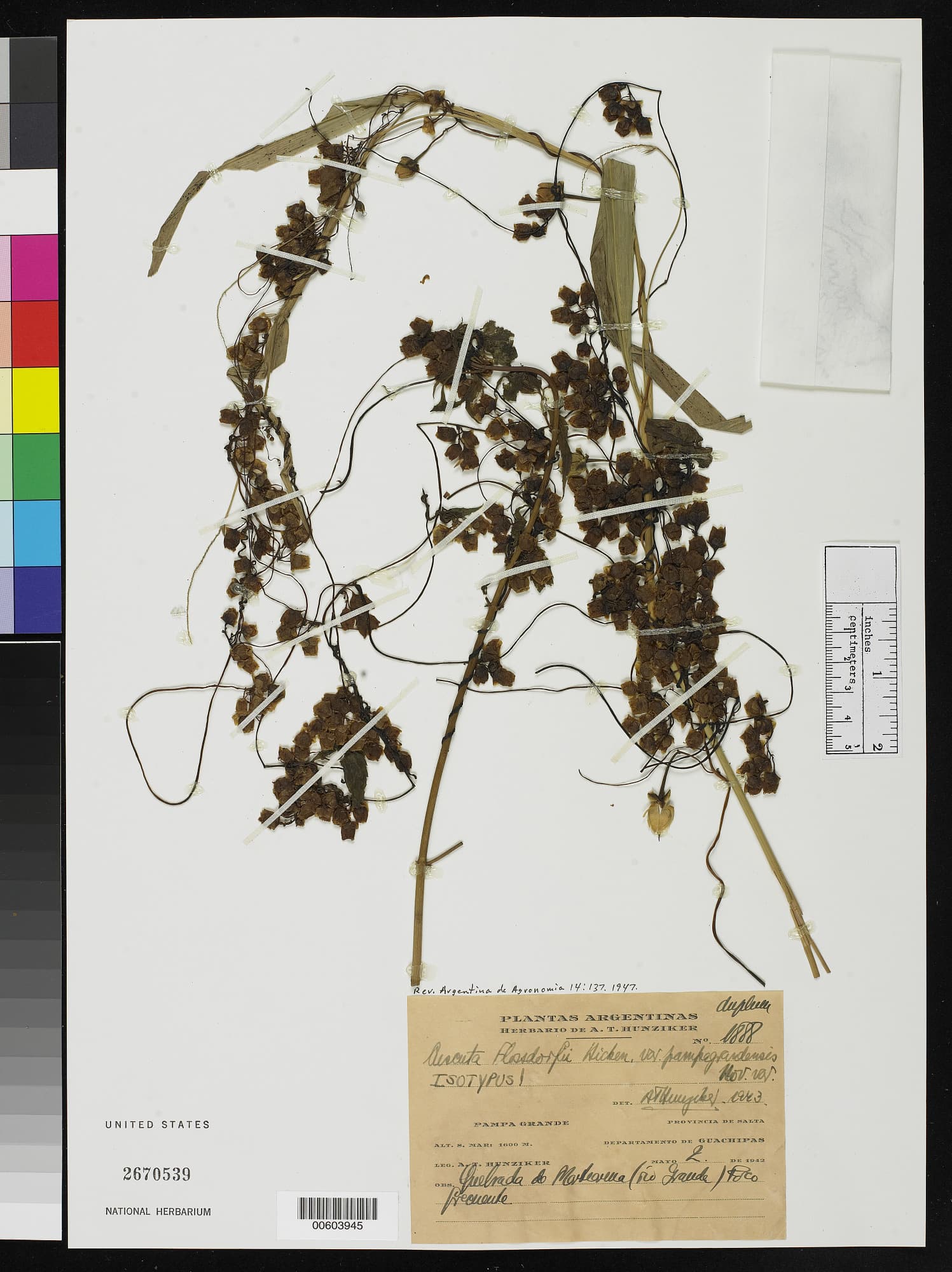
Cuscuta flossdorfii
Image: Ingrid P. Lin (cc0)
NameCuscuta flossdorfii
Scientific NameCuscuta flossdorfii
Common NamesDodder, Love Vine, Strangleweed
Plant FamilyConvolvulaceae
Natural HabitatThis species is found in South America, specifically noted in the metadata from Pampa Grande, Salta Province, Argentina, at an altitude of 1600m in a quebrada (ravine) environment. As a parasitic plant, it grows on various host plants in these regions.
Parts Usedwhole_plant,seed
Medicinal Actionsadaptogen, anti-inflammatory, antioxidant, diuretic
Traditional UsesTraditionally, various Cuscuta species, particularly their seeds (known as Tu Si Zi in Traditional Chinese Medicine), are used as a kidney and liver tonic. They are employed to improve vision, strengthen bones, and address issues like urinary problems, impotence, and premature ejaculation. The plant is also used for its general tonic and anti-inflammatory properties.
Active Constituentsflavonoids, lignans, polysaccharides, saponins
Preparation Methodsinfusion, decoction, powder
Contraindications & WarningsContraindicated during pregnancy and lactation. Individuals with qi deficiency or excessive urination should use with caution. May interact with certain medications due to its diuretic effects.
Cultivation NotesAs an obligate parasitic plant, Cuscuta flossdorfii cannot be cultivated independently. It requires a suitable host plant to germinate and grow, making controlled cultivation challenging and generally not practiced for medicinal purposes.
Raritycommon
Description
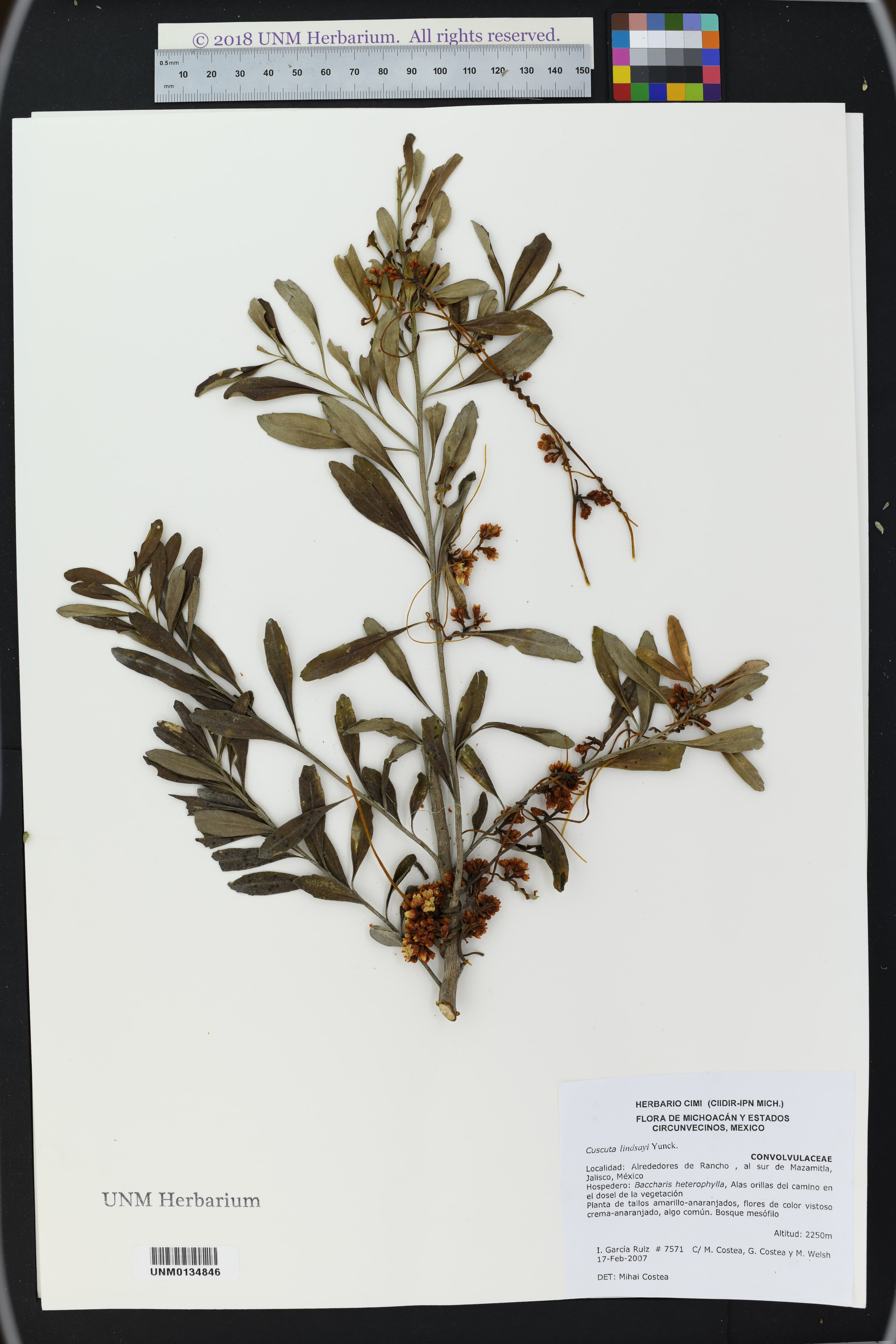
Cuscuta flossdorfii is an obligate parasitic vine characterized by its slender, twining, yellowish to reddish stems that lack true leaves and chlorophyll. It attaches to host plants via haustoria to absorb nutrients. The plant produces clusters of small, inconspicuous flowers and fruits along its stems.