Cuscuta cozumeliensis
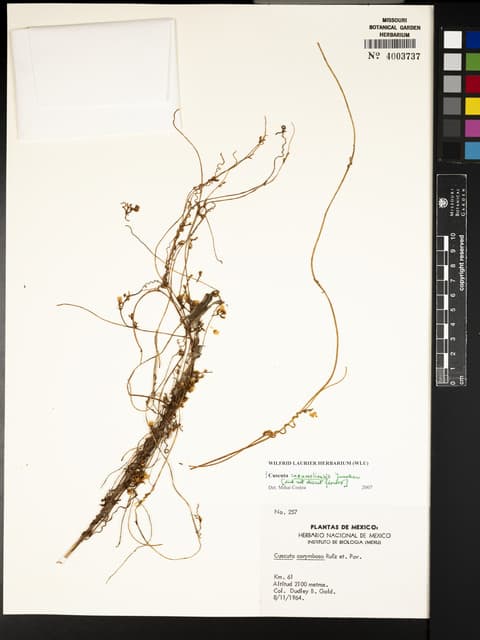
Image: MBG (cc-by-nc)
NameCuscuta cozumeliensis
Scientific NameCuscuta cozumeliensis
Common NamesDodder, Love Vine, Strangleweed
Plant FamilyConvolvulaceae
Natural HabitatAs a parasitic plant, Cuscuta cozumeliensis grows on various host plants in diverse environments. The specimen label indicates it was found at an altitude of 2100 meters in Mexico.
Parts Usedwhole_plant,seed
Medicinal Actionsadaptogen, antioxidant, anti-inflammatory, diuretic
Traditional UsesWhile specific traditional uses for Cuscuta cozumeliensis are not widely documented, other species within the Cuscuta genus, particularly C. chinensis and C. japonica, have a long history of use in Traditional Chinese Medicine (TCM). The seeds (Tu Si Zi) are traditionally used as a kidney and liver tonic, to address impotence, premature ejaculation, frequent urination, blurred vision, and chronic diarrhea.
Active Constituentsflavonoids, lignans, polysaccharides, coumarins
Preparation Methodsinfusion, decoction, powder, tincture
Contraindications & WarningsPregnancy, lactation, individuals with yin deficiency with heat signs, or those with constipation. Potential interactions with blood thinners or diabetes medications should be considered.
Cultivation NotesAs a parasitic plant, Cuscuta cozumeliensis is not typically cultivated independently. It requires a host plant to grow and thrive, making traditional cultivation methods impractical.
Rarityuncommon
Description
Cuscuta cozumeliensis is a parasitic vine characterized by its slender, leafless, yellowish-orange or reddish twining stems. It attaches to host plants via haustoria to absorb nutrients, producing small, often whitish or yellowish flowers in clusters along its stems.