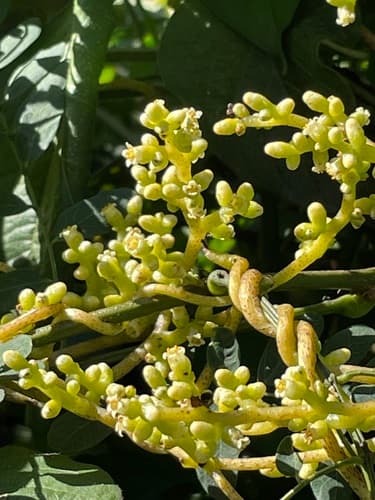
Cuscuta cassytoides
NameCuscuta cassytoides
Scientific NameCuscuta cassytoides
Common NamesDodder, African Dodder, Love Vine
Plant FamilyConvolvulaceae
Natural HabitatThis parasitic plant is found growing on a wide range of host plants in various habitats, including grasslands, disturbed areas, and along forest edges, particularly in tropical and subtropical regions of Africa.
Parts Usedwhole_plant,seed
Medicinal Actionsdiuretic, antioxidant, anti-inflammatory, adaptogen
Traditional UsesTraditionally, Cuscuta cassytoides has been used in African herbal medicine for conditions related to the liver, kidneys, and urinary tract. It is also employed as a general tonic, for fertility issues, and to treat various inflammatory conditions.
Active ConstituentsFlavonoids, Lignans, Polysaccharides, Alkaloids
Preparation Methodsinfusion, decoction, powder
Contraindications & WarningsDue to its parasitic nature and potential for toxicity, caution is advised. Not recommended for pregnant or breastfeeding women. May interact with certain medications, especially those affecting liver or kidney function.
Cultivation NotesAs an obligate parasitic plant, Cuscuta cassytoides cannot be cultivated independently. It requires a suitable host plant to grow and thrive, making intentional cultivation challenging outside of specific research or propagation efforts.
Raritycommon
Description
Cuscuta cassytoides is a parasitic, leafless vine characterized by its yellowish, thread-like stems that twine tightly around host plants. It produces dense clusters of small, pale yellow to whitish, bell-shaped flowers along its stems.