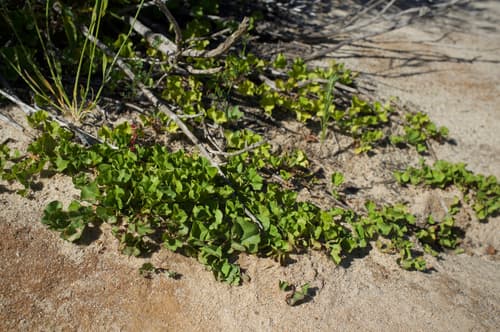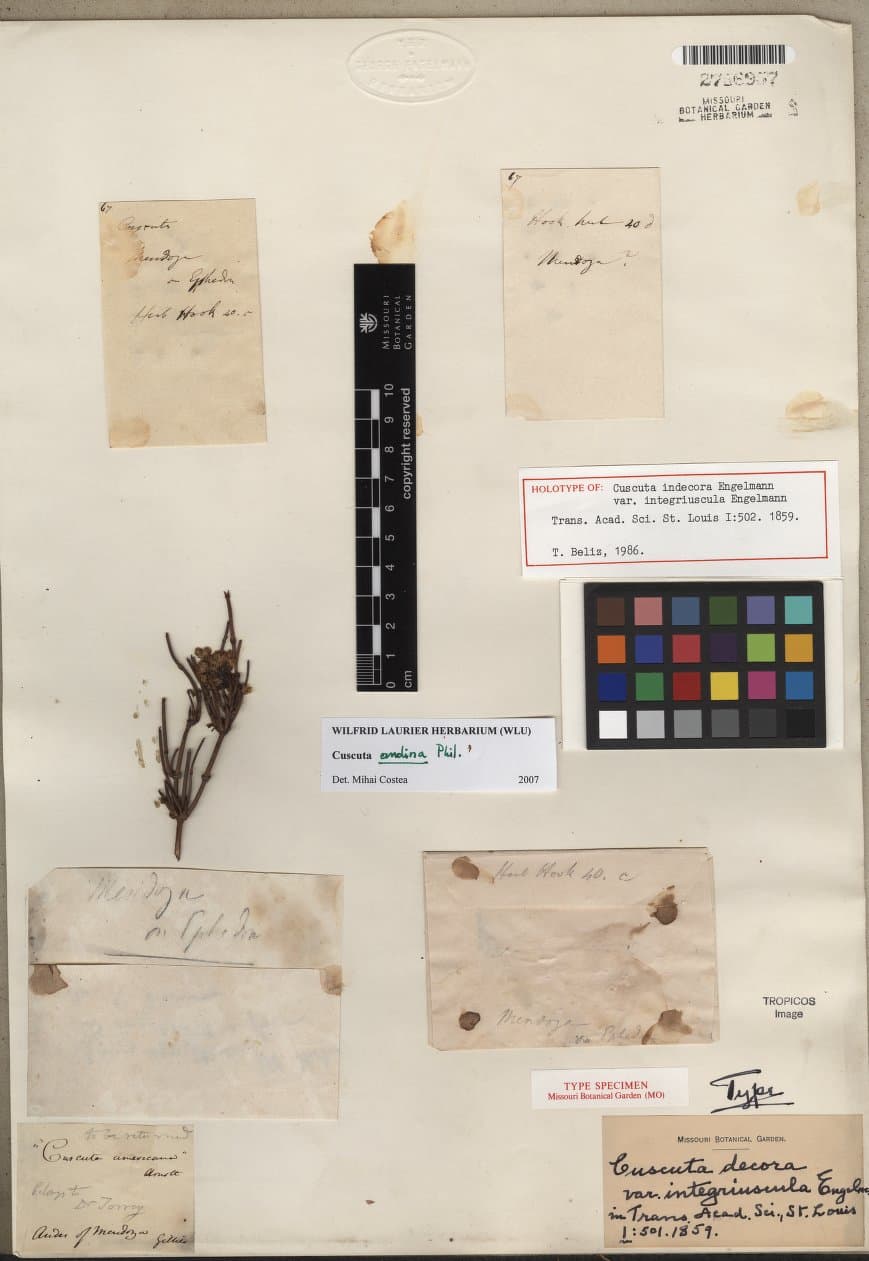
Cuscuta alataloba
Image: Botanical Museum digitization area (cc-by-nc)
NameCuscuta alataloba
Scientific NameCuscuta alataloba
Common NamesDodder, Winged Dodder
Plant FamilyConvolvulaceae
Natural HabitatThis species is found in temperate to subtropical regions, specifically recorded in Tucumán, Argentina, at an altitude of 850m, where it parasitizes various host plants, including Verbena.
Parts Usedwhole_plant,seed
Medicinal Actionsadaptogen, antioxidant, diuretic, anti-inflammatory
Traditional UsesTraditionally, Cuscuta species, particularly their seeds, are used in herbal medicine to tonify kidney yang, benefit the liver, and improve vision. They are employed for conditions such as impotence, premature ejaculation, frequent urination, lower back pain, and blurred vision.
Active ConstituentsFlavonoids, Lignans, Polysaccharides, Saponins
Preparation Methodsinfusion, decoction, powder, tincture
Contraindications & WarningsPregnant individuals should exercise caution. It may interact with conditions involving blood stasis. Due to its parasitic nature, the chemical composition can vary depending on the host plant.
Cultivation NotesCuscuta alataloba is a parasitic plant that cannot be cultivated independently. Its growth is dependent on suitable host plants, which it attaches to and draws nutrients from. It is often considered an agricultural weed.
Rarityuncommon
Description
Cuscuta alataloba is a parasitic, achlorophyllous plant characterized by its thread-like, twining stems that attach to host plants. It produces small, clustered flowers, and its specific epithet "alataloba" suggests distinctive winged lobes on its floral structures.