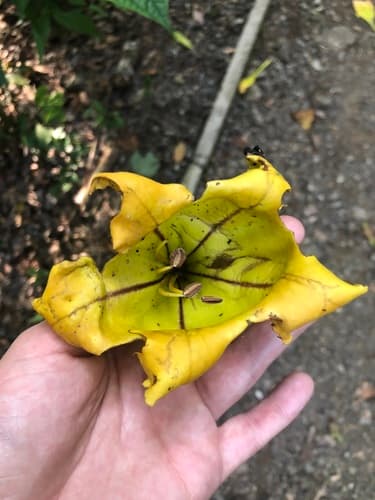
Costa Rican Chalice Vine
NameCosta Rican Chalice Vine
Scientific NameSolandra guttata
Common NamesCosta Rican Chalice Vine, Cup of Gold Vine, Chalice Vine, Trumpet Flower
Plant FamilySolanaceae
Natural HabitatNative to tropical and subtropical regions of Central America, including Costa Rica and Mexico. It thrives in moist, well-drained soils in full sun to partial shade, often found in disturbed areas, forest edges, or cultivated as an ornamental.
Parts Usedflower,leaf,bark
Medicinal Actionssedative, analgesic
Traditional UsesHistorically, various parts of Solandra species have been used by indigenous cultures for their potent psychoactive and narcotic properties in ritualistic contexts, often as a hallucinogen or sedative. It has also been applied externally for pain relief, though internal use is extremely dangerous due to high toxicity.
Active ConstituentsTropane alkaloids, scopolamine, hyoscyamine, atropine, solandrine
Preparation Methodsinfusion, poultice
Contraindications & WarningsEXTREMELY TOXIC. All parts of the plant are poisonous if ingested, containing potent tropane alkaloids that can cause severe anticholinergic poisoning, hallucinations, delirium, coma, and death. Not safe for internal use. External use should be approached with extreme caution due to potential absorption. Interacts with anticholinergic drugs.
Cultivation NotesGrows best in tropical to subtropical climates, requiring full sun to partial shade and well-drained soil. It is a vigorous climber that needs strong support and can be pruned to manage its size. Propagated by cuttings or seeds.
Raritycommon
Description
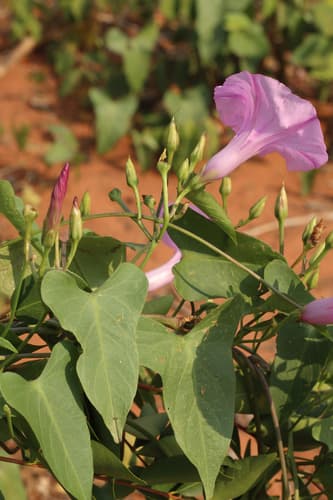
A robust, woody climbing vine native to Central America, characterized by its very large, fragrant, trumpet-shaped yellow flowers. The plant produces large, berry-like fruits, often enclosed by a persistent calyx, containing numerous seeds.