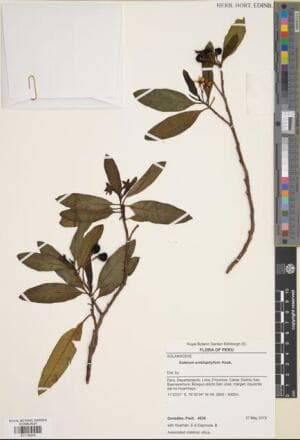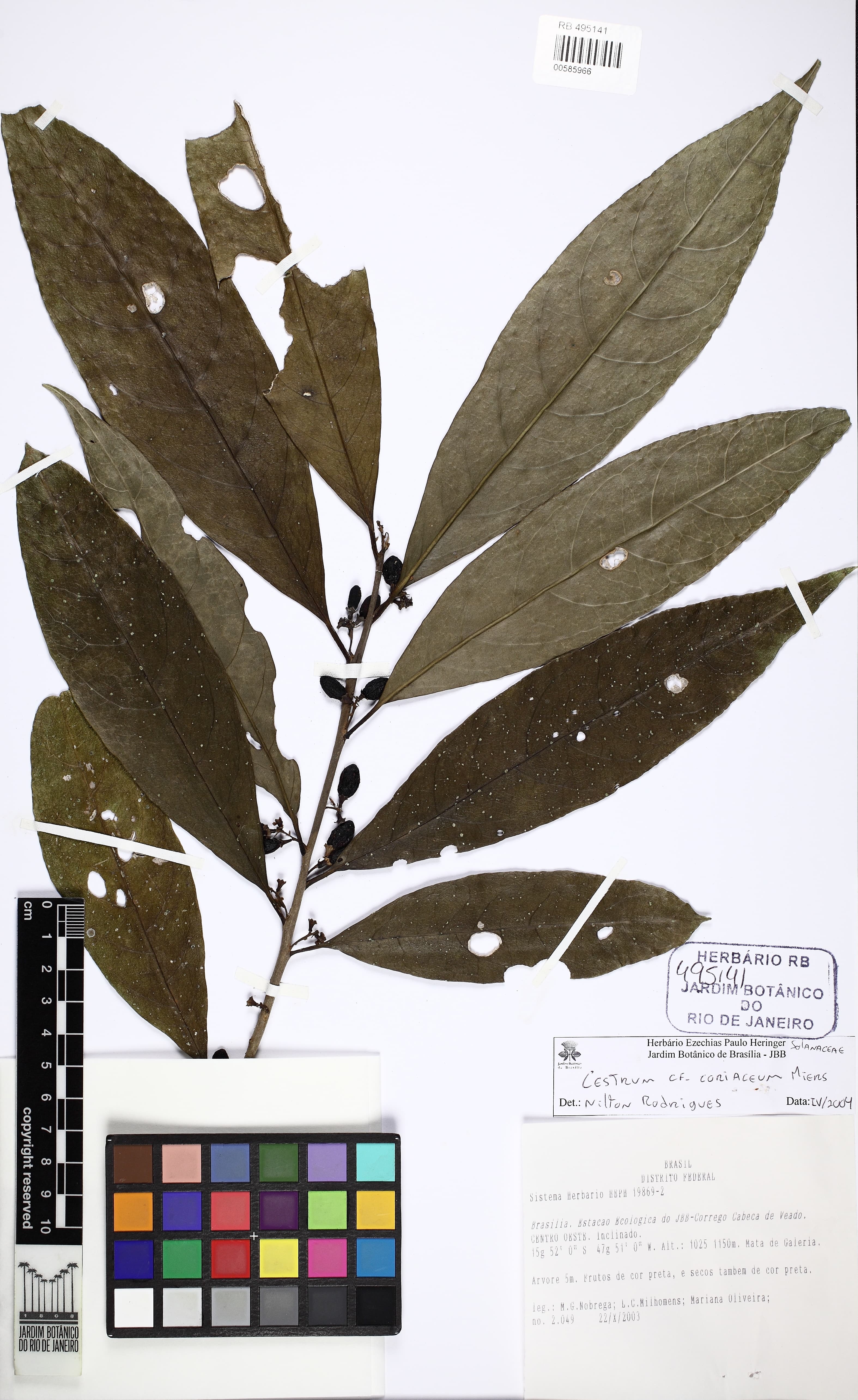
coriaceus cestrum
Image: M.G. Nobrega; L.C. Milhomens & Mariana Oliveira (cc-by)
Namecoriaceus cestrum
Scientific NameCestrum coriaceum Miers
Common NamesCoriaceus Cestrum
Plant FamilySolanaceae
Natural HabitatNative to gallery forests in regions such as the Distrito Federal of Brazil, found at altitudes between 1025 and 1150 meters. It thrives in humid, forested environments.
Parts Usedleaf,fruit
Traditional UsesTraditional medicinal uses for Cestrum coriaceum are not well-documented. The genus Cestrum is generally known for containing toxic compounds, and many species are considered poisonous, especially the leaves and fruits, which can cause severe poisoning.
Active Constituentssteroidal glycoalkaloids, saponins
Contraindications & WarningsAll parts of the plant, particularly the leaves and fruits, are considered toxic due to the presence of steroidal glycoalkaloids and saponins. Ingestion can cause severe poisoning symptoms in humans and livestock, and internal use is strongly contraindicated.
Cultivation NotesTypically found in its native habitat of gallery forests, requiring humid conditions and moderate altitudes. It is not commonly cultivated due to its inherent toxicity.
Rarityuncommon
Description
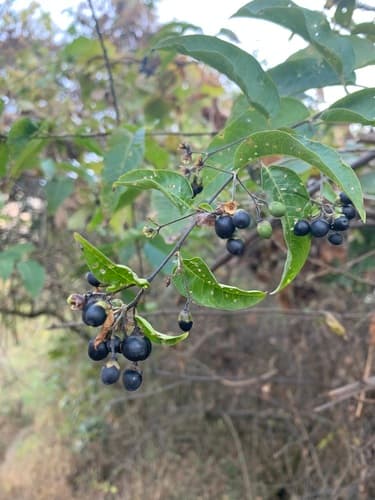
A shrub or small tree, typically growing up to 5 meters tall, characterized by its leathery, ovate to lanceolate leaves. It produces clusters of small, black, berry-like fruits that remain black even when dry.