Convolvulus caput-medusae
NameConvolvulus caput-medusae
Scientific NameConvolvulus caput-medusae
Common NamesMedusa's Bindweed, Corregüela de Medusa
Plant FamilyConvolvulaceae
Natural HabitatArid, rocky, coastal areas and sandy plains of Fuerteventura and Lanzarote in the Canary Islands, often found on volcanic soils. It is highly adapted to xeric conditions.
Parts Usedwhole_plant
Medicinal Actionsantioxidant, anti-inflammatory
Traditional UsesWhile specific traditional medicinal uses for *Convolvulus caput-medusae* are not widely documented, other species within the *Convolvulus* genus have historically been used as strong purgatives due to their resin glycoside content. Some traditional applications for related species include external use for skin conditions, suggesting potential anti-inflammatory or antimicrobial properties.
Active ConstituentsResin glycosides, Flavonoids, Phenolic compounds
Preparation Methodsinfusion, powder
Contraindications & WarningsDue to the presence of resin glycosides common in the *Convolvulus* genus, internal use may cause strong purgative effects, abdominal cramping, and dehydration. Not recommended for pregnant or breastfeeding women, or individuals with gastrointestinal disorders without expert guidance.
Cultivation NotesPrefers full sun and well-draining, sandy or rocky soil. It is highly drought-tolerant and requires minimal watering once established, thriving in arid, Mediterranean-like climates. Propagation is typically by seed or cuttings.
Rarityuncommon
Description
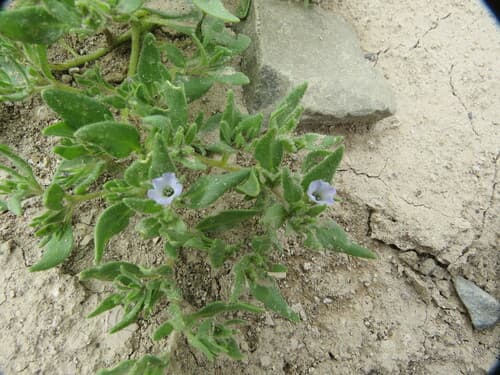
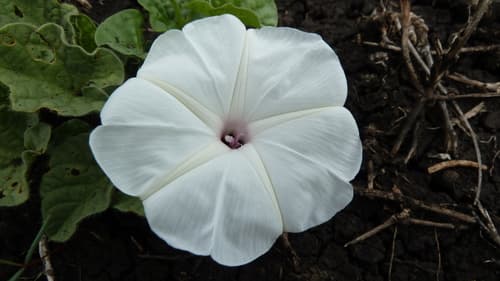
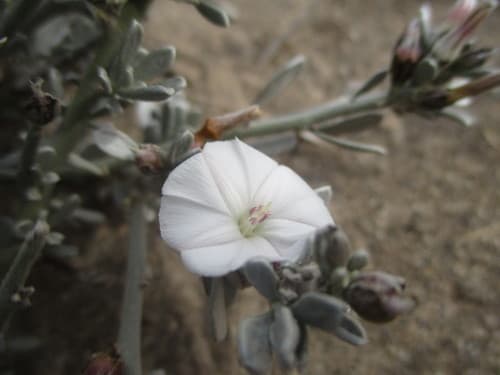
A low-growing, sprawling shrublet endemic to the Canary Islands, characterized by its small, silvery-grey, densely hairy leaves. It produces solitary, white, funnel-shaped flowers with a pinkish throat, forming dense cushions adapted to arid environments.