Coffee
NameCoffee
Scientific NameCoffea arabica
Common NamesCoffee, Arabica Coffee, Coffee Plant
Plant FamilyRubiaceae
Natural HabitatNative to the mountainous regions of Ethiopia and Sudan, it is now widely cultivated in tropical and subtropical climates worldwide, thriving in high altitudes with consistent rainfall and well-drained soil.
Parts Usedseed,leaf
Medicinal Actionsnervine, antioxidant, diuretic
Traditional UsesTraditionally used as a stimulant to combat fatigue, enhance mental alertness, and improve concentration. It has also been used to alleviate headaches and as a mild diuretic. The leaves have been used in some cultures for their stimulating properties.
Active ConstituentsCaffeine, Chlorogenic acids, Diterpenes (cafestol, kahweol)
Preparation Methodsinfusion, powder
Contraindications & WarningsHigh consumption can lead to anxiety, insomnia, heart palpitations, and digestive upset. Should be used with caution by individuals with heart conditions, high blood pressure, anxiety disorders, or during pregnancy and breastfeeding. Can interact with certain medications.
Cultivation NotesPrefers rich, well-drained soil, partial shade, and a consistent warm, humid climate without frost. Requires regular watering and protection from strong winds. High altitudes are often preferred for optimal flavor development in the beans.
Raritycommon
Description
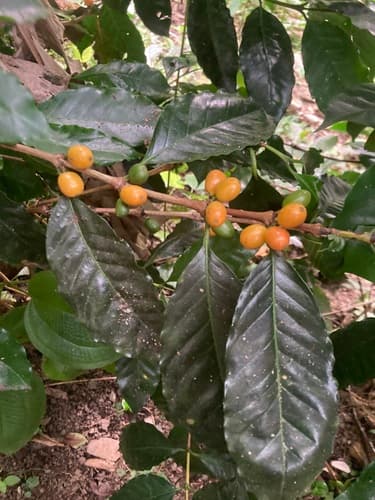
Coffea arabica is an evergreen shrub or small tree, typically growing 3-5 meters tall, with glossy, dark green, opposite leaves. It produces fragrant white flowers that develop into small, round fruits (cherries) which ripen from green to yellow, then red, each typically containing two seeds (coffee beans).