Cochise Dodder
NameCochise Dodder
Scientific NameCuscuta cochiseana
Common NamesCochise Dodder, Dodder
Plant FamilyConvolvulaceae
Natural HabitatThis parasitic plant is found in arid and semi-arid regions, primarily in the southwestern United States (e.g., Cochise County, Arizona) and northern Mexico, where it parasitizes various herbaceous and woody host plants.
Parts Usedwhole_plant
Medicinal Actionsantioxidant, anti-inflammatory, adaptogen
Traditional UsesWhile specific traditional uses for Cochise Dodder are not widely documented, other species within the *Cuscuta* genus (e.g., *C. chinensis*) are highly valued in Traditional Chinese Medicine (TCM). These species are traditionally used to support kidney and liver function, improve vision, strengthen bones, and address issues related to male fertility.
Active Constituentsflavonoids, lignans, polysaccharides, alkaloids
Preparation Methodsinfusion, decoction, powder
Contraindications & WarningsDue to its parasitic nature and potential for varying chemical compositions across species, caution is advised. Pregnant or breastfeeding women should avoid use. May interact with certain medications, and high doses could potentially be toxic.
Cultivation NotesCochise Dodder, like all Dodder species, is an obligate parasite and cannot be cultivated independently. It requires a suitable host plant to germinate, attach, and extract nutrients for survival. It is often considered an agricultural weed.
Rarityuncommon
Description
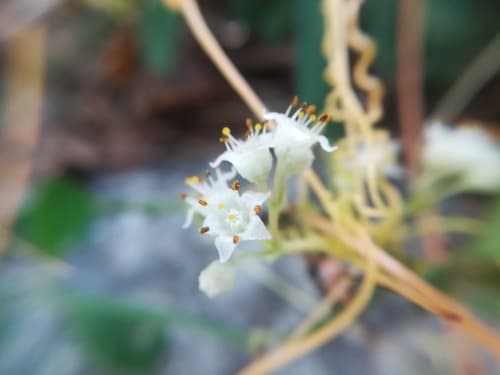
Cochise Dodder is a parasitic annual vine characterized by its slender, leafless, yellowish-orange stems that twine tightly around host plants. It produces small, white, star-shaped flowers in dense clusters along its stems.