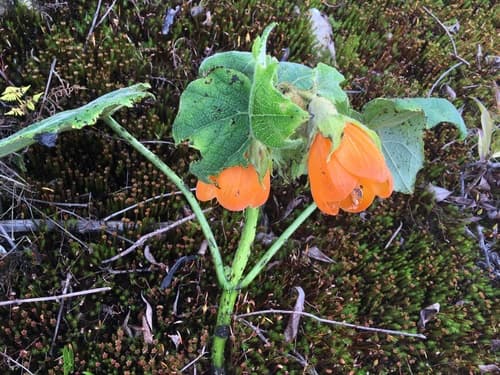
Cleveland's tobacco
NameCleveland's tobacco
Scientific NameNicotiana clevelandii
Common NamesCleveland's tobacco, Desert tobacco, Wild tobacco
Plant FamilySolanaceae
Natural HabitatNative to arid and semi-arid regions of the southwestern United States and northwestern Mexico. It thrives in deserts, scrublands, washes, and disturbed areas.
Parts Usedleaf,flower,whole_plant
Medicinal Actionsanalgesic, anti-inflammatory, antimicrobial
Traditional UsesTraditionally used by Native American tribes for ceremonial purposes and externally for medicinal applications. Poultices of crushed leaves were applied to relieve pain from headaches, toothaches, swellings, and rheumatic joints, as well as for insect bites and skin irritations. Internal use is highly toxic and generally avoided for medicinal purposes.
Active ConstituentsNicotine, Anabasine, Nornicotine
Preparation Methodspowder, poultice, infusion
Contraindications & WarningsEXTREMELY TOXIC when ingested due to high nicotine content, leading to severe poisoning, respiratory paralysis, and death. Not safe for internal consumption. Avoid use during pregnancy, breastfeeding, and in individuals with heart conditions, high blood pressure, or neurological disorders. External use should be approached with caution due to potential skin absorption.
Cultivation NotesPrefers full sun and well-drained, sandy or rocky soils. It is drought-tolerant once established and can be grown from seed in warm climates.
Raritycommon
Description
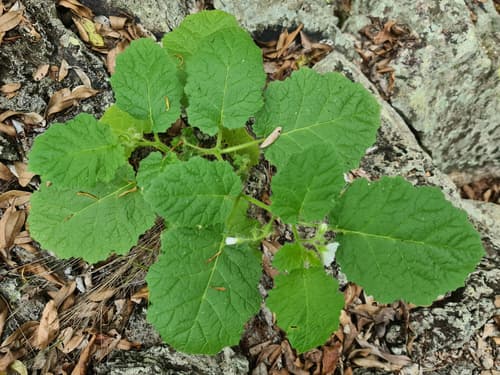
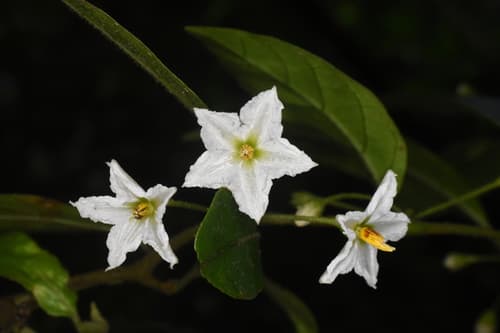
An annual or short-lived perennial herb, typically glandular-hairy, growing up to 1 meter tall. It produces sticky, ovate to lanceolate leaves and terminal clusters of tubular, five-petaled white to greenish-white flowers, often opening at night.