Witheringia maculata
NameWitheringia maculata
Scientific NameWitheringia maculata
Plant FamilySolanaceae
Natural HabitatNative to the Andean regions of South America, typically found in humid forest understories, disturbed areas, and forest edges at moderate elevations.
Parts Usedleaf
Medicinal Actionsanti-inflammatory, antioxidant
Traditional UsesWhile the genus Witheringia belongs to the Solanaceae family, known for various bioactive compounds like withanolides, specific traditional medicinal uses for Witheringia maculata are not widely documented in ethnobotanical literature. Any use would require careful study due to potential toxicity common in the family.
Active ConstituentsWithanolides, Alkaloids
Preparation Methodsinfusion, poultice
Contraindications & WarningsDue to its classification within the Solanaceae family, which includes many toxic species, Witheringia maculata should be considered potentially toxic. It is not recommended for internal use without thorough scientific validation and expert guidance. Pregnant or nursing women, children, and individuals with pre-existing conditions should avoid use.
Cultivation NotesThis species prefers a humid, subtropical to tropical climate with well-drained soil and partial shade. It can be propagated from seeds or cuttings and requires protection from frost.
Rarityuncommon
Description
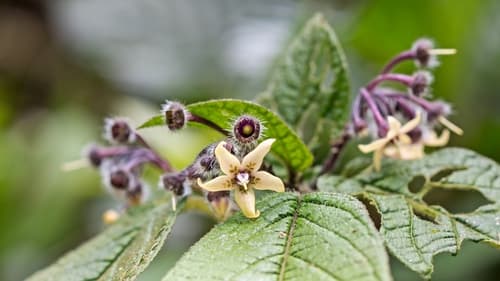
Witheringia maculata is a herbaceous plant or small shrub characterized by its ovate, often pubescent leaves. It produces clusters of star-shaped, pale yellow to cream flowers with a darker central eye, followed by dark purple, fuzzy berries.