Chilean Bellflower
NameChilean Bellflower
Scientific NameNolana paradoxa
Common NamesChilean Bellflower, Chilean Bell
Plant FamilySolanaceae
Natural HabitatNative to the coastal regions of Chile and Peru, where it thrives in sandy soils, dunes, and rocky areas, often found in close proximity to the ocean.
Parts Usedleaf,flower
Medicinal Actionsanalgesic, sedative
Traditional UsesTraditional medicinal uses of *Nolana paradoxa* are not widely documented in mainstream herbalism and are primarily limited to highly localized folk practices. Some *Nolana* species have been anecdotally reported to be used with extreme caution in indigenous traditions for their potent effects, possibly as a topical application for pain or as a sedative, but specific evidence is scarce and potential toxicity is a significant concern.
Active ConstituentsTropane alkaloids
Preparation Methodsinfusion, poultice
Contraindications & WarningsDue to the presence of potentially toxic alkaloids, *Nolana paradoxa* should be considered toxic and is not recommended for internal use. External application should also be approached with extreme caution and under expert guidance. Pregnant or nursing women, children, and individuals with pre-existing health conditions should avoid use. Always consult a qualified healthcare professional before considering any use.
Cultivation NotesThis plant thrives in full sun and requires well-drained, sandy soils, mimicking its native coastal environment. It is drought-tolerant once established and requires minimal watering. Can be propagated from seed.
Raritycommon
Description
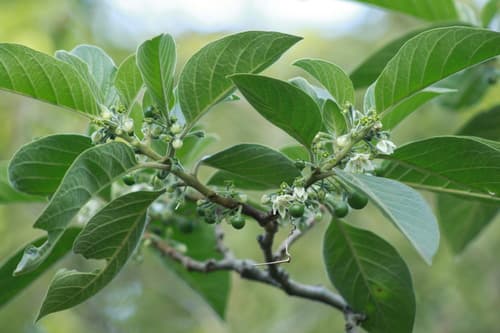
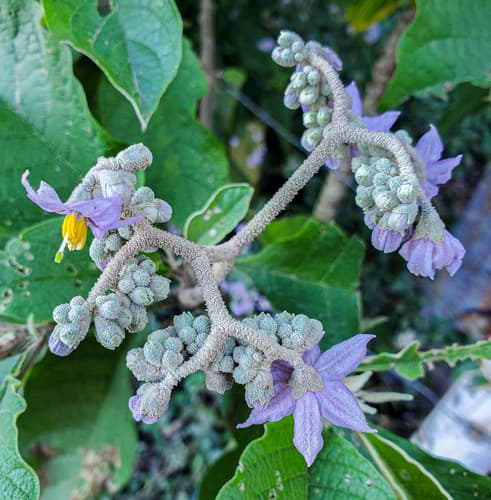
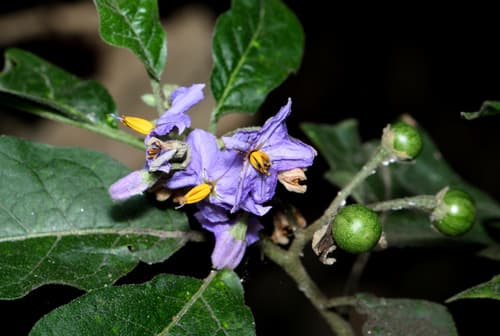
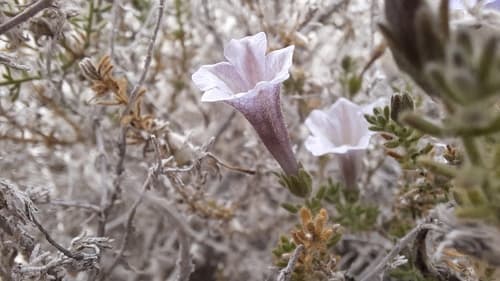
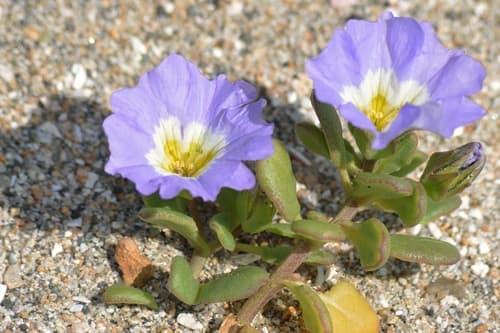
A low-growing, sprawling annual or perennial herb characterized by its succulent, spatulate leaves. It produces showy, bell-shaped flowers, typically lavender-blue with a distinctive white and yellow throat, blooming profusely in its native habitat.