Chamomile
NameChamomile
Scientific NameMatricaria chamomilla
Common NamesGerman Chamomile, Wild Chamomile, Hungarian Chamomile
Plant FamilyAsteraceae
Natural HabitatNative to Europe and Asia, German Chamomile is now widely naturalized across temperate regions. It thrives in disturbed soils, fields, roadsides, and waste areas, preferring full sun.
Parts Usedflower
Medicinal Actionsanti-inflammatory, sedative, nervine, antimicrobial, antioxidant, carminative
Traditional UsesTraditionally, German Chamomile has been used to alleviate anxiety, promote sleep, and soothe digestive upsets such as indigestion, gas, and bloating. It is also applied topically for skin irritations, minor wounds, and as a mild anti-inflammatory agent.
Active ConstituentsChamazulene, Bisabolol, Apigenin, Coumarins, Flavonoids
Preparation Methodsinfusion, tincture, essential oil, poultice, salve
Contraindications & WarningsIndividuals with allergies to plants in the Asteraceae family (e.g., ragweed, marigolds, chrysanthemums) may experience allergic reactions. Chamomile may also interact with blood-thinning medications due to its coumarin content and is generally not recommended in large doses during pregnancy.
Cultivation NotesGerman Chamomile is easy to grow from seed, preferring full sun and well-drained soil. It readily self-seeds and can become naturalized in suitable conditions. Flowers should be harvested when fully open for optimal medicinal potency.
Raritycommon
Description
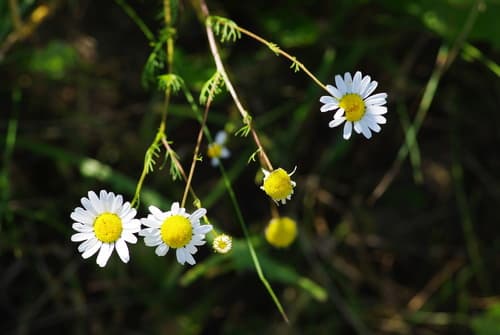
German Chamomile is an annual herbaceous plant growing up to 60 cm tall, characterized by its finely dissected, feathery leaves and small, daisy-like flowers with white ray florets and a prominent yellow, conical center. The flowers emit a distinctive apple-like scent when crushed.