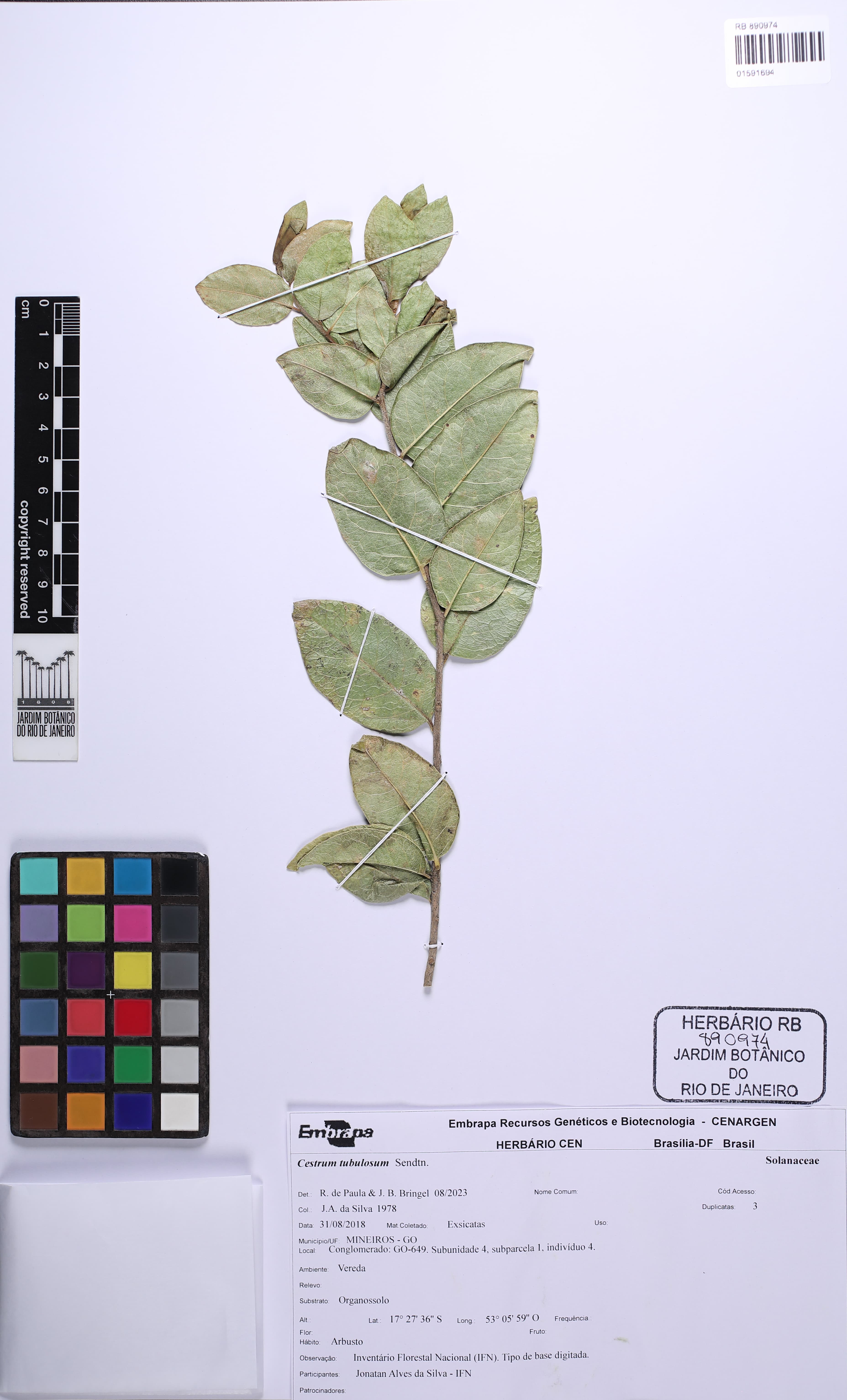
Cestrum tubulosum
Image: J.A. da Silva (cc-by)
NameCestrum tubulosum
Scientific NameCestrum tubulosum Sendtn.
Common NamesN/A
Plant FamilySolanaceae
Natural HabitatThis species is native to Vereda ecosystems, which are specific palm swamps or wetlands within the Cerrado biome of Brazil, particularly noted in Mineiros, Goiás. It thrives in organosols (organic soils), indicating a preference for moist, organic-rich environments.
Parts UsedN/A
Medicinal ActionsN/A
Traditional UsesThere are no widely recognized or safe traditional medicinal uses documented for Cestrum tubulosum. The genus Cestrum is generally known for its toxicity rather than medicinal properties, and ingestion of any part is typically discouraged.
Active ConstituentsSteroidal glycoalkaloids (e.g., solasonine, solamargine, solasodine), Saponins
Preparation MethodsN/A
Contraindications & WarningsAll parts of Cestrum tubulosum, like other species within the Cestrum genus, are considered toxic and should not be ingested. Poisoning can lead to severe gastrointestinal distress, neurological symptoms, and cardiac issues. It is highly toxic to livestock and humans.
Cultivation NotesAs a shrub native to Vereda habitats, Cestrum tubulosum would likely prefer moist, organic-rich soils and a tropical to subtropical climate. It is adapted to wetland or seasonally wet conditions.
Rarityuncommon
Description
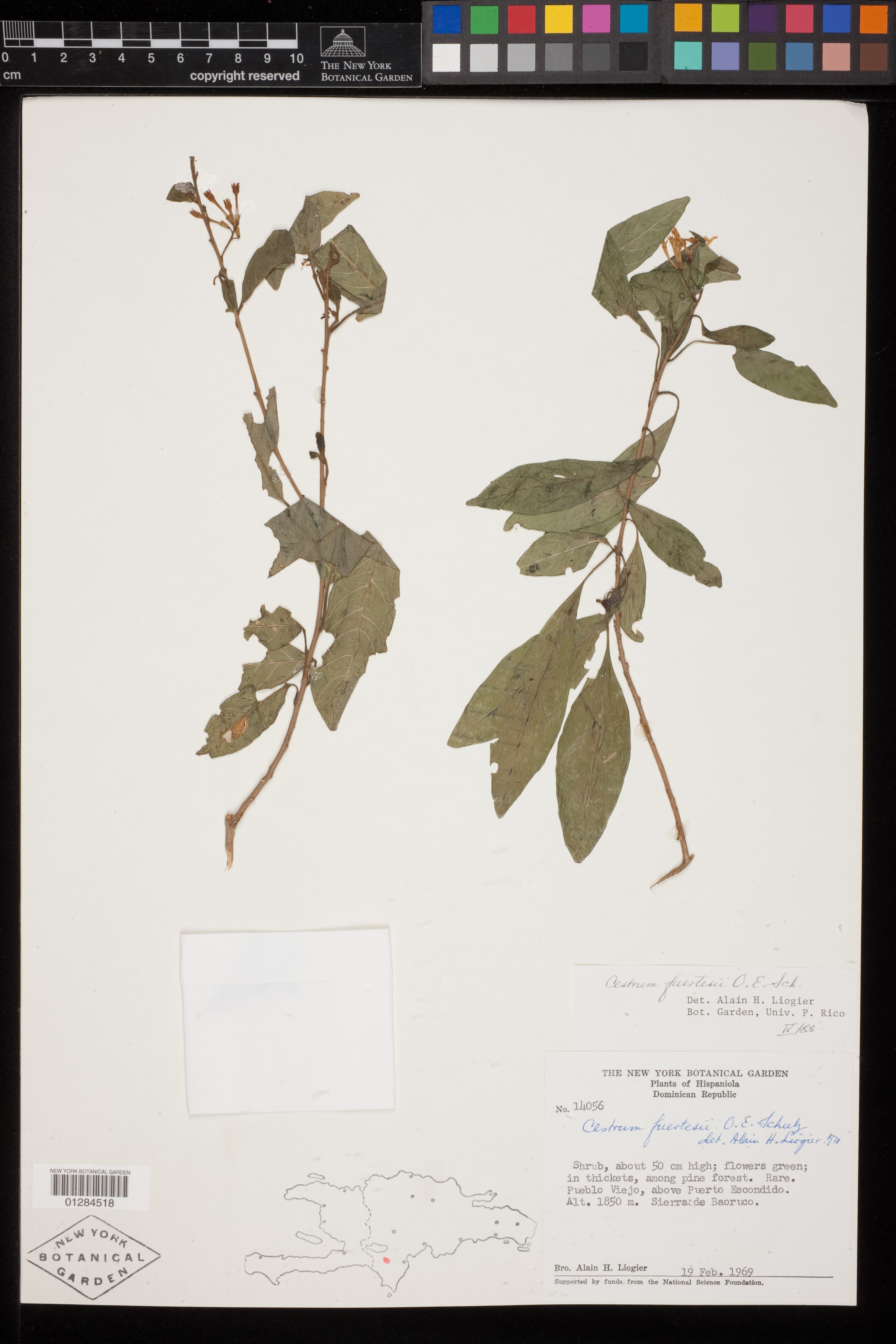
Cestrum tubulosum is a shrub characterized by simple, alternate, entire leaves on woody stems. The leaves are typically ovate to elliptical with visible venation, as observed in the dried herbarium specimen.