Ulmus prunifolia
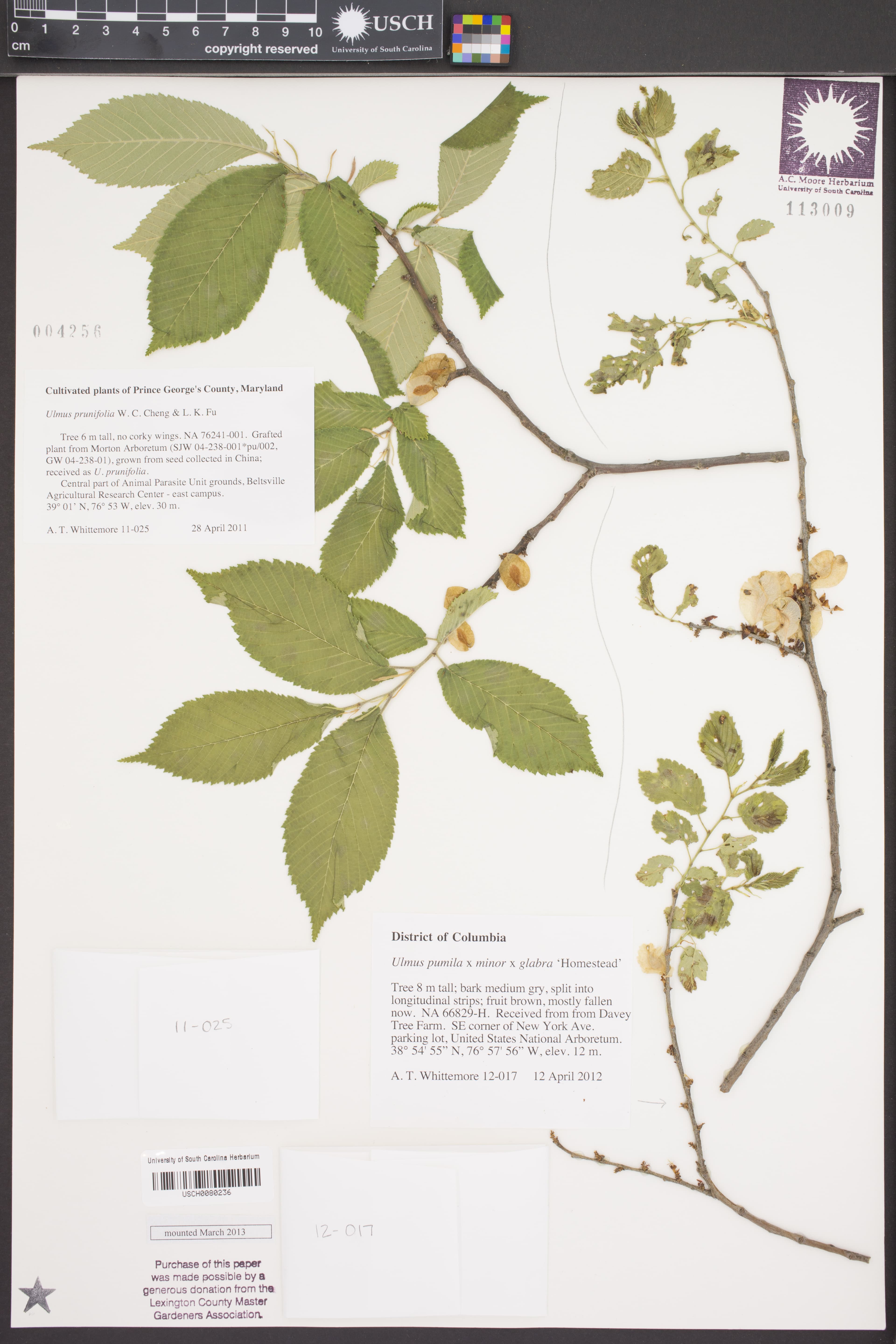
Image: Whittemore, A.T. (cc0)
NameUlmus prunifolia
Scientific NameUlmus prunifolia W.C.Cheng & L.K.Fu
Plant FamilyUlmaceae
Natural HabitatNative to China, where it grows in forests. It is also cultivated in other regions, as indicated by the specimen being grown from seed collected in China.
Parts Usedbark,leaf
Medicinal Actionsdemulcent, anti-inflammatory, astringent
Traditional UsesWhile specific traditional uses for Ulmus prunifolia are not widely documented, other elm species, particularly Ulmus rubra (Slippery Elm), have a long history of use. The inner bark is traditionally used to soothe inflamed mucous membranes, alleviate coughs, sore throats, and digestive complaints such as gastritis and ulcers. It is also applied externally as a poultice for skin irritations and wounds.
Active Constituentsmucilage, tannins, flavonoids
Preparation Methodsinfusion, decoction, powder, poultice
Contraindications & WarningsDue to its high mucilage content, elm bark may interfere with the absorption of other medications if taken at the same time. It is generally considered safe, but caution is advised for individuals on prescription drugs.
Cultivation NotesThis deciduous tree can reach heights of 6 meters and is cultivated from seed. It typically prefers well-drained soil and is adaptable to various temperate climates, originating from its native range in China.
Rarityuncommon
Description
Ulmus prunifolia is a deciduous tree, typically growing to about 6 meters tall, characterized by its simple, alternate, serrated leaves. The tree produces distinctive winged fruits known as samaras.