Cestrum sprucei
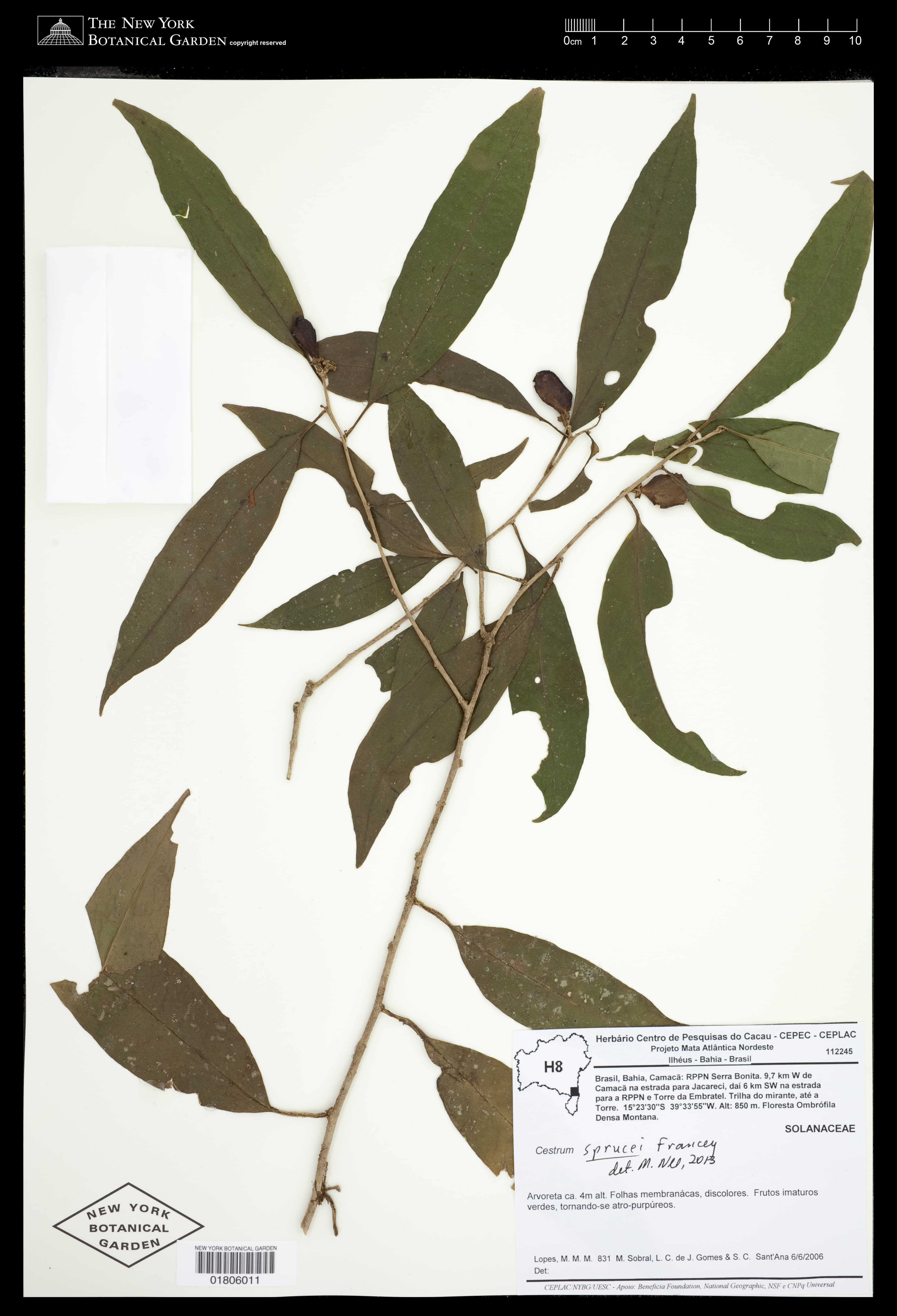
Image: The New York Botanical Garden (cc-by)
NameCestrum sprucei
Scientific NameCestrum sprucei Francey
Plant FamilySolanaceae
Natural HabitatFound in the Dense Montane Ombrophilous Forest (Atlantic Forest biome) at an altitude of 850 meters. The specimen was collected in Bahia, Brazil, specifically within the RPPN Serra Bonita.
Parts Used
Traditional UsesInformation regarding specific traditional medicinal uses for Cestrum sprucei is not readily available. The genus Cestrum is generally known for containing toxic compounds, and internal use is often contraindicated.
Active Constituentssteroidal saponins, alkaloids, glycosides
Contraindications & WarningsThe genus Cestrum is widely recognized for its toxicity due to the presence of various alkaloids and saponins. Ingestion can lead to severe gastrointestinal upset, neurological symptoms, and cardiac issues. Internal use is strongly contraindicated.
Cultivation NotesThis species thrives in montane ombrophilous forests, indicating a preference for humid, subtropical to tropical climates. It likely requires well-drained soil and may prefer partial shade, consistent with its natural high-altitude forest habitat.
Rarityuncommon
Description
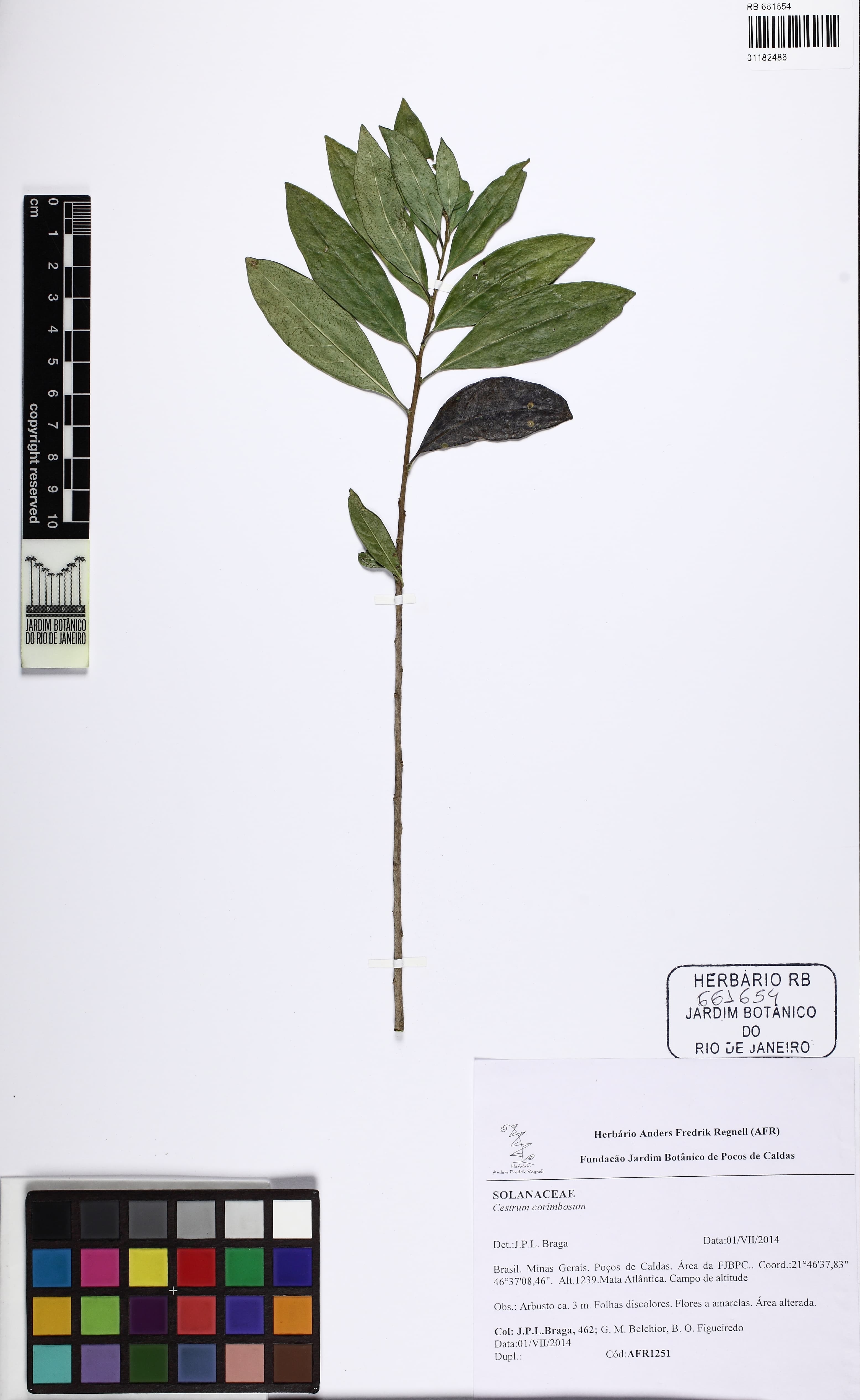
This plant is a shrub or small tree, noted to be approximately 4 meters tall. It features membranous and somewhat discolored leaves, and produces immature fruits that are initially green, maturing to a dark purple hue.