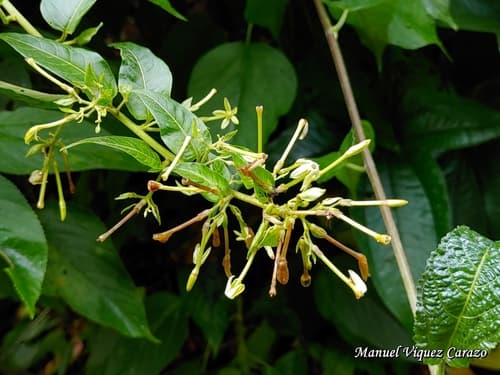
Cestrum reflexum
NameCestrum reflexum
Scientific NameCestrum reflexum
Plant FamilySolanaceae
Natural HabitatNative to tropical and subtropical regions of Central and South America, typically found in disturbed areas, forest edges, and secondary growth.
Parts Usedleaf
Medicinal Actionsanalgesic, anti-inflammatory
Traditional UsesWhile specific, safe traditional medicinal uses for Cestrum reflexum are not widely documented, other species within the Cestrum genus have been traditionally used externally for their purported analgesic and anti-inflammatory properties, such as in poultices for pain or skin conditions. However, all parts of Cestrum species, including C. reflexum, are known to be highly toxic and internal use is extremely dangerous.
Active Constituentssteroidal glycoalkaloids, saponins, solasodine
Preparation Methodspoultice, infusion
Contraindications & WarningsAll parts of Cestrum reflexum are highly toxic and ingestion can be fatal. It contains steroidal glycoalkaloids and saponins which can cause severe gastrointestinal distress, neurological symptoms, and liver damage. Absolutely avoid internal use. External use should also be approached with extreme caution due to potential skin irritation or absorption. Keep away from children and pets.
Cultivation NotesThis plant prefers full sun to partial shade and well-drained soil. It can be grown as an ornamental shrub and is relatively tolerant of various soil types, thriving in warm climates.
Raritycommon
Description
Cestrum reflexum is a shrub or small tree characterized by slender stems and alternate, simple, glossy green leaves. It produces axillary or terminal clusters of elongated, tubular, pale greenish-white to yellowish flowers that open into small lobes at the tip.