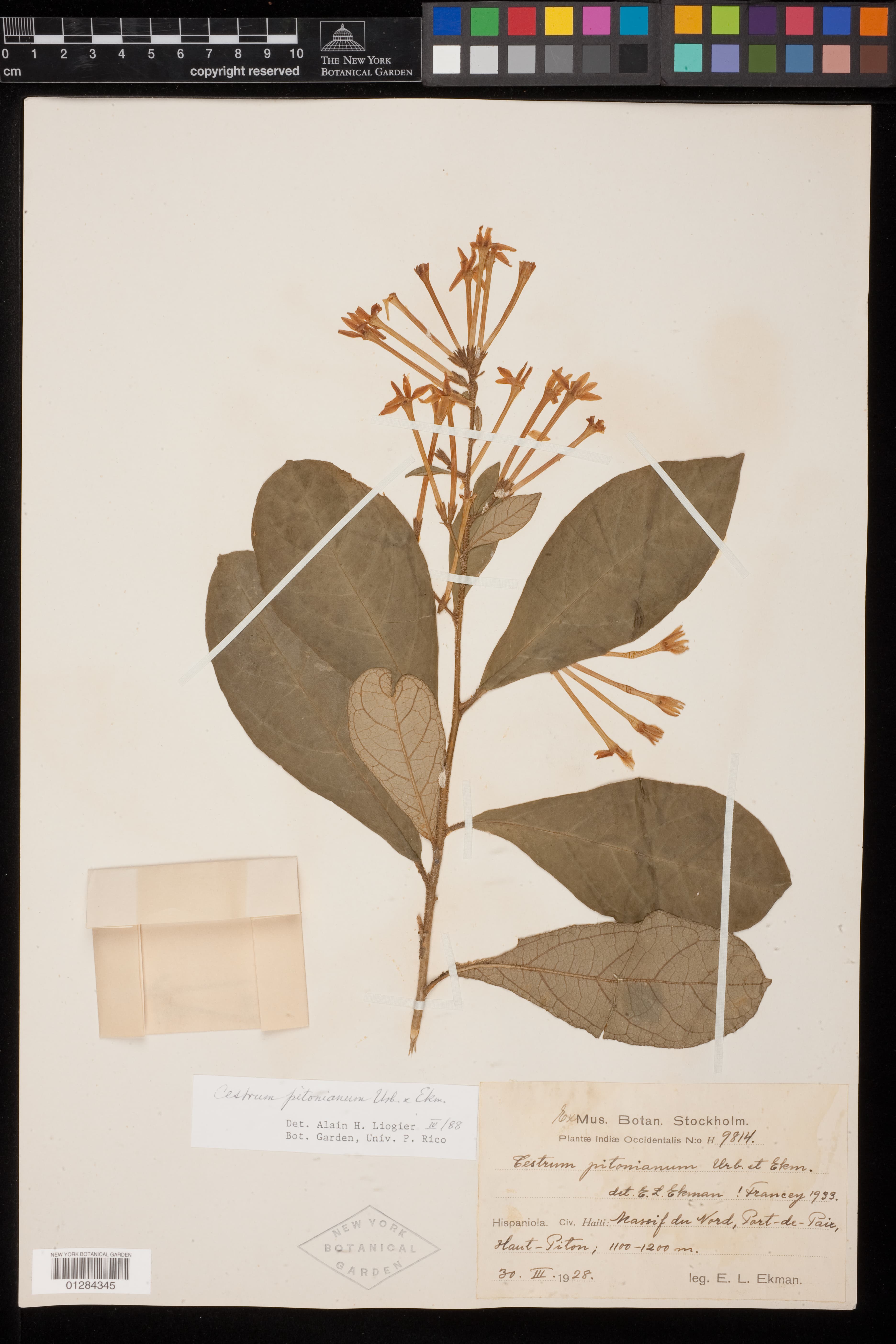
Cestrum pitonianum
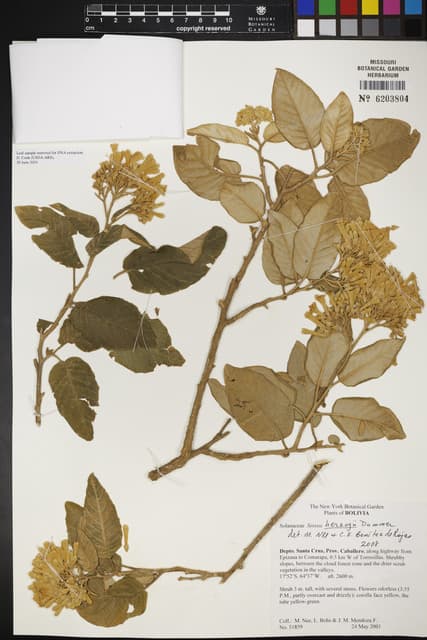
Image: The New York Botanical Garden (cc-by)
NameCestrum pitonianum
Scientific NameCestrum pitonianum Urb. & Ekman
Plant FamilySolanaceae
Natural HabitatEndemic to Hispaniola (specifically the Massif du Nord, Port-de-Paix region in Haiti) at elevations between 1100-1200 meters, suggesting a montane or submontane forest habitat.
Parts Usedleaf,flower
Medicinal Actionsanti-inflammatory, analgesic, antimicrobial
Traditional UsesSpecific traditional medicinal uses for *Cestrum pitonianum* are not well-documented. However, other species within the *Cestrum* genus have been traditionally used externally for conditions like pain, inflammation, and skin ailments, often with significant caution due to the plant's known toxicity. Internal use is generally avoided or highly restricted.
Active Constituentssteroidal saponins, glycoalkaloids
Preparation Methodspoultice, tincture
Contraindications & WarningsAll parts of *Cestrum* species, including *C. pitonianum*, are generally considered toxic due to the presence of steroidal glycoalkaloids. Ingestion can cause severe gastrointestinal upset, neurological symptoms, and can be fatal. Use should be strictly external and with extreme caution, or avoided entirely; it is not safe for internal consumption.
Cultivation NotesThis species is likely adapted to tropical montane environments with moderate to high humidity and specific soil conditions found in its native Hispaniola habitat. It would require a warm, frost-free climate and well-drained soil, possibly with some shade, mimicking its natural elevation range.
Rarityrare
Description
A woody shrub or small tree, as evidenced by the stem and branching pattern in the herbarium specimen. The leaves are simple, alternate, and ovate to elliptical with entire margins, appearing somewhat leathery. The inflorescence consists of terminal or axillary clusters of tubular, yellowish-brown flowers.