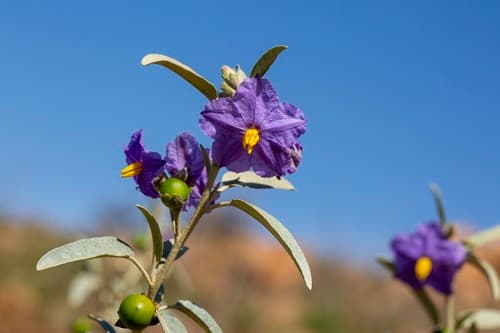
Sturt's nightshade
NameSturt's nightshade
Scientific NameSolanum sturtianum
Common NamesSturt's nightshade, Sturt's desert nightshade
Plant FamilySolanaceae
Natural HabitatNative to arid and semi-arid regions of Australia, thriving in sandy soils, rocky areas, and open woodlands. It is highly drought-tolerant and adapted to harsh, dry conditions.
Parts Usedleaf,fruit
Medicinal Actionsanti-inflammatory, analgesic, antimicrobial
Traditional UsesTraditionally, some Aboriginal groups have used parts of Sturt's nightshade externally. Crushed leaves or fruits (with extreme caution due to toxicity) might have been applied as poultices to treat skin sores, boils, or for localized pain relief. Internal use is generally considered dangerous.
Active Constituentssolasodine, steroidal glycoalkaloids
Preparation Methodspoultice, powder
Contraindications & WarningsAll parts of Sturt's nightshade, especially the unripe fruits, are highly toxic if ingested due to the presence of steroidal glycoalkaloids. Internal use is strictly contraindicated and can cause severe gastrointestinal upset, neurological symptoms, and be fatal. External use should be approached with extreme caution and under expert guidance due to potential skin irritation or absorption.
Cultivation NotesPrefers full sun and well-drained, sandy or rocky soils. It is highly drought-tolerant and thrives in arid conditions. Propagation is typically by seed.
Raritycommon
Description
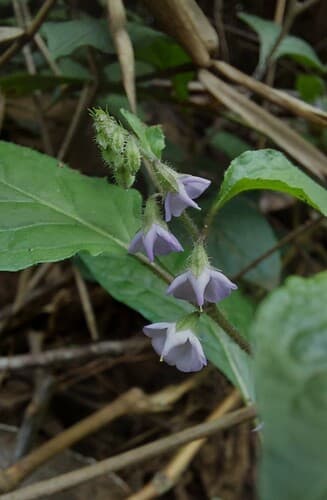
A perennial shrub growing up to 1.5 meters tall, characterized by its silvery-grey, hairy leaves and striking purple, star-shaped flowers with prominent yellow anthers. It produces small, green, spherical fruits that mature to yellow or orange.