Cestrum pinetorum
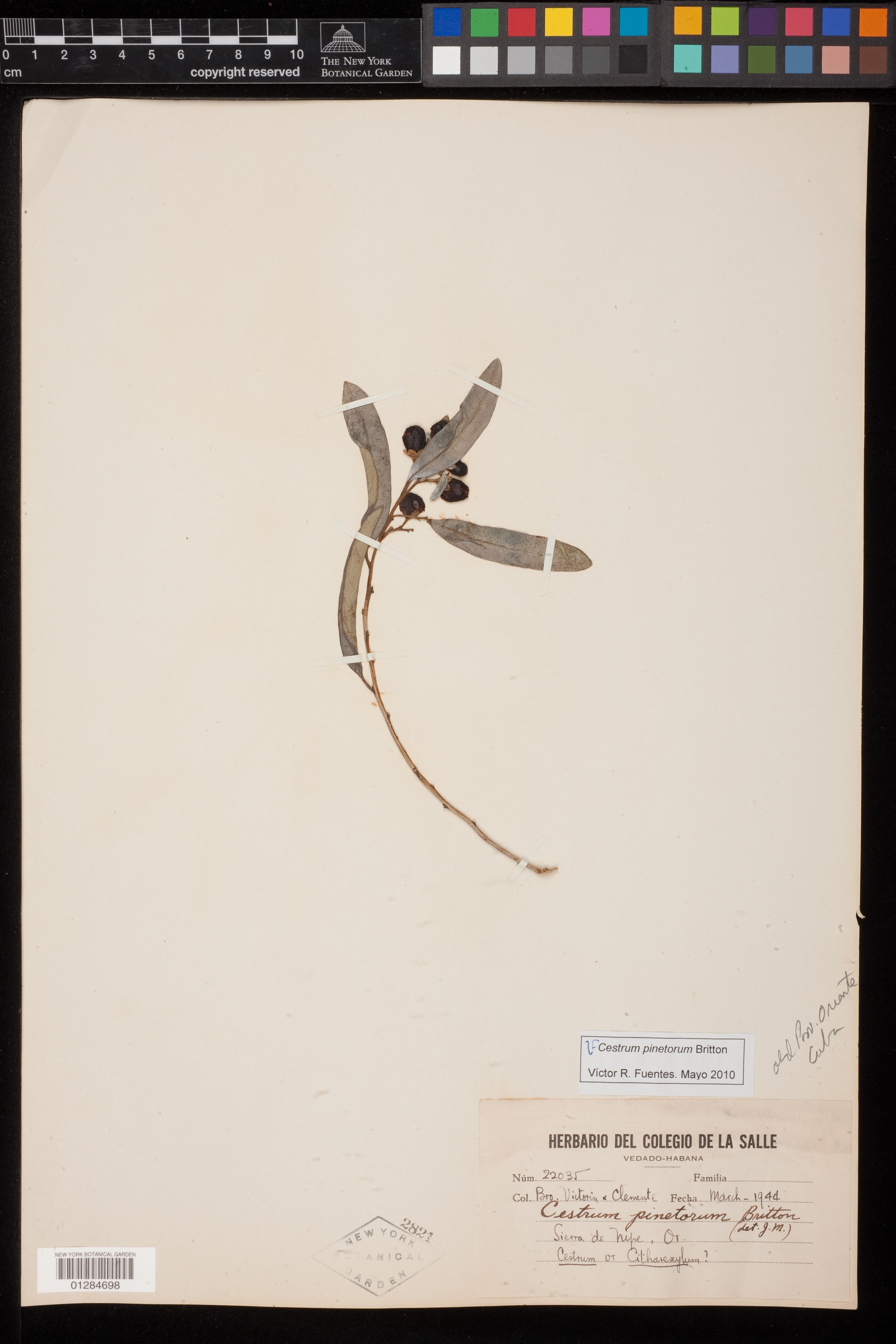
Image: The New York Botanical Garden (cc-by)
NameCestrum pinetorum
Scientific NameCestrum pinetorum Britton
Plant FamilySolanaceae
Natural HabitatEndemic to Cuba, typically found in pine forests and rocky areas, often at higher elevations, such as the Sierra de Nipe in eastern Cuba.
Parts Usedwhole_plant
Traditional UsesWhile some Cestrum species have been historically used in folk medicine, Cestrum pinetorum is primarily known for its toxicity rather than safe medicinal applications. Documented traditional medicinal uses for this specific species are scarce and generally not recommended due to its poisonous nature.
Active Constituentssteroidal saponins, alkaloids
Contraindications & WarningsAll parts of Cestrum pinetorum, especially the fruits, are considered toxic. Ingestion can cause severe gastrointestinal upset, neurological symptoms, and is poisonous to humans and livestock. It should not be used internally or externally for medicinal purposes.
Cultivation NotesThis tropical shrub prefers full sun to partial shade and well-drained soil. It thrives in warm, humid conditions typical of its native Cuban habitat. It is not commonly cultivated outside of botanical collections.
Rarityuncommon
Description
Cestrum pinetorum is a shrub or small tree, endemic to Cuba. It features simple, alternate leaves and produces clusters of dark, globose, berry-like fruits.