Cuscuta draconella
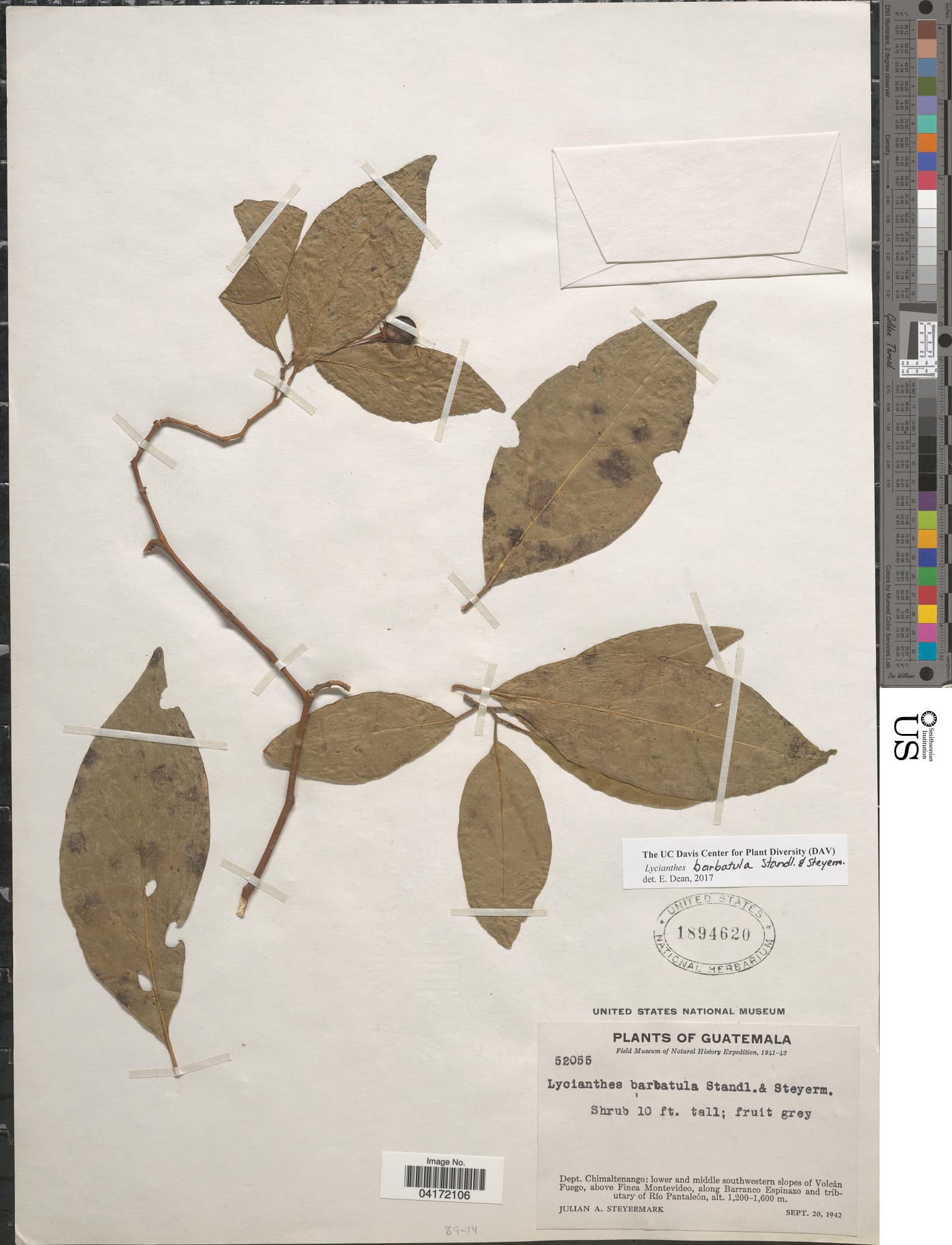
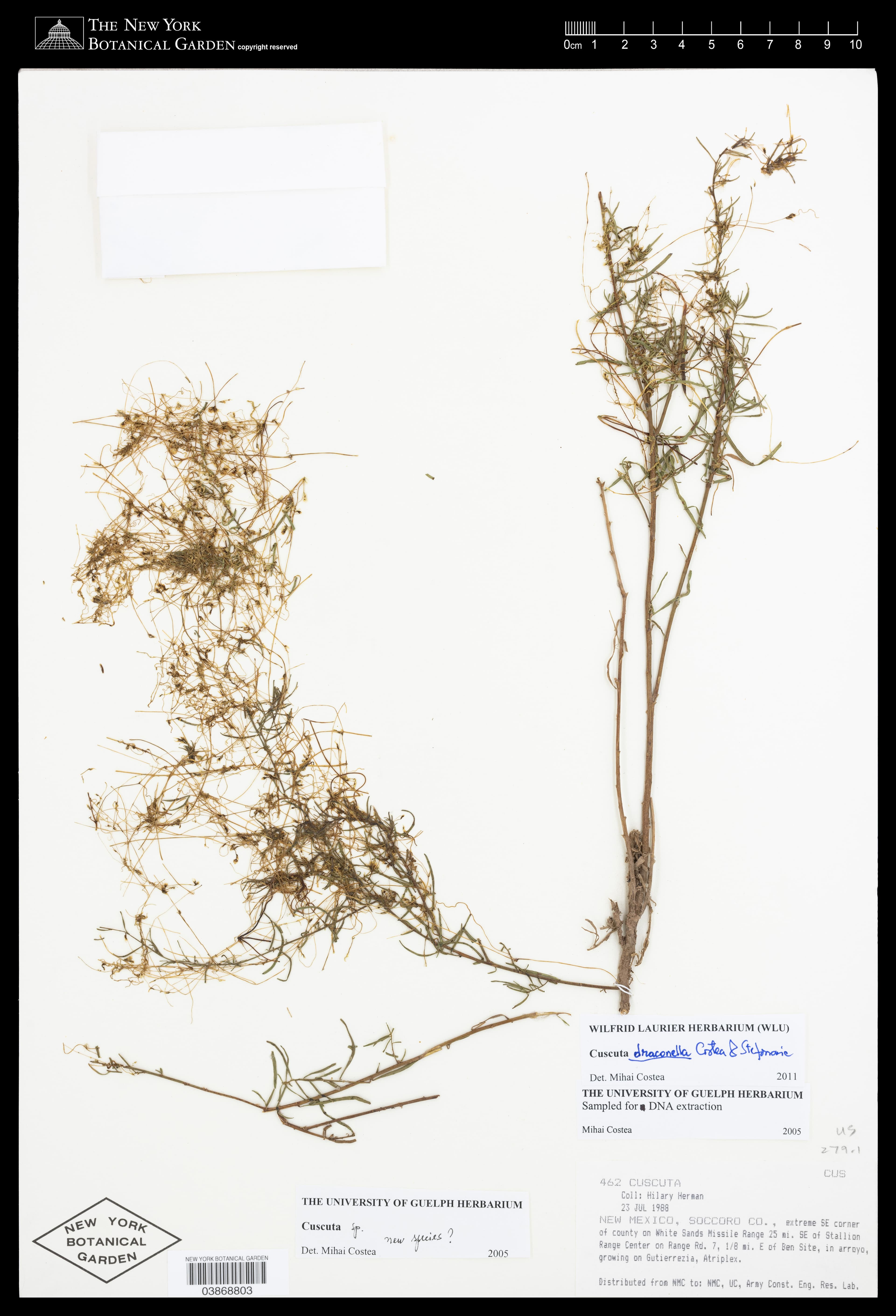
Image: The New York Botanical Garden (cc-by)
NameCuscuta draconella
Scientific NameCuscuta draconella
Common NamesDodder, Witch's Hair, Strangleweed
Plant FamilyConvolvulaceae
Natural HabitatThis species is found in arid and semi-arid environments, such as deserts and arroyos, where it parasitizes various herbaceous plants and shrubs. The specimen was collected in an arroyo in Socorro County, New Mexico, growing on *Gutierrezia* and *Atriplex* species.
Parts Usedwhole_plant,seed
Medicinal Actionsantioxidant, anti-inflammatory, adaptogen
Traditional UsesWhile specific traditional uses for *Cuscuta draconella* are not widely documented, other *Cuscuta* species (like *Cuscuta chinensis* or Tu Si Zi in TCM) are traditionally used as a kidney and liver tonic. They are believed to improve vision, strengthen bones, and address conditions such as impotence, premature ejaculation, and frequent urination.
Active Constituentsflavonoids, lignans, polysaccharides
Preparation Methodsinfusion, decoction, powder, tincture
Contraindications & WarningsAs a parasitic plant, *Cuscuta draconella* is not typically consumed fresh. General caution is advised for pregnant or nursing women, and individuals with specific medical conditions should consult a healthcare professional before use. Potential drug interactions are not well-studied for this specific species.
Cultivation NotesAs an obligate parasitic plant, *Cuscuta draconella* cannot be cultivated independently. It requires a suitable host plant for germination and growth, making traditional cultivation methods impractical. Propagation would involve introducing seeds to a compatible host.
Rarityuncommon
Description
Cuscuta draconella is an annual parasitic herb characterized by its slender, thread-like, yellowish-orange to reddish stems that twine extensively around host plants. Lacking chlorophyll, it obtains all nutrients via haustoria that penetrate the host's vascular system, appearing as a tangled mass of stems with inconspicuous flowers.