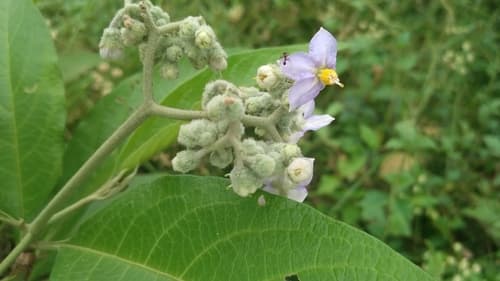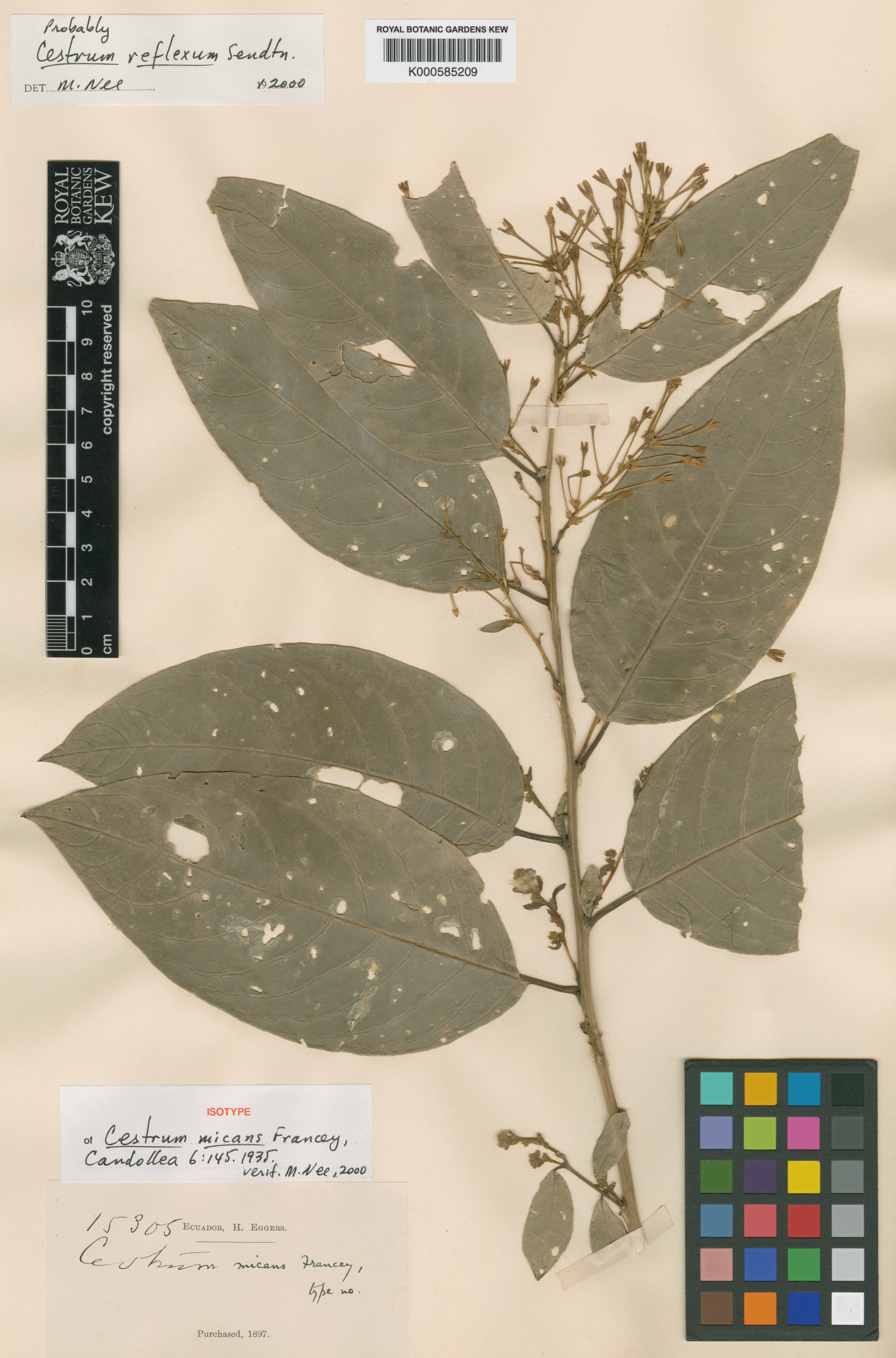
Cestrum micans
Image: Eggers, H. (cc-by)
NameCestrum micans
Scientific NameCestrum micans Francey
Common NamesNone widely recognized
Plant FamilySolanaceae
Natural HabitatNative to tropical regions of South America, particularly Ecuador, where it can be found in humid forests, forest edges, and disturbed areas. It thrives in warm, moist environments.
Parts Usedleaf,flower,bark
Medicinal Actionsanalgesic, anti-inflammatory, sedative
Traditional UsesWhile Cestrum species are generally considered toxic, some, including potentially Cestrum micans, have been used in traditional folk medicine with extreme caution. Reported uses for the genus include external applications for pain and inflammation, and internal use as a febrifuge or sedative, typically in very small, carefully controlled doses due to the plant's potent compounds.
Active Constituentssteroidal saponins, alkaloids, cardiotoxic glycosides
Preparation Methodspoultice, powder
Contraindications & WarningsAll Cestrum species are considered toxic and ingestion is generally not recommended. Contraindications include pregnancy, lactation, children, and individuals with heart, liver, or kidney conditions. Use should be strictly external and with extreme caution, if at all.
Cultivation NotesCestrum species generally prefer warm, humid climates with well-drained soil. They can be grown in full sun to partial shade and are often cultivated as ornamental shrubs, though Cestrum micans is not widely cultivated.
Rarityuncommon
Description
Cestrum micans is a woody shrub or small tree characterized by alternate, simple, ovate to elliptic leaves with entire margins. It produces terminal or axillary cymes of small, tubular flowers, which are evident in their dried state on the specimen. The plant typically has a somewhat leathery leaf texture.