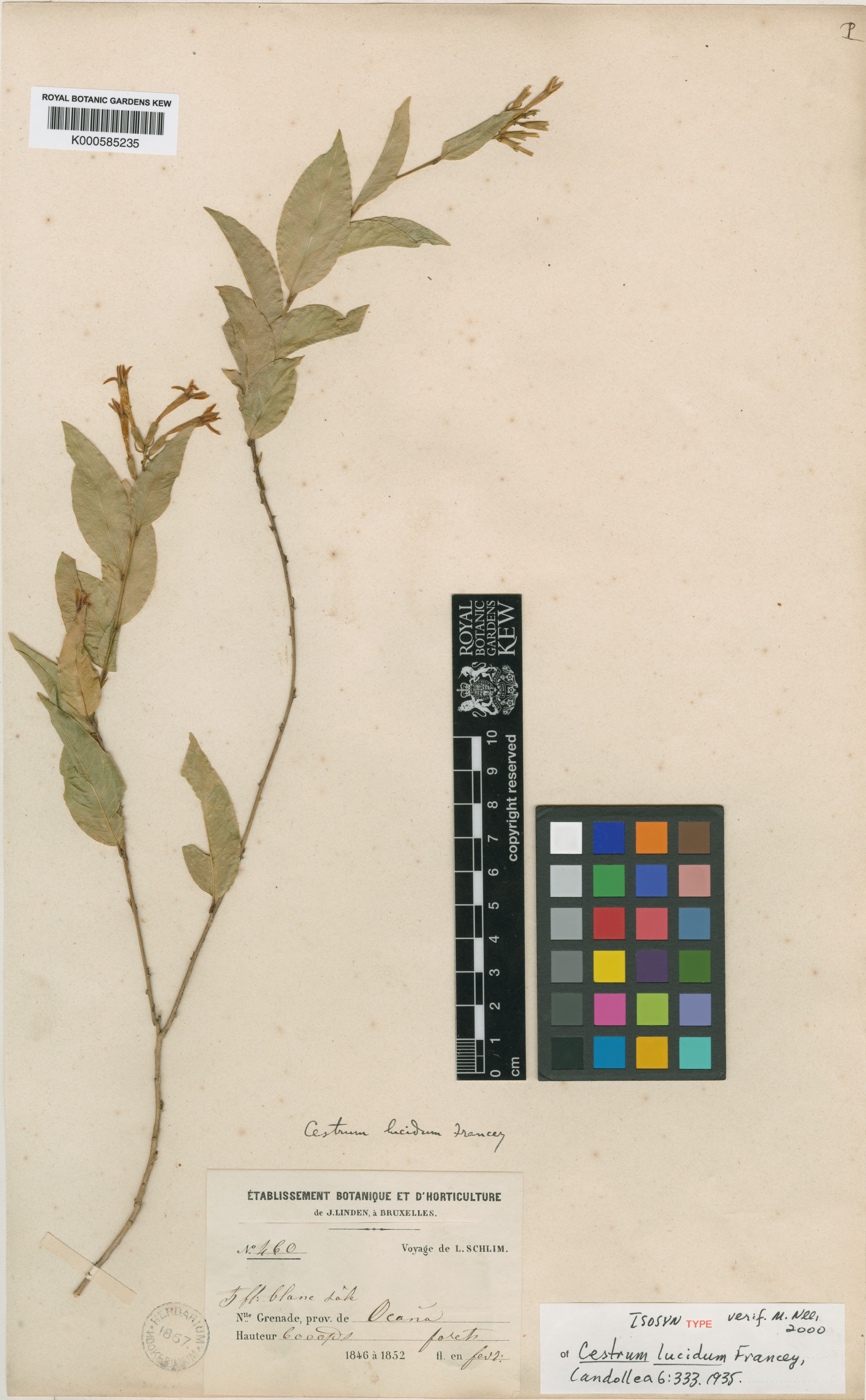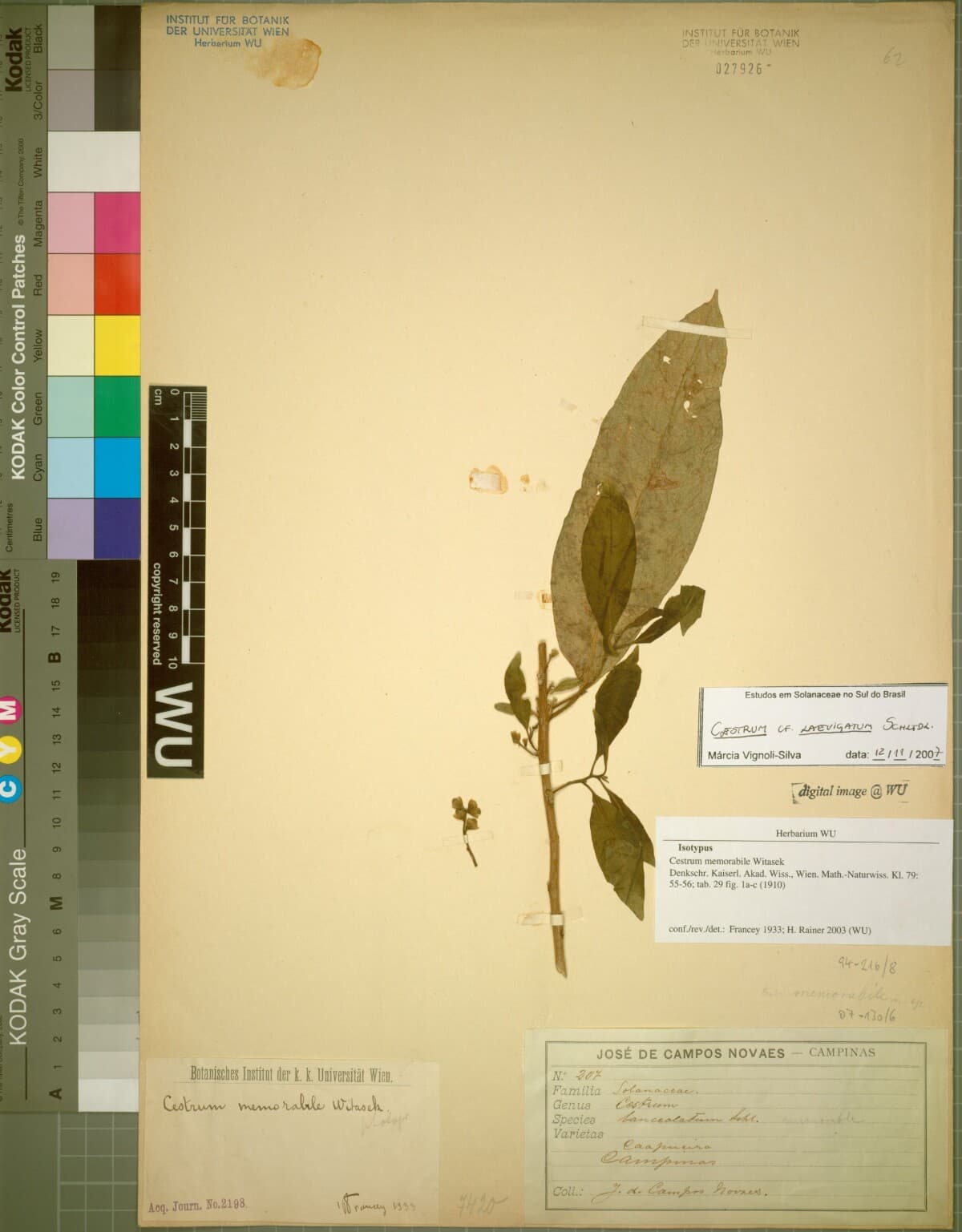
Cestrum memorabile
Image: Campos Novaes,J. de 270 (cc-by)
NameCestrum memorabile
Scientific NameCestrum memorabile Witasek
Common NamesGreen Cestrum, Inkberry, Jessamine
Plant FamilySolanaceae
Natural HabitatNative to South America, particularly Brazil, it thrives in tropical and subtropical regions. It is often found in disturbed areas, forest margins, and along waterways.
Parts Usedleaf,bark,fruit
Medicinal Actionsanalgesic, anti-inflammatory, sedative
Traditional UsesTraditionally, the leaves and bark of closely related Cestrum species have been used in some folk medicine systems for their analgesic and anti-inflammatory properties, often applied externally or in very small, controlled internal doses for pain, fever, and inflammation. It has also been noted for its sedative effects, though extreme caution is warranted due to toxicity.
Active Constituentstropane_alkaloids, saponins, flavonoids
Preparation Methodspoultice, decoction
Contraindications & WarningsHighly toxic; all parts of the plant are poisonous, especially the fruits. Ingestion can cause severe gastrointestinal upset, neurological symptoms (hallucinations, delirium), and cardiac issues due to potent tropane alkaloids. Not recommended for internal use without strict medical supervision. Avoid during pregnancy and lactation.
Cultivation NotesThis plant prefers full sun to partial shade and well-drained soil, tolerating a range of soil types. It can be propagated by seeds or cuttings. In suitable climates, it can grow vigorously and may become invasive.
Raritycommon
Description
Cestrum memorabile is a shrub or small tree characterized by its simple, alternate, ovate to lanceolate leaves. It produces greenish-yellow, tubular flowers that develop into small, dark berries. This species is part of the nightshade family.