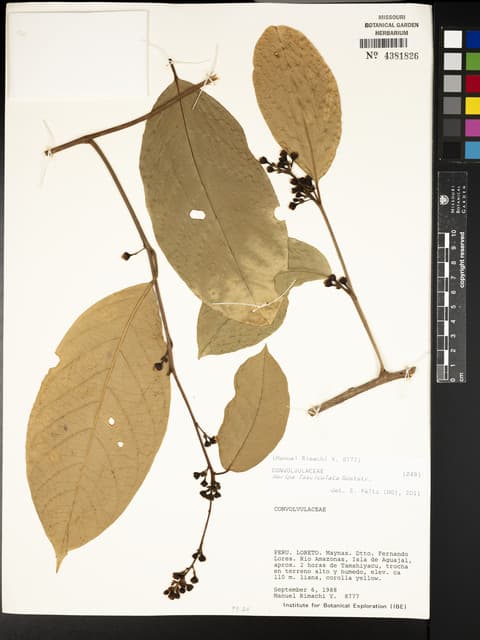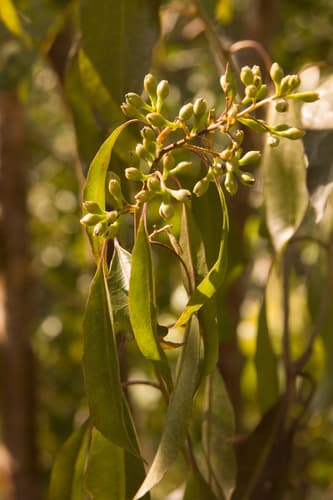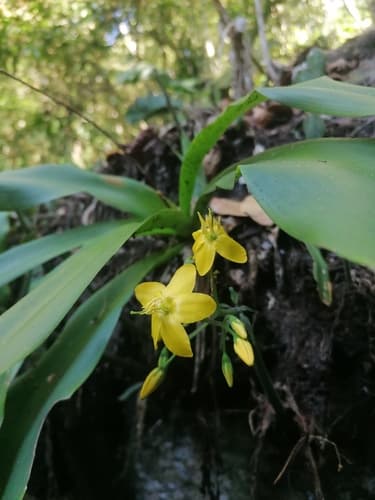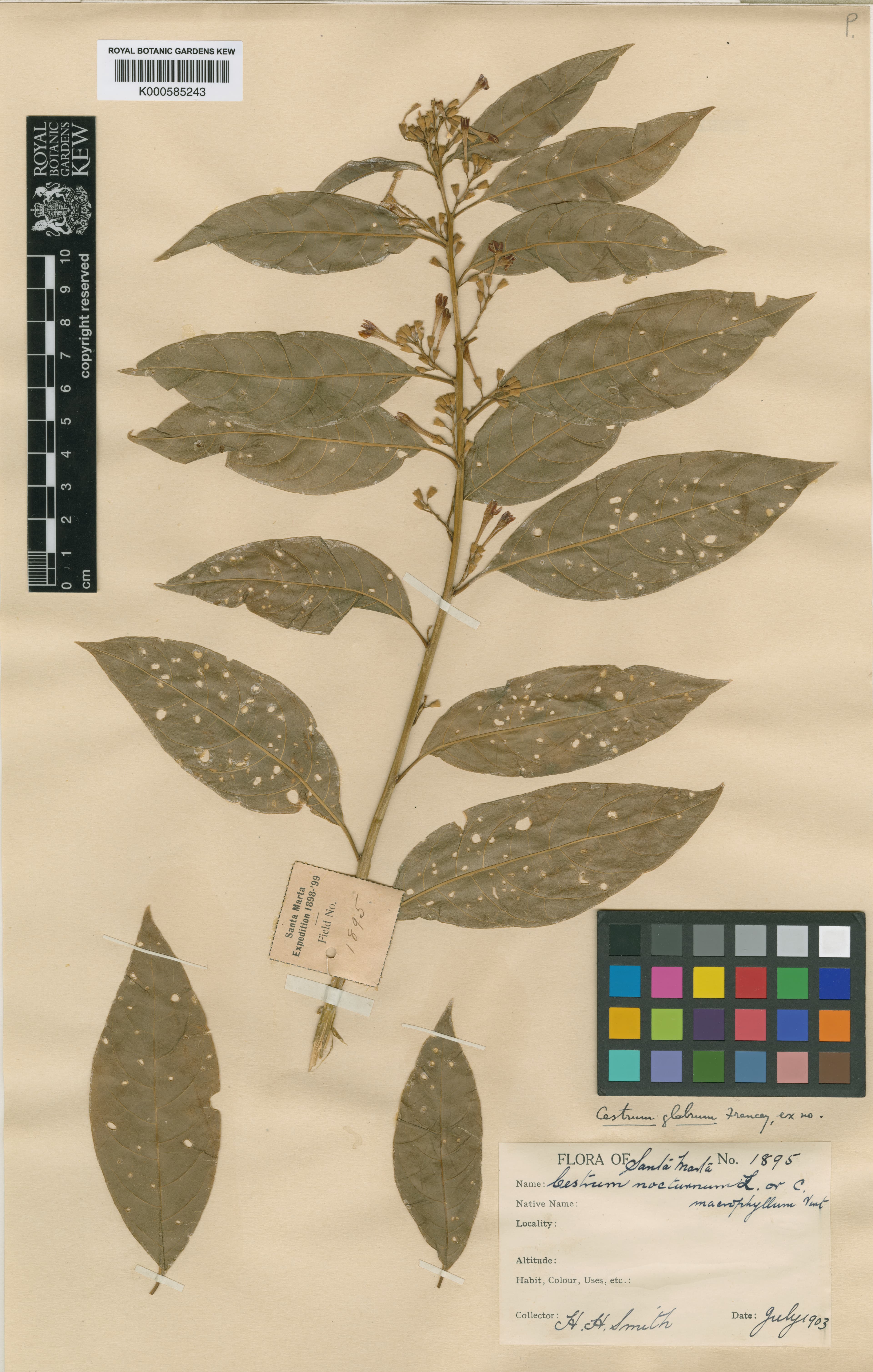
Cestrum glabrum
Image: Smith, H.H. (cc-by)
NameCestrum glabrum
Scientific NameCestrum glabrum Francey
Common NamesNight Jasmine
Plant FamilySolanaceae
Natural HabitatNative to tropical and subtropical regions of South America, often found in forests, disturbed areas, and along riverbanks.
Parts Usedleaf,flower
Medicinal Actionsanalgesic, anti-inflammatory
Traditional UsesTraditionally used in some South American cultures for treating fever, pain, and inflammation. Due to its toxicity, internal use is highly cautioned and often limited to external applications or highly diluted preparations.
Active ConstituentsSteroidal glycoalkaloids, Saponins
Preparation Methodsinfusion, decoction, poultice
Contraindications & WarningsAll parts of the plant are considered toxic due to the presence of steroidal glycoalkaloids. Internal use is highly dangerous and should be avoided. Not for use by pregnant or lactating women, children, or without expert medical supervision. Can cause gastrointestinal upset, neurological symptoms, and even death if ingested in sufficient quantities.
Cultivation NotesPrefers full sun to partial shade and well-drained soil. Thrives in warm, subtropical to tropical climates. Can be grown as an ornamental shrub, but caution should be exercised due to its toxicity, especially around children and pets.
Raritycommon
Description
Cestrum glabrum is a shrub or small tree characterized by its alternate, simple, ovate-lanceolate leaves. It produces clusters of tubular, often fragrant flowers, typically found in terminal or axillary inflorescences.