Barberry
Image: Krzysztof Ziarnek, Kenraiz (CC BY-SA 4.0)
NameBarberry
Scientific NameBerberis vulgaris
Common NamesBarberry, Common Barberry, European Barberry
Plant FamilyBerberidaceae
Natural HabitatNative to central and southern Europe, northwest Africa, and western Asia, Barberry thrives in woodlands, hedges, scrublands, and disturbed areas. It often grows on calcareous soils and can tolerate a range of conditions.
Parts Usedroot,bark,fruit
Medicinal Actionsantimicrobial, anti-inflammatory, antioxidant, astringent
Traditional UsesTraditionally, Barberry has been used to support liver and gallbladder function, stimulating bile flow and aiding digestion. Its antimicrobial properties made it useful for treating various infections, and it was also employed as a bitter tonic for digestive complaints like diarrhea.
Active ConstituentsBerberine, Oxyacanthine, Berbamine
Preparation Methodsinfusion, decoction, tincture, powder
Contraindications & WarningsNot recommended for pregnant or breastfeeding women, infants, or young children. It may interact with certain medications, including blood thinners, immunosuppressants, and drugs metabolized by the liver (CYP450 enzymes).
Cultivation NotesBarberry prefers full sun to partial shade and well-drained soil, tolerating a range of soil types once established. It is drought-tolerant and can be propagated by seed or cuttings. Due to its invasive potential in some regions, local regulations should be considered.
Raritycommon
Description
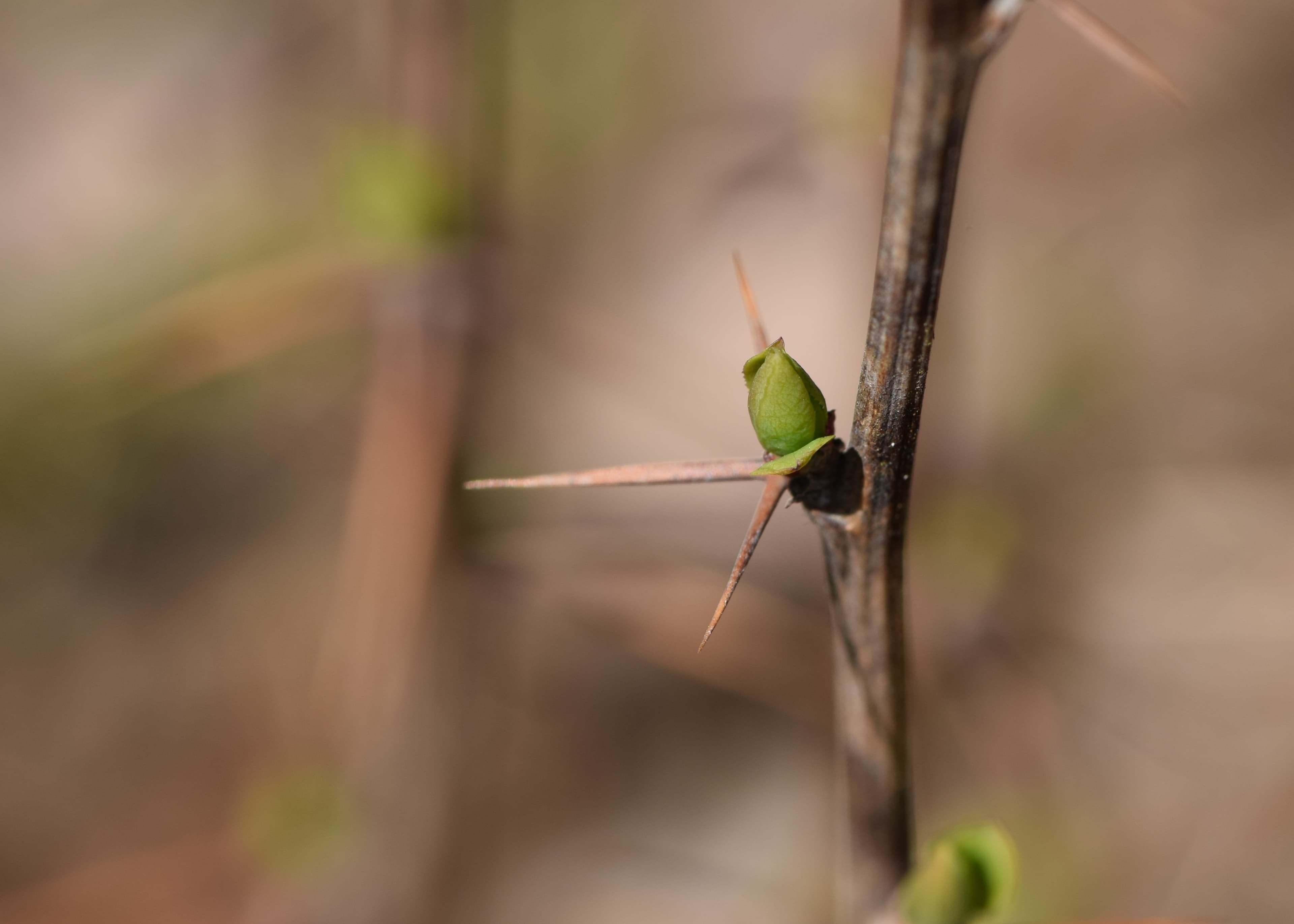
Berberis vulgaris is a deciduous shrub characterized by thorny stems and small, oval leaves that emerge in spring. It produces clusters of yellow flowers followed by oblong, tart red berries. The image shows a thorny stem with a newly emerging green bud, indicative of early spring growth.