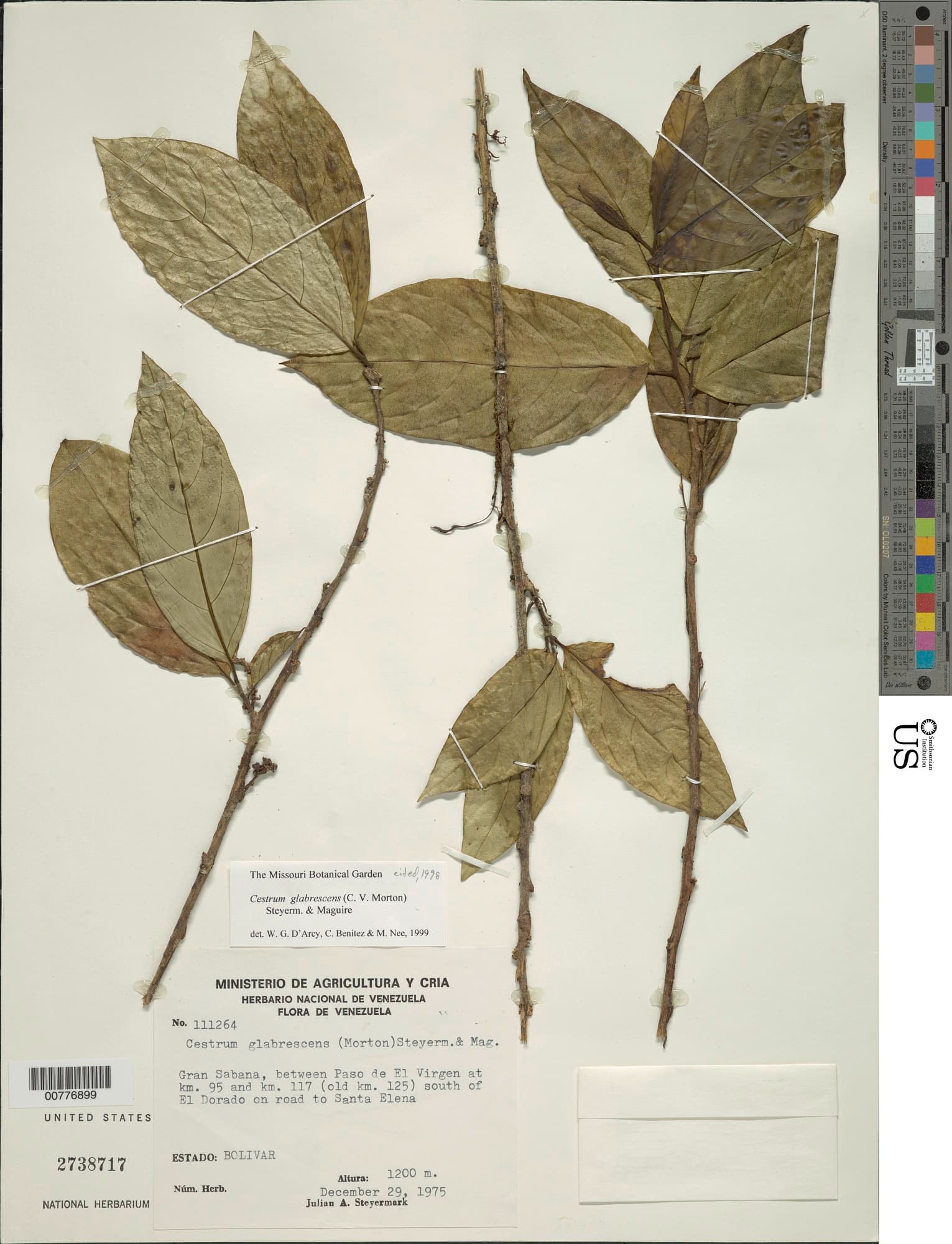
Cestrum glabrescens
Image: Conveyor Belt (cc0)
NameCestrum glabrescens
Scientific NameCestrum glabrescens (C.V.Morton) Steyerm. & Maguire
Plant FamilySolanaceae
Natural HabitatNative to the Gran Sabana region of Bolívar State, Venezuela, typically found at altitudes around 1200 meters. It thrives in montane or savanna-edge environments within its native range.
Parts Used
Traditional UsesNo specific traditional medicinal uses for Cestrum glabrescens are widely documented. The genus Cestrum is generally known for containing toxic compounds, and many species are considered poisonous, limiting their internal medicinal application.
Contraindications & WarningsAll parts of Cestrum species are generally considered toxic if ingested, primarily due to steroidal saponins and alkaloids. Ingestion can cause gastrointestinal upset, neurological symptoms, and other severe effects. Extreme caution is advised; not recommended for internal use.
Cultivation NotesCestrum species generally prefer well-drained soil and full sun to partial shade. They are typically tropical or subtropical plants, requiring warm climates and protection from frost. Propagation is often by seed or cuttings.
Rarityuncommon
Description
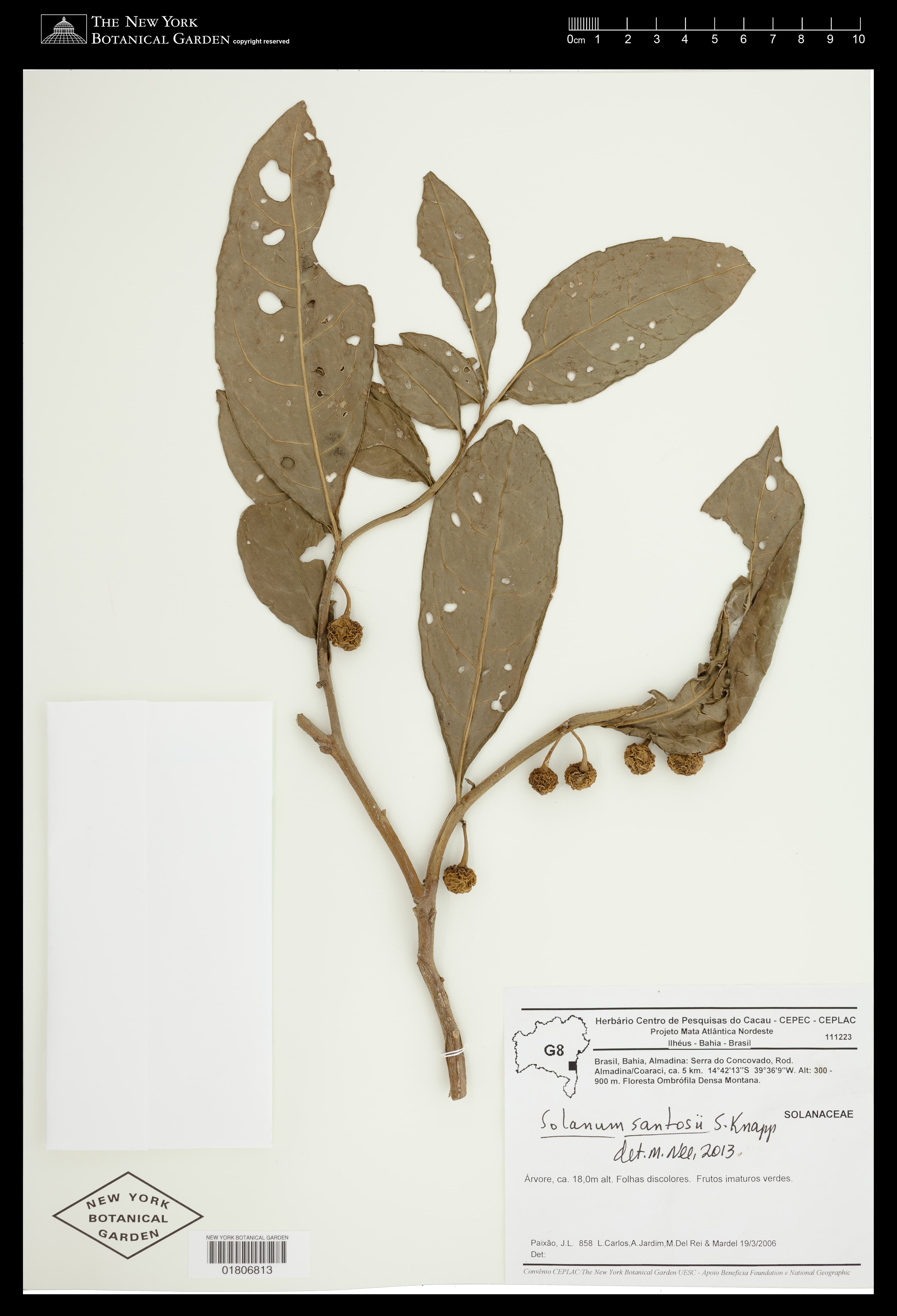
Cestrum glabrescens is a woody shrub or small tree characterized by its alternate, simple, ovate to elliptic leaves with entire margins and prominent venation. The stems are woody, and the plant typically exhibits a somewhat smooth or sparsely hairy surface. This specimen shows dried leaves and woody stems, indicative of its growth habit.