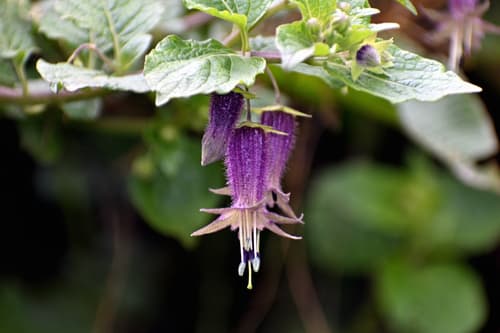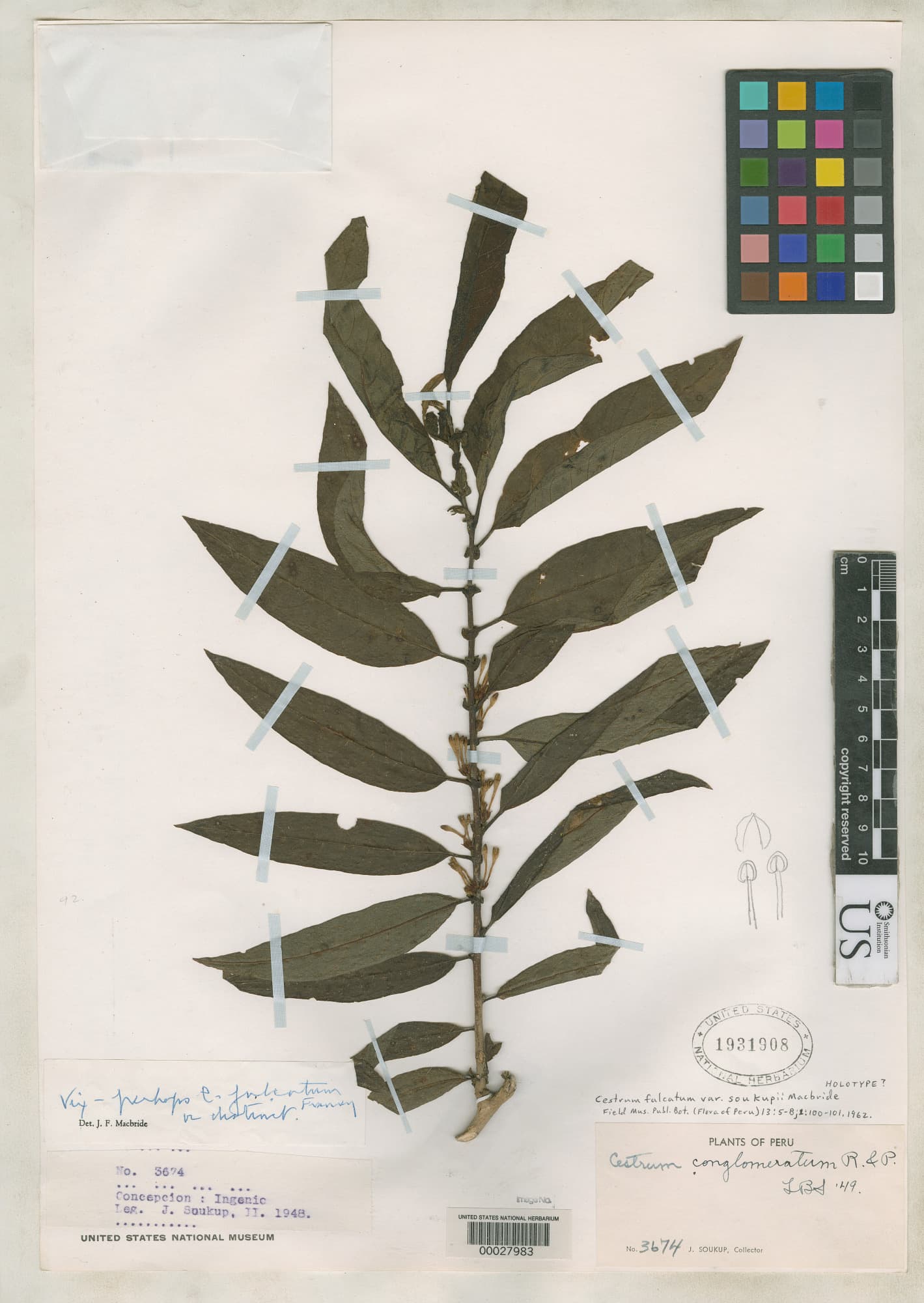
Cestrum falcatum
Image: Ingrid P. Lin (cc0)
NameCestrum falcatum
Scientific NameCestrum falcatum
Plant FamilySolanaceae
Natural HabitatNative to Peru, typically found in tropical and subtropical regions, including Andean valleys and inter-Andean zones. It prefers well-drained soils and can grow in various light conditions.
Parts Usedleaf,bark
Medicinal Actionsanti-inflammatory, antimicrobial, analgesic
Traditional UsesTraditionally, some Cestrum species have been used externally for their anti-inflammatory and analgesic properties, such as in poultices for skin ailments, wounds, or localized pain. Internal use is generally avoided due to the plant's known toxicity.
Active Constituentssteroidal saponins, alkaloids, flavonoids
Preparation Methodspoultice, decoction, infusion
Contraindications & WarningsAll parts of Cestrum falcatum are considered toxic, especially if ingested. Contraindicated for internal use, pregnant or lactating women, and children. May cause gastrointestinal upset, neurological symptoms, and cardiac issues. Consult a healthcare professional before any use.
Cultivation NotesThis species thrives in warm, subtropical to tropical climates with full sun to partial shade and well-drained soil. It is generally frost-sensitive and can be propagated from seeds or cuttings.
Rarityuncommon
Description
Cestrum falcatum is a shrub or small tree characterized by its simple, alternate leaves, often lanceolate to ovate in shape. It produces small, tubular flowers, typically clustered in axillary inflorescences, which develop into berries.