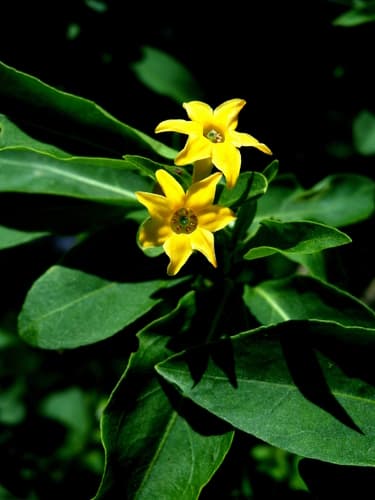
Cestrum decurrens
NameCestrum decurrens
Scientific NameCestrum decurrens
Plant FamilySolanaceae
Natural HabitatNative to South America, particularly found in Brazil, Argentina, and Paraguay, growing in forests, disturbed areas, and along watercourses.
Parts Usedleaf,bark
Medicinal Actionsanalgesic, anti-inflammatory, antimicrobial
Traditional UsesTraditional medicinal uses for Cestrum decurrens are limited and often associated with the plant's inherent toxicity. Some Cestrum species have been anecdotally used in folk medicine for pain, inflammation, or as purgatives, but these applications are highly risky and not recommended.
Active Constituentssteroidal_saponins, alkaloids, flavonoids
Preparation Methodspoultice
Contraindications & WarningsAll parts of Cestrum decurrens, especially the berries and leaves, are considered highly toxic due to the presence of steroidal saponins and alkaloids. Ingestion can cause severe gastrointestinal upset, neurological symptoms, and can be fatal. Internal use is strongly contraindicated, and even external use should be approached with extreme caution due to potential skin irritation or absorption.
Cultivation NotesCestrum decurrens thrives in full sun to partial shade and requires well-drained soil. It is a relatively hardy shrub that can tolerate some drought once established and can be propagated from seeds or cuttings.
Raritycommon
Description
Cestrum decurrens is a shrub or small tree characterized by its simple, alternate leaves and clusters of bright yellow, star-shaped flowers. The flowers are tubular at the base and open into five pointed lobes, often followed by berries.