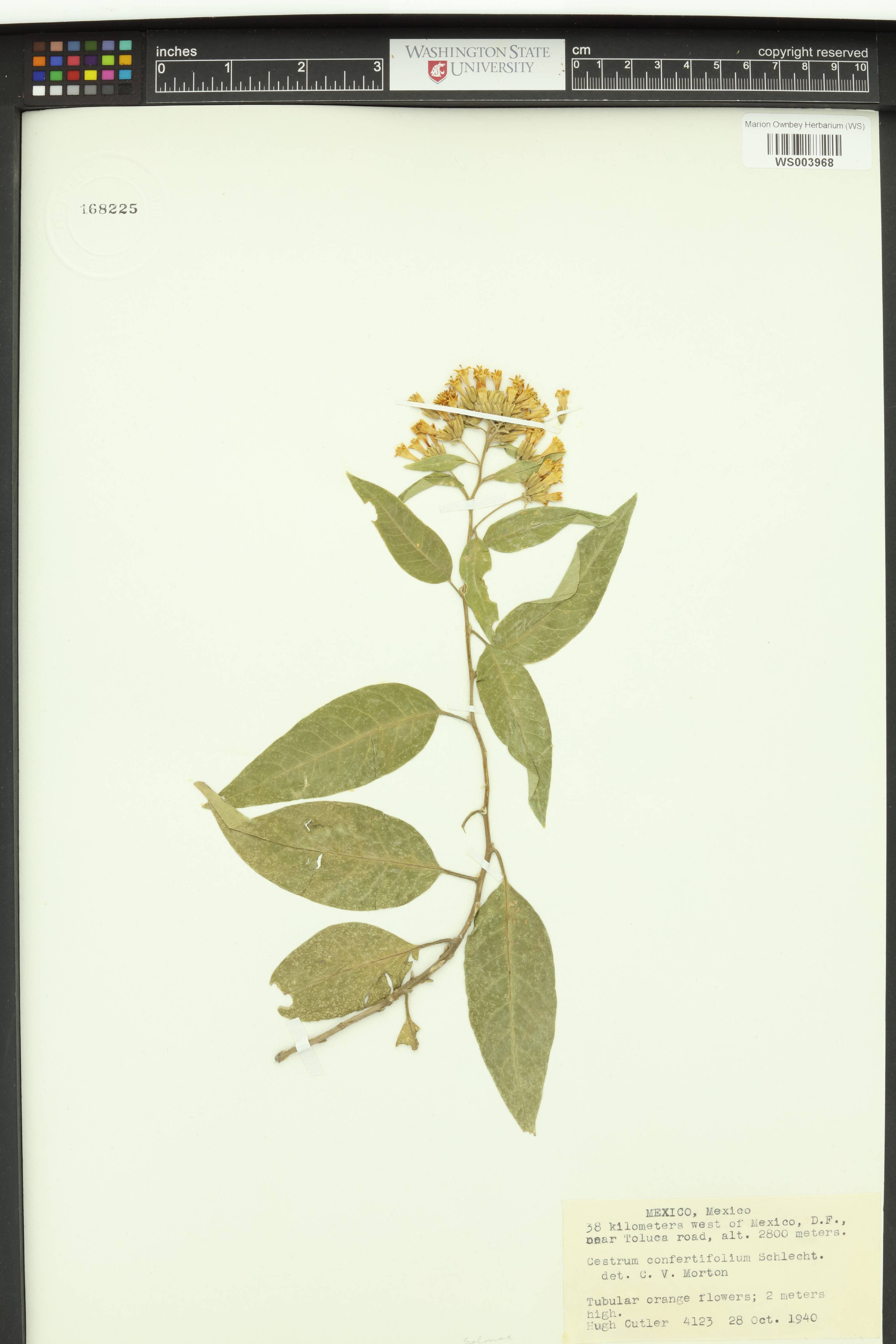
Cestrum confertifolium
Image: Hugh Cutler (cc-by-nc)
NameCestrum confertifolium
Scientific NameCestrum confertifolium
Common NamesNone widely recognized
Plant FamilySolanaceae
Natural HabitatNative to Mexico, found at high altitudes (around 2800 meters) in mountainous regions, often in open woodlands or disturbed areas.
Parts Usedleaf
Medicinal Actionsanalgesic, anti-inflammatory
Traditional UsesSpecific traditional medicinal uses for Cestrum confertifolium are not well-documented. However, some species within the Cestrum genus have been traditionally used externally as poultices for pain relief and to reduce inflammation, though all Cestrum species are known for their toxicity and internal use is strongly discouraged.
Active ConstituentsSaponins, Alkaloids, Glycosides
Preparation Methodspoultice
Contraindications & WarningsAll parts of Cestrum confertifolium are considered toxic and should not be ingested. Contraindications include internal consumption, pregnancy, lactation, children, and individuals with heart conditions, glaucoma, or other pre-existing medical conditions. External use should be approached with extreme caution due to potential skin irritation and systemic absorption of toxic compounds.
Cultivation NotesThis species can be grown as an ornamental shrub in warm climates, preferring full sun to partial shade and well-drained soil. It is relatively hardy and can be propagated from seeds or cuttings.
Raritycommon
Description
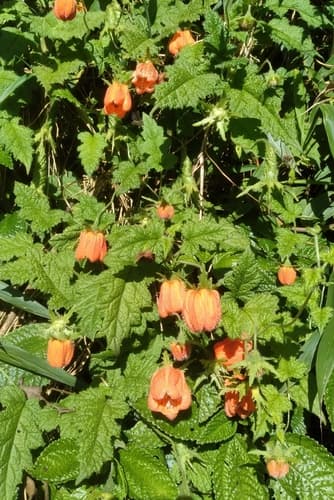
Cestrum confertifolium is a shrub or small tree, typically growing up to 2 meters high. It features simple, alternate, ovate to lanceolate leaves and dense terminal or axillary clusters of tubular, orange flowers.