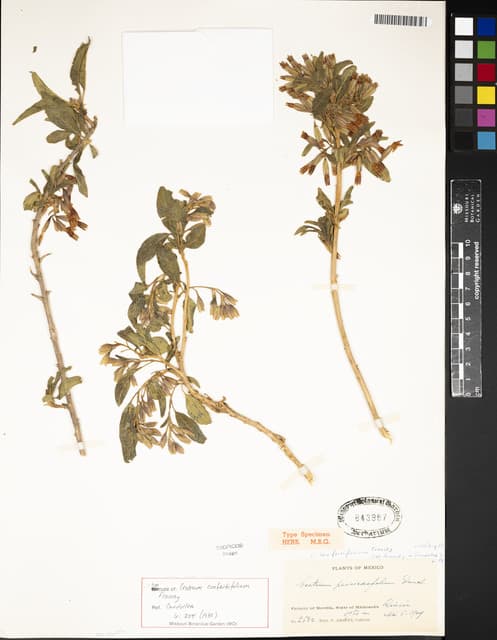
Cestrum confertifolium
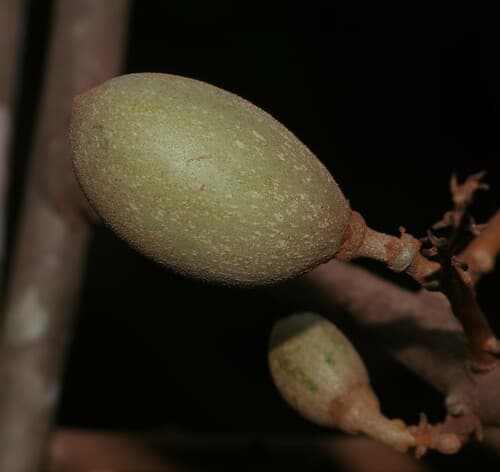
Image: MBG (cc-by-nc)
NameCestrum confertifolium
Scientific NameCestrum confertifolium Francey
Common NamesJessamine, Night Jessamine
Plant FamilySolanaceae

Natural HabitatNative to tropical and subtropical regions of the Americas, particularly Mexico, where this specimen was collected in the state of Michoacán. It likely thrives in disturbed areas, forest margins, or open woodlands.
Parts Used
Traditional UsesWhile some species within the *Cestrum* genus have been used in traditional medicine for conditions like fever, pain, or skin ailments, often externally, specific traditional uses for *Cestrum confertifolium* are not widely documented. The genus is generally known for its toxicity, and internal use is often discouraged.
Active ConstituentsSteroidal saponins, Alkaloids
Contraindications & WarningsAll parts of *Cestrum* species are generally considered toxic, especially to livestock and humans, due to the presence of steroidal saponins and other alkaloids. Ingestion can cause gastrointestinal upset, neurological symptoms, and cardiac issues. Not recommended for internal use.
Cultivation NotesCestrum species are typically fast-growing shrubs that prefer full sun to partial shade and well-drained soil. They are often grown as ornamental plants in tropical and subtropical climates.
Rarityuncommon
Description
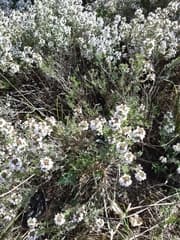
Cestrum confertifolium is a woody shrub characterized by its alternate, simple leaves and clusters of tubular flowers, typically found in terminal or axillary inflorescences. The herbarium specimen shows dried stems with leaves and flower clusters, indicating a moderate size.