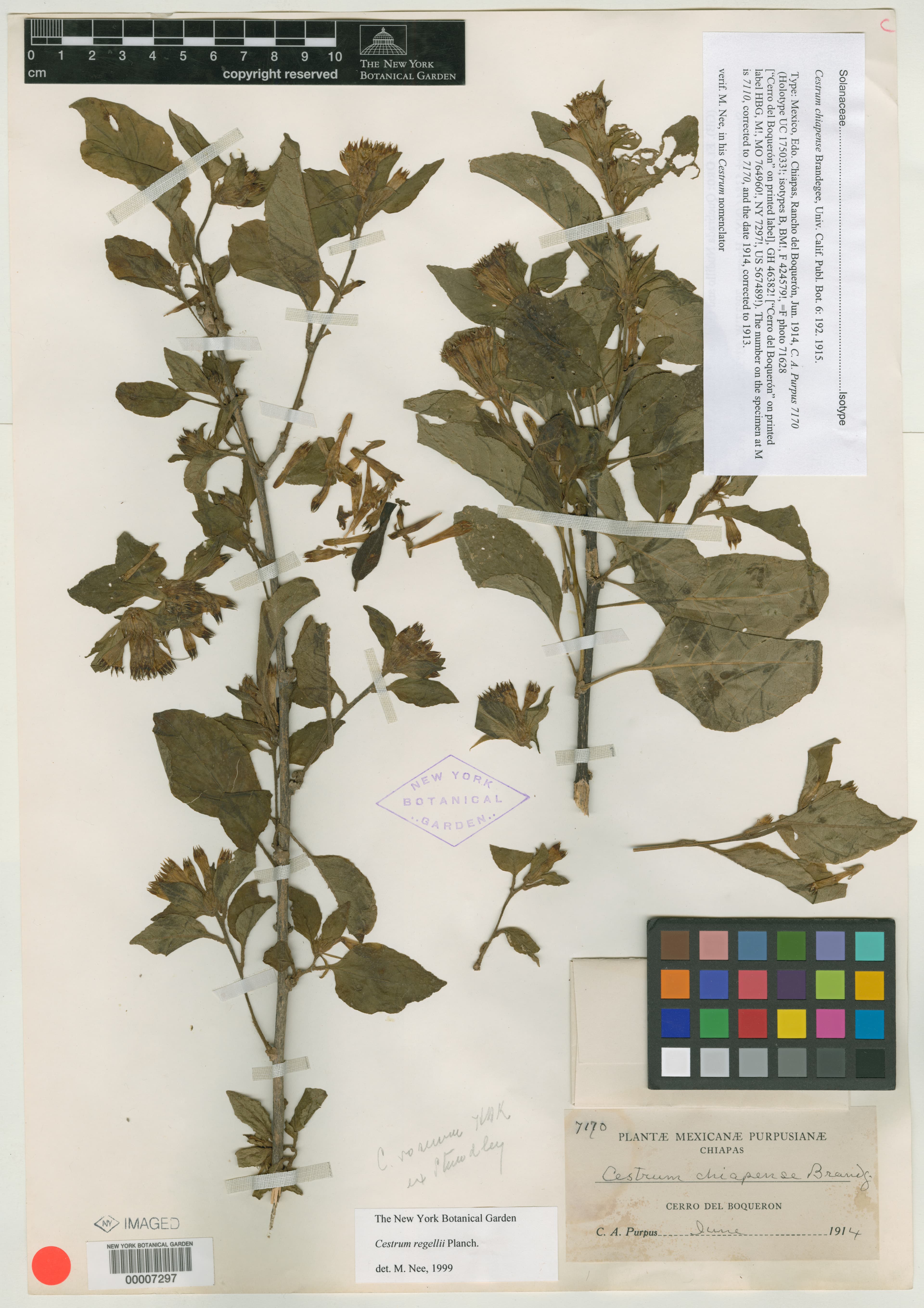
Cestrum chiapense
Image: The New York Botanical Garden (cc-by)
NameCestrum chiapense
Scientific NameCestrum chiapense Brandegee
Common NamesCestrum roseum
Plant FamilySolanaceae
Natural HabitatNative to Mexico, specifically documented from Chiapas, in regions like Rancho del Boquerón and Cerro del Boquerón, suggesting a tropical or subtropical mountainous habitat.
Parts Usedleaf,flower
Medicinal Actionsanti-inflammatory, analgesic
Traditional UsesSpecific traditional medicinal uses for Cestrum chiapense are not well-documented in the provided context. However, other species within the Cestrum genus have been historically used in folk medicine for conditions such as fever, pain, and inflammation, often with significant caution due to their toxic properties.
Active Constituentssteroidal saponins, alkaloids
Preparation Methodsinfusion, decoction, poultice, powder
Contraindications & WarningsMany species within the Cestrum genus are known to be toxic, containing steroidal saponins and alkaloids that can cause gastrointestinal upset, neurological symptoms, and cardiac issues. Internal use is generally not recommended without expert guidance due to potential severe toxicity. Handle with care.
Cultivation NotesAs a member of the Cestrum genus, it likely prefers well-drained soil, full sun to partial shade, and a warm, frost-free climate. Propagation is typically by seeds or cuttings.
Rarityuncommon
Description

Cestrum chiapense is a woody shrub or small tree, characterized by alternate, simple leaves and clusters of tubular flowers. The specimen shows dried foliage and inflorescences, typical of a herbarium collection.