Centaury
NameCentaury
Scientific NameCentaurium erythraea
Common NamesCommon Centaury, European Centaury, Centaury Herb
Plant FamilyGentianaceae
Natural HabitatDry grasslands, meadows, open woodlands, heaths, and coastal areas, preferring calcareous or neutral soils. It is native to Europe, North Africa, and parts of Asia.
Parts Usedwhole_plant
Medicinal Actionscarminative, anti-inflammatory, antimicrobial, antioxidant
Traditional UsesTraditionally used as a bitter tonic to stimulate appetite and digestion, particularly for dyspepsia, bloating, and sluggish digestion. It has also been employed for fevers, liver and gallbladder complaints, and as a mild laxative.
Active ConstituentsSecoiridoid glycosides (e.g., gentiopicrin, centapicrin, swertiamarin), Flavonoids, Phenolic acids, Triterpenes, Xanthones
Preparation Methodsinfusion, tincture, powder
Contraindications & WarningsNot recommended for individuals with gastric or duodenal ulcers due to its bitter stimulating effect on digestive secretions. Avoid during pregnancy and lactation.
Cultivation NotesPrefers full sun to partial shade and well-drained, neutral to alkaline soil. Can be grown from seed, often self-seeds. It is an annual or biennial, so new plants need to be established regularly.
Raritycommon
Description
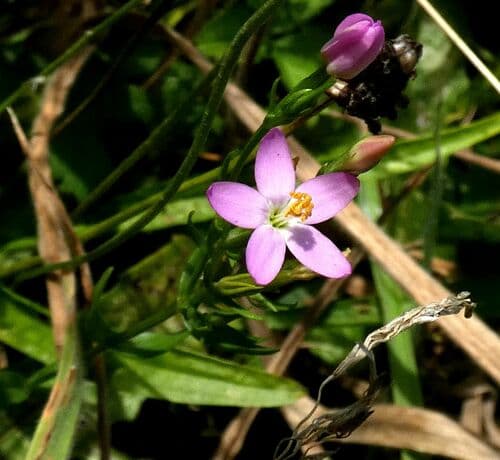
A slender annual or biennial herb growing up to 50 cm tall, featuring a basal rosette of leaves and erect, branched stems bearing clusters of small, star-shaped, pinkish-purple flowers. The flowers typically open in sunshine.