Centaury
Image: daniel_heald (cc-by-nc)
NameCentaury
Scientific NameCentaurium erythraea
Common NamesCommon Centaury, European Centaury, Bitter Herb, Feverwort
Plant FamilyGentianaceae
Natural HabitatFound in dry grasslands, meadows, open woodlands, clearings, roadsides, and sandy or calcareous soils across Europe, North Africa, and parts of Asia. It prefers sunny or partially shaded locations.
Parts Usedwhole_plant
Medicinal Actionsanti-inflammatory, antioxidant, carminative
Traditional UsesTraditionally used as a bitter tonic to stimulate appetite and digestion, treat dyspepsia, heartburn, and bloating. It has also been used for fevers, liver and gallbladder complaints, and as a mild diuretic.
Active ConstituentsSecoiridoid glycosides, Gentiopicrin, Centapicrin, Swertiamarin, Flavonoids, Xanthones
Preparation Methodsinfusion, decoction, tincture, powder
Contraindications & WarningsNot recommended for individuals with gastric or duodenal ulcers due to its bitter properties stimulating gastric acid secretion. Pregnant and breastfeeding women should avoid its use.
Cultivation NotesPrefers well-drained, sandy or loamy soil and full sun to partial shade. Can be grown from seed, often self-seeds. Requires moderate watering and is generally low maintenance.
Raritycommon
Description
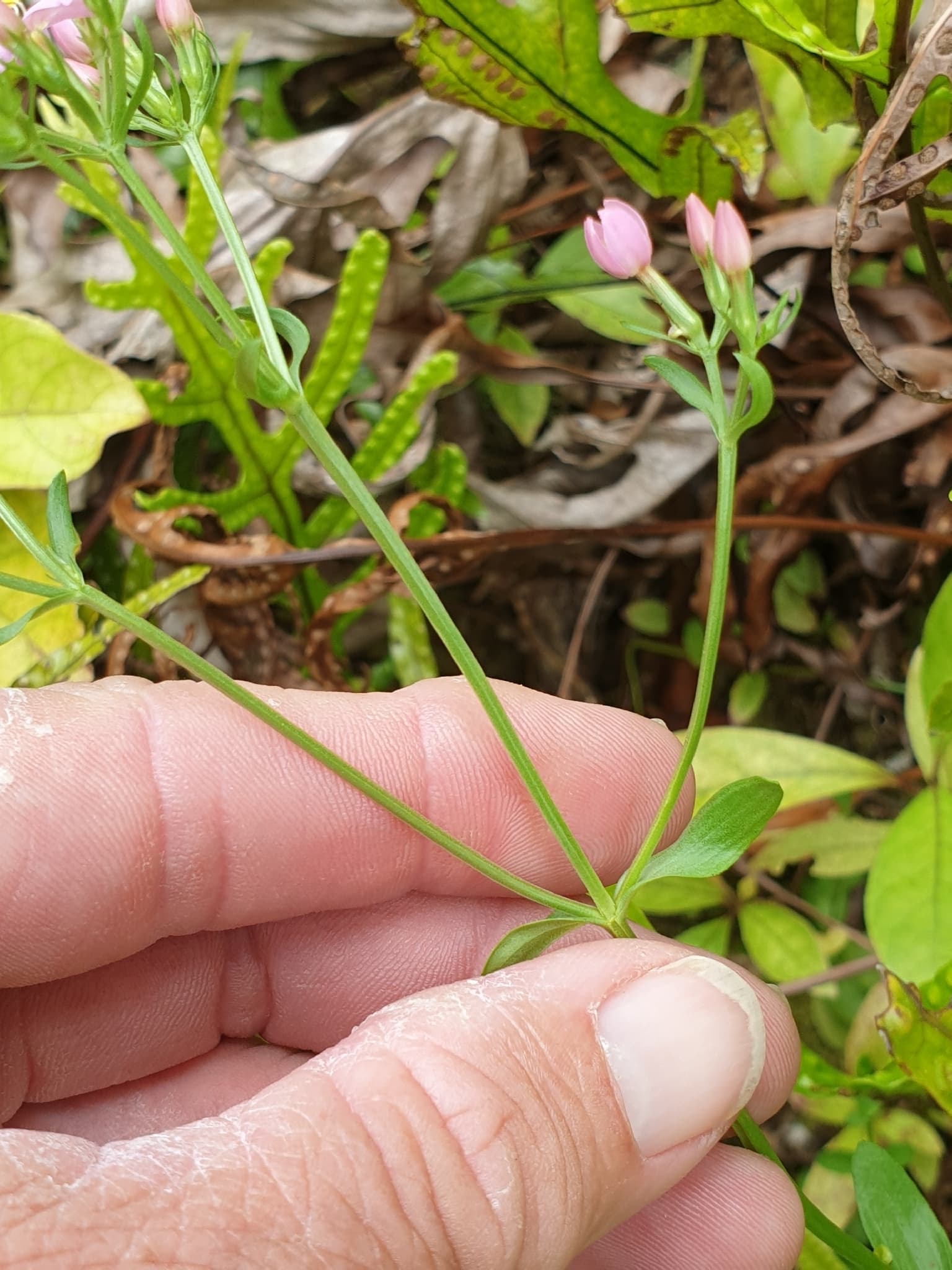
Centaury is a slender annual or biennial herb growing up to 50 cm tall, characterized by its square stems, opposite ovate-lanceolate leaves, and clusters of small, star-shaped, pink flowers that typically open in sunlight. The basal leaves form a rosette, while stem leaves are smaller and sessile.