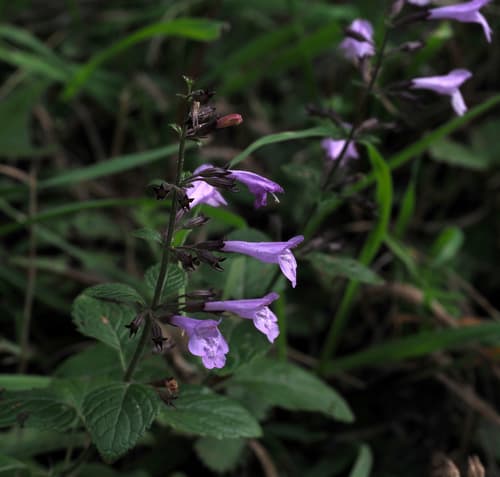
Calamint
NameCalamint
Scientific NameClinopodium nepeta
Common NamesCalamint, Lesser Calamint, Basil Thyme, Field Balm
Plant FamilyLamiaceae
Natural HabitatNative to Europe, North Africa, and parts of Asia, it thrives in dry, sunny locations such as meadows, open woodlands, roadsides, and rocky slopes. It prefers well-drained, often calcareous soils.
Parts Usedleaf,flower
Medicinal Actionscarminative, expectorant, nervine, antimicrobial, anti-inflammatory
Traditional UsesTraditionally, Calamint has been used to aid digestion, relieve flatulence, and soothe stomach cramps due to its carminative properties. It was also employed as an expectorant for coughs and colds, and as a nervine to calm nervous tension, anxiety, and promote sleep.
Active ConstituentsPulegone, Menthone, Piperitone, Isomenthone, Limonene
Preparation Methodsinfusion, tincture, essential oil
Contraindications & WarningsHigh doses or prolonged use, particularly of essential oil, should be avoided due to the presence of pulegone, which can be hepatotoxic. It is generally contraindicated in pregnancy and lactation.
Cultivation NotesCalamint is easy to grow, preferring full sun to partial shade and well-drained soil. It is drought-tolerant once established and can be propagated by seed, cuttings, or division. It readily self-seeds and can naturalize.
Raritycommon
Description
Lesser Calamint is a herbaceous perennial characterized by its square stems, opposite, ovate, slightly hairy leaves, and small, tubular, bilabiate lavender-purple flowers arranged in whorls along the upper stem. The plant emits a pleasant minty-lemony aroma when crushed.