Bushmanland Honeythorn
NameBushmanland Honeythorn
Scientific NameLycium cinereum
Common NamesBushmanland Honeythorn, Kalahari Honeythorn, Cape Honeythorn, Gou-ghoem
Plant FamilySolanaceae
Natural HabitatIndigenous to arid and semi-arid regions of Southern Africa, particularly the Karoo and Bushmanland. It thrives on rocky slopes, sandy flats, and along dry riverbeds, demonstrating high drought tolerance.
Parts Usedfruit,leaf,root
Medicinal Actionsantioxidant, anti-inflammatory, adaptogen, analgesic
Traditional UsesTraditionally, the sweet berries are consumed fresh or dried as a nutritious food source. Indigenous communities have used various parts of the plant, including leaves and roots, in traditional medicine to treat fevers, colds, and as a general tonic for well-being and pain relief.
Active ConstituentsPolysaccharides, Carotenoids, Flavonoids, Alkaloids, Vitamins
Preparation Methodsinfusion, decoction, powder
Contraindications & WarningsGenerally considered safe when consumed as food. Pregnant and breastfeeding women should exercise caution and consult a healthcare professional. Large doses of non-fruit parts may warrant caution, and potential interactions with blood-thinning medications have been suggested for some Lycium species.
Cultivation NotesThrives in full sun and well-drained, sandy or rocky soils. It is extremely drought-tolerant once established and requires minimal water. Can be propagated from seeds or cuttings and is frost-hardy in its native range.
Raritycommon
Description
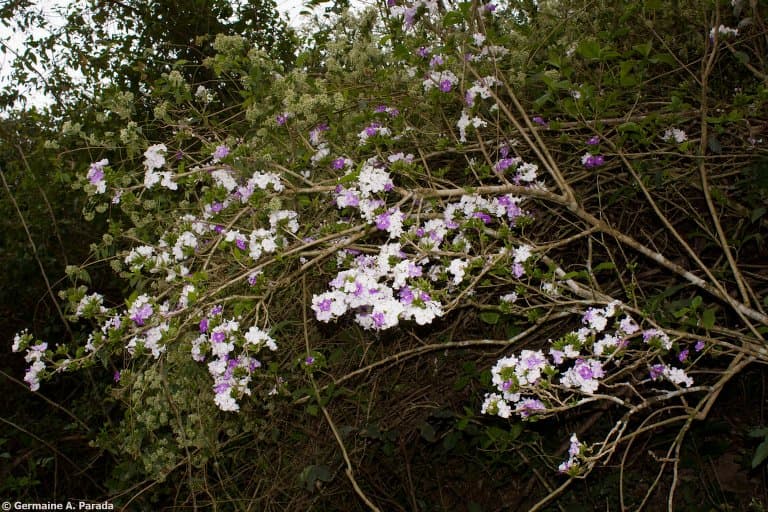
A thorny, woody shrub native to Southern Africa, typically growing up to 2 meters tall. It features small, fleshy, often spatulate leaves and produces distinctive tubular, pale purple to white flowers with prominent stamens, followed by small, red or orange berries.