Burdock
NameBurdock
Scientific NameArctium lappa
Common NamesBurdock, Greater Burdock, Gobō, Beggar's Buttons, Lappa
Plant FamilyAsteraceae
Natural HabitatCommonly found in disturbed soils, roadsides, fields, waste areas, and forest edges across temperate regions. It thrives in full sun to partial shade and prefers moist, rich, well-drained soil.
Parts Usedroot,leaf,seed
Medicinal Actionsanti-inflammatory, antimicrobial, antioxidant, astringent, demulcent, diuretic
Traditional UsesTraditionally, burdock root has been highly valued as a blood purifier and detoxifier, particularly for addressing various skin conditions such as acne, eczema, and psoriasis. It is also used to support liver and kidney function, improve digestion, and alleviate joint pain. The root is a popular edible vegetable in some cultures, known as gobō.
Active ConstituentsInulin, arctigenin, arctiin, lignans, polyacetylenes, mucilage, tannins
Preparation Methodsinfusion, decoction, tincture, poultice, powder
Contraindications & WarningsBurdock may interact with blood-thinning medications due to its coumarin content. Individuals with diabetes should use it cautiously as it may lower blood sugar levels. Pregnant or breastfeeding women, and those with allergies to the Asteraceae family, should consult a healthcare professional before use.
Cultivation NotesBurdock grows best in deep, loose, well-drained soil in full sun to partial shade. As a biennial, its roots are typically harvested in the first year for medicinal use. It can readily self-seed and may become weedy if not managed.
Raritycommon
Description
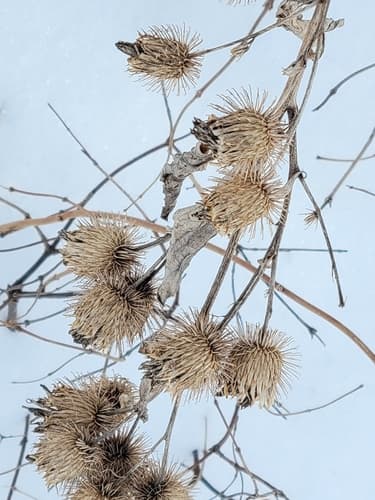
Burdock is a robust biennial plant characterized by its large, wavy leaves and distinctive globular burrs, which are visible in their dried state in the image. These burrs are covered in stiff hooks that readily cling to fur and clothing, facilitating seed dispersal. The plant can grow quite tall, often reaching 1-2 meters in height.