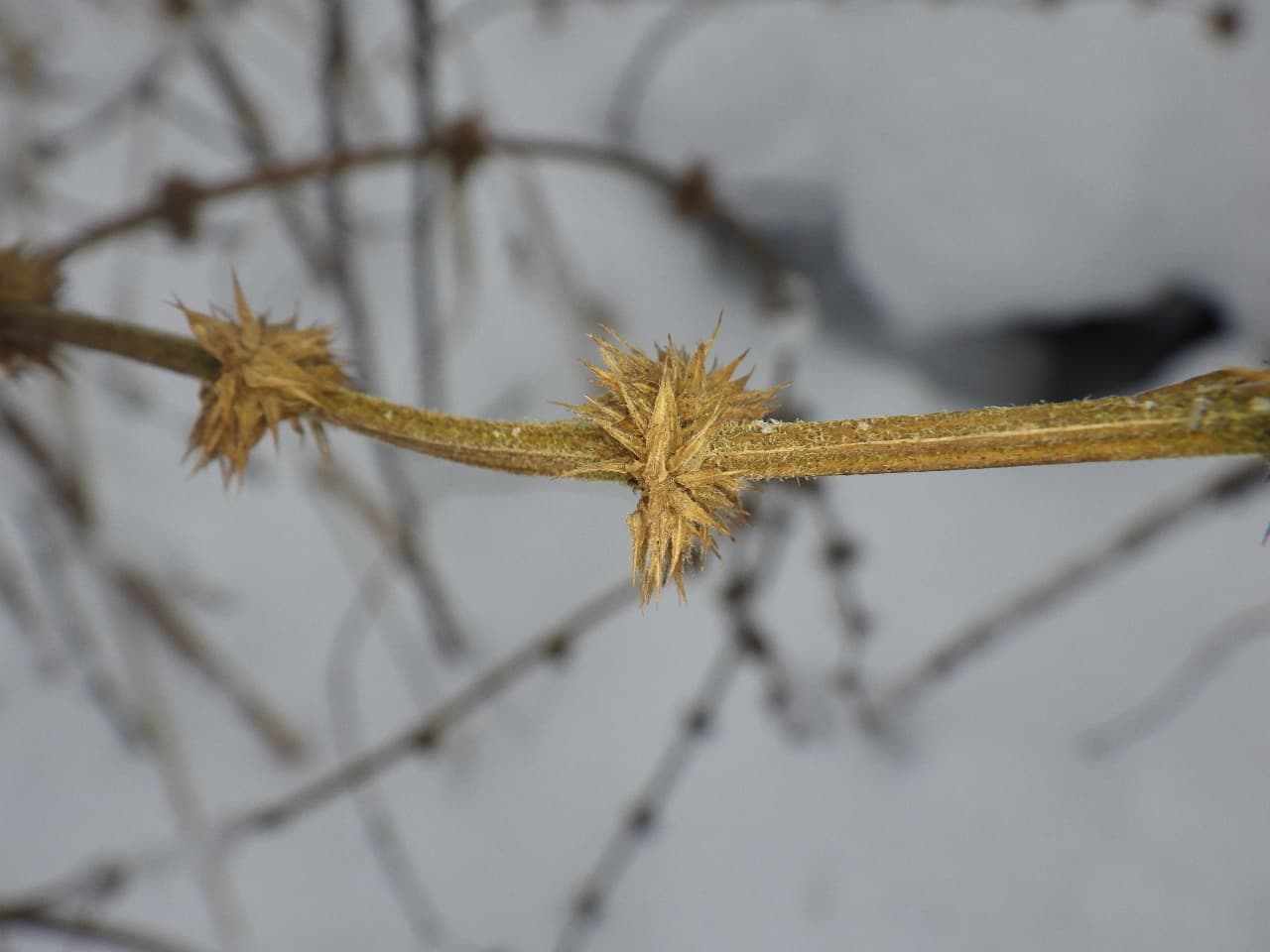
Bugleweed
Image: alexfamilyteam (cc-by-nc)
NameBugleweed
Scientific NameLycopus europaeus
Common NamesGypsywort, European Bugleweed, Water Horehound
Plant FamilyLamiaceae
Natural HabitatTypically found in damp, marshy areas, ditches, fens, riverbanks, and wet woodlands across Europe, Asia, and naturalized in parts of North America. It thrives in moist to wet soils.
Parts Usedwhole_plant
Medicinal Actionsanti-inflammatory, nervine, sedative
Traditional UsesTraditionally used to treat hyperthyroidism (overactive thyroid) due to its thyroid-suppressing properties. It has also been employed as a mild sedative for nervous tension, anxiety, and heart palpitations, and occasionally for coughs and respiratory issues.
Active ConstituentsLithospermic acid, rosmarinic acid, flavonoids, phenolic acids, tannins
Preparation Methodsinfusion, tincture, powder
Contraindications & WarningsContraindicated in hypothyroidism, pregnancy, and breastfeeding. Should not be used concurrently with thyroid hormone medication or during radioactive iodine therapy. Consult a healthcare professional before use, especially for thyroid conditions.
Cultivation NotesPrefers moist to wet soil and full sun to partial shade. It can be quite vigorous and spread readily, often considered a weed in some areas. Propagated by seed or division.
Raritycommon
Description
Lycopus europaeus is a perennial herbaceous plant characterized by its square stems and opposite, toothed leaves. It produces small, white, often purple-spotted flowers in dense whorls in the leaf axils, which develop into distinctive spiky seed heads as seen in the image, especially in its dried winter state.