Bryony
NameBryony
Scientific NameBryonia dioica
Common NamesWhite Bryony, English Mandrake, Wild Hops, Devil's Turnip
Plant FamilyCucurbitaceae
Natural HabitatNative to Europe and parts of North Africa and Western Asia, White Bryony thrives in woodlands, hedgerows, scrub, and disturbed ground, often climbing over other vegetation for support.
Parts Usedroot,fruit
Medicinal Actionsanalgesic, anti-inflammatory, diuretic, expectorant
Traditional UsesTraditionally, White Bryony root was used externally as a poultice for bruises, sprains, and rheumatic pain. Internally, it was historically employed as a powerful purgative, emetic, and diuretic for conditions like dropsy and respiratory ailments, but its extreme toxicity made such uses highly dangerous and often fatal.
Active ConstituentsBryonin, bryonidin, cucurbitacins
Preparation Methodsdecoction, poultice, tincture
Contraindications & WarningsAll parts of White Bryony, especially the root and berries, are highly toxic and can be fatal if ingested. Symptoms of poisoning include severe gastrointestinal irritation, vomiting, diarrhea, kidney damage, and central nervous system depression. It should never be used internally and external application should be avoided on broken skin; contraindicated during pregnancy, lactation, and for children.
Cultivation NotesWhite Bryony grows best in well-drained soil in full sun to partial shade. It is a vigorous climber and requires substantial support. Due to its rapid growth and toxicity, it is often considered a weed in cultivated gardens.
Raritycommon
Description
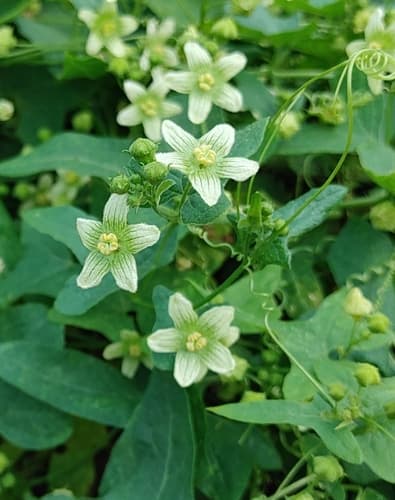
White Bryony is a vigorous, perennial climbing vine characterized by its palmate, rough leaves, coiling tendrils, and small, star-shaped greenish-white flowers. These flowers develop into highly toxic red berries in the autumn. It is a member of the gourd family, Cucurbitaceae.