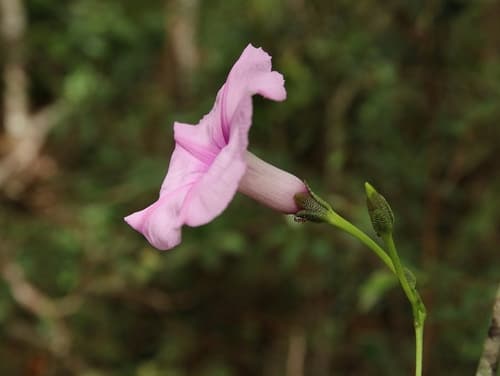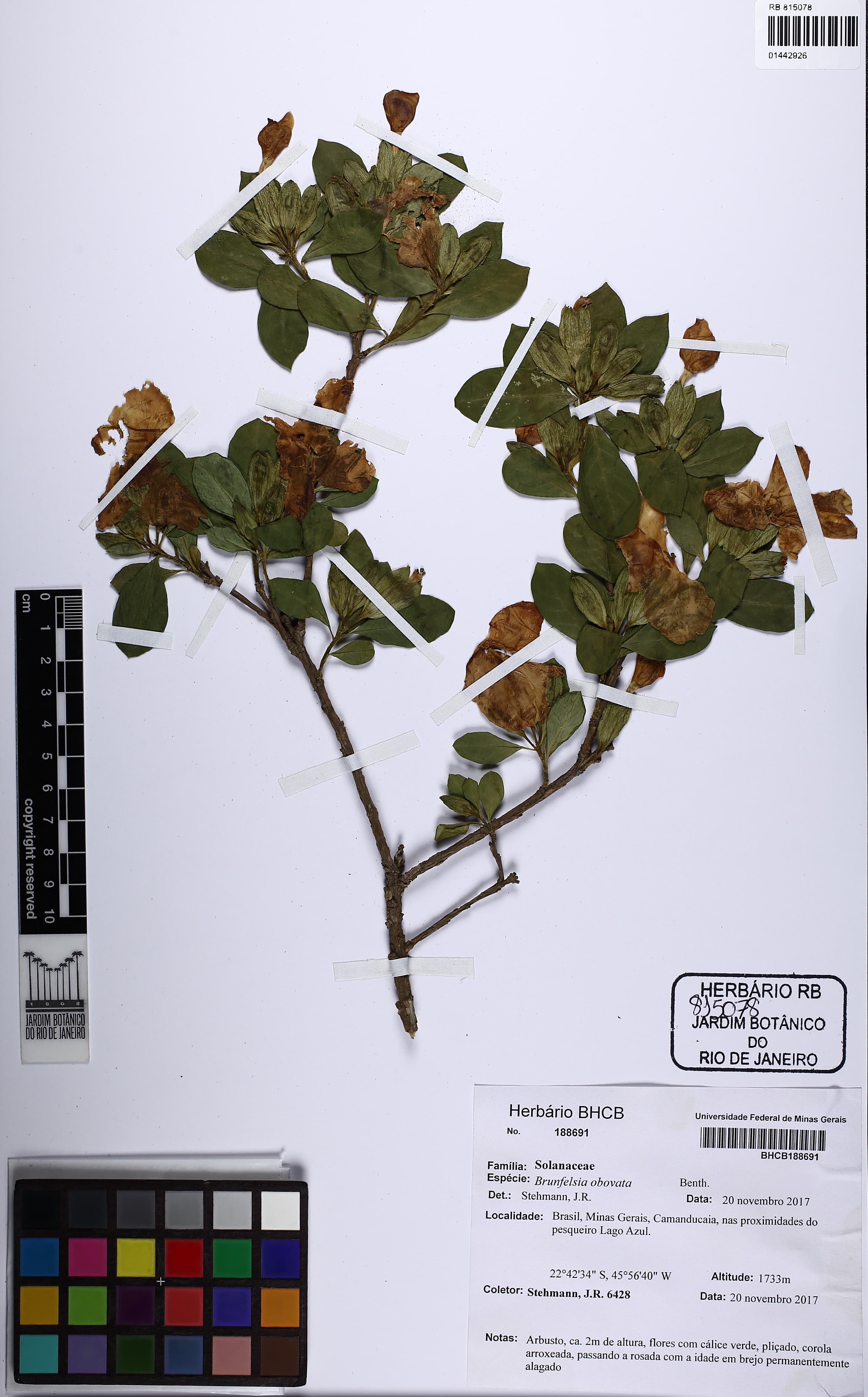
Brunfelsia obovata
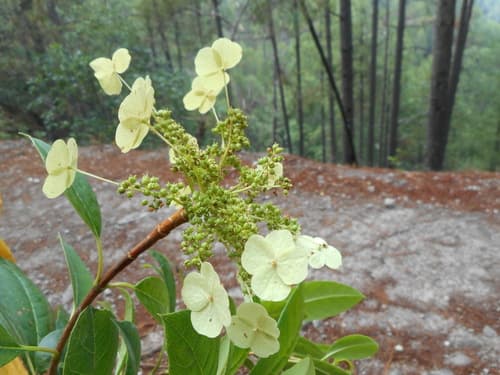
Image: J.R. Stehmann (cc-by)
NameBrunfelsia obovata
Scientific NameBrunfelsia obovata Benth.
Common NamesManacá, Yesterday-Today-and-Tomorrow
Plant FamilySolanaceae
Natural HabitatNative to Brazil, specifically found in permanently flooded marsh areas at an altitude of 1733m in Minas Gerais.
Parts Usedroot,bark
Medicinal Actionsdiuretic, sedative, anti-inflammatory
Traditional UsesTraditionally, various Brunfelsia species, including this one, have been used with extreme caution as purgatives, diuretics, and for treating fevers, rheumatism, and syphilis. Due to its potent toxicity, it is primarily used by experienced traditional healers, often for its psychoactive properties in shamanic rituals.
Active ConstituentsBrunfelsamidine, Manacine, Scopoletin
Preparation Methodsdecoction, tincture, poultice
Contraindications & WarningsAll parts of Brunfelsia obovata are considered toxic. Contraindications include pregnancy, lactation, children, and individuals with liver, kidney, or heart conditions. Overdose can cause severe gastrointestinal distress, neurological symptoms (e.g., tremors, convulsions), and cardiac issues. Should only be used under strict expert supervision due to high toxicity.
Cultivation NotesPrefers warm, humid climates and consistently moist to wet soil, as it naturally occurs in permanently flooded marsh areas. Requires partial shade and protection from frost.
Rarityuncommon
Description
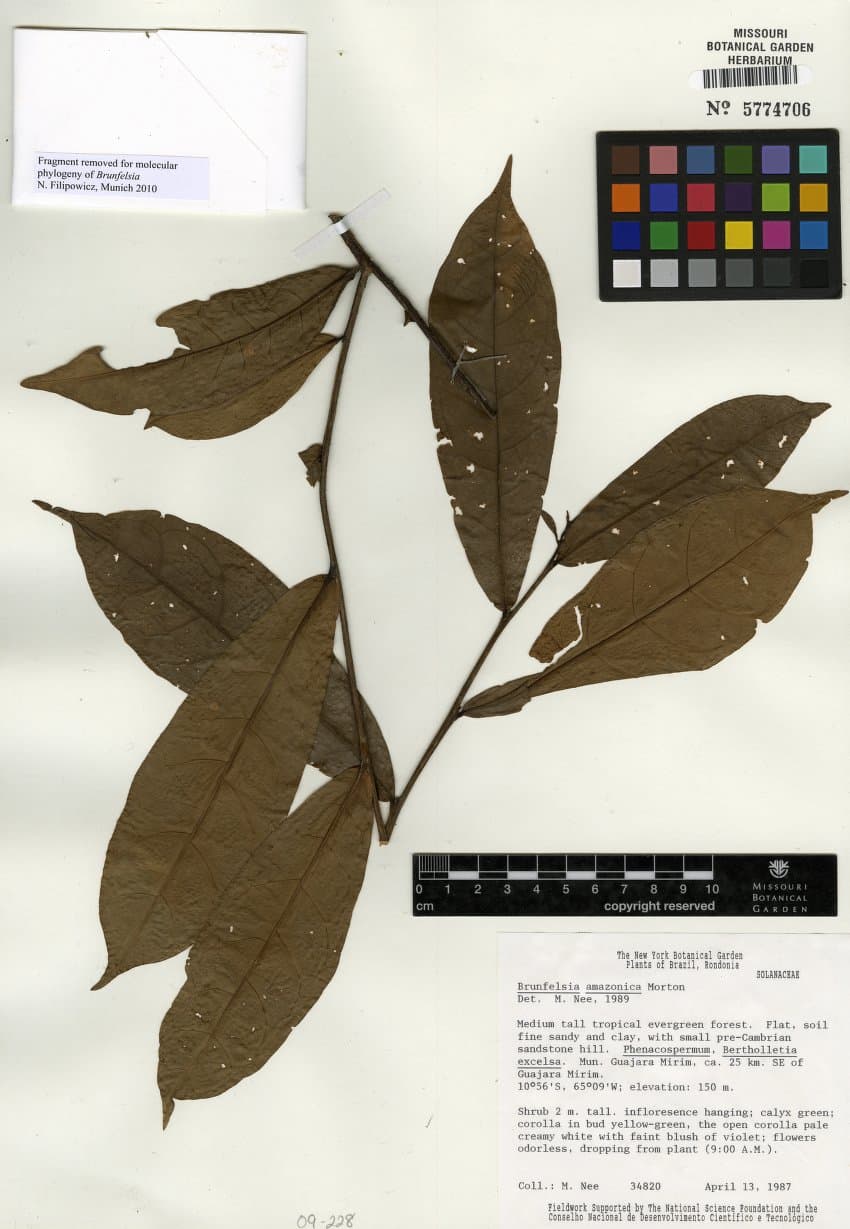
A shrub, approximately 2m tall, characterized by flowers with a green, plicate calyx and a corolla that changes color from purplish to pink as it ages. The leaves are simple and ovate, typical of the genus Brunfelsia.